


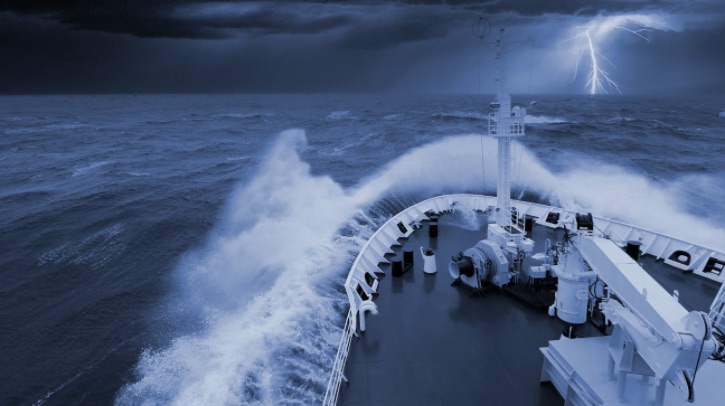
The World Meteorological Organization (WMO) and the International Maritime Organization (IMO) have co-hosted a symposium on extreme maritime weather. The event, which took place in London from September 23-26, 2024, brought together experts from the fields of meteorology, oceanography and the maritime community to forge solutions for addressing this issue.
Collaborative efforts to improve maritime safety
In his opening remarks, IMO Secretary-General Arsenio Dominguez stressed the importance of maritime safety, highlighting its significance to the organization’s core mission: “Everything we do to enhance maritime safety adds positive value to the environmental regulations we adopt and implement through the IMO.”
WMO Deputy Secretary-General Ko Barrett underscored the mounting challenges the maritime sector faces due to climate change, such as rising sea levels affecting ports, increasingly intense cyclones endangering seafarers, and melting Arctic sea ice opening new and potentially hazardous sea routes. “Climate change affects maritime operations, whether at sea or in ports. It is vitally important that WMO and meteorological services work closely with the IMO and the maritime community to meet joint challenges and improve efficiency and safety,” Barrett said.
Saving lives through accurate forecasting
The symposium emphasized the importance of maritime observations, forecasting and early warning systems. Captain Radhika Menon, recipient of the 2016 IMO Bravery Award, delivered a powerful keynote address, recalling a rescue operation where fishers nearly lost their lives due to a delayed weather warning. “Maritime weather is inherently unpredictable, making accurate forecasting not just a necessity but a lifesaver,” she said.
The UN Secretary-General’s Special Envoy for the Ocean, Ambassador Peter Thomson, commended the symposium for tackling climate and ocean issues, particularly in the context of the UN Decade of Ocean Science (2021-2030).
Key focus areas for action
Panel discussions at the symposium built on the progress made since the first WMO-IMO symposium on extreme maritime weather in 2019. Key areas of focus included: enhanced collaboration to strengthen the ties between the meteorological and maritime sectors to ensure comprehensive knowledge sharing; knowledge and capacity building to provide training opportunities for both seafarers and forecasters; improved observations and data collection, emphasizing the importance of reliable maritime observations; and timely dissemination of warnings to ensure that early warnings and forecasts are accessible and practical for end users.
The discussions highlighted the critical need for better communication among stakeholders and enhanced training for maritime professionals, both at sea and on shore. “Maritime safety information must be reliable, accurate, practical and accessible all at the same time,” noted Keld Quistgaard of the Danish Meteorological Institute (DMI).
Insights from end users
End users of weather services stressed the value of accurate information in making critical decisions. Nelly Florida Riama of Indonesia’s BMKG noted, “Severe weather disrupts ferry operations, impacting safety, schedules and efficiency. Accurate forecasts are key to minimizing these impacts.”
Derek Cardno of the Scottish Fishermen’s Federation spoke of the need for better coordination between public and private weather services, noting the challenges when forecasts from different sources contradict each other. “When models don’t align, you hope for the best but prepare for the worst,” he said. Cardno also emphasized the value of building direct relationships with forecasters: “To put a face to the forecast is really powerful.”
The need for more observations
With only about 3% of ships at sea participating in the WMO’s Voluntary Observing Ships Scheme, the symposium repeatedly highlighted the need for more ships to contribute to weather observations. Such observations are crucial for improving forecast accuracy and ensuring maritime safety.
“Given forecasting advances, ships should not succumb to weather disasters nowadays,” Barrett emphasized. “Working together, we can help reduce the frequency of such incidents and minimize weather-related losses.”
Moving forward
The symposium’s discussions underscored the importance of “ongoing collaboration and innovation to address the challenges of extreme maritime weather”, the WMO said. By strengthening the partnership between meteorological and maritime communities, the WMO and IMO aim to ensure a safer, more resilient future for all who work at sea.
In related news, the Canadian Coast Guard recently launched its ‘floating laboratory’ vessel for oceanographic science. Click here to read the full story.