


Close Menu
Meteorological Technology International
  • News
    • A-E
      • Agriculture
      • Automated Weather Stations
      • Aviation
      • Climate Measurement
      • Data
      • Developing Countries
      • Digital Applications
      • Early Warning Systems
      • Extreme Weather
    • G-P
      • Hydrology
      • Lidar
      • Lightning Detection
      • New Appointments
      • Nowcasting
      • Numerical Weather Prediction
      • Polar Weather
    • R-S
      • Radar
      • Rainfall
      • Remote Sensing
      • Renewable Energy
      • Satellites
      • Solar
      • Space Weather
      • Supercomputers
    • T-Z
      • Training
      • Transport
      • Weather Instruments
      • Wind
      • World Meteorological Organization
      • Meteorological Technology World Expo
  • Features
  • Online Magazines
    • January 2026
    • April 2025
    • January 2025
    • September 2024
    • April 2024
    • Archive Issues
    • Subscribe Free!
  • Opinion
  • Videos
  • Supplier Spotlight
  • Expo
LinkedIn X (Twitter) Facebook
  • Sign-up for Free Weekly E-Newsletter
  • Meet the Editors
  • Contact Us
  • Media Pack
LinkedIn Facebook
Subscribe
Meteorological Technology International
  • News
      • Agriculture
      • Automated Weather Stations
      • Aviation
      • Climate Measurement
      • Data
      • Developing Countries
      • Digital Applications
      • Early Warning Systems
      • Extreme Weather
      • Hydrology
      • Lidar
      • Lightning Detection
      • New Appointments
      • Nowcasting
      • Numerical Weather Prediction
      • Polar Weather
      • Radar
      • Rainfall
      • Remote Sensing
      • Renewable Energy
      • Satellites
      • Solar
      • Space Weather
      • Supercomputers
      • Training
      • Transport
      • Weather Instruments
      • Wind
      • World Meteorological Organization
      • Meteorological Technology World Expo
  • Features
  • Online Magazines
    1. January 2026
    2. September 2025
    3. April 2025
    4. January 2025
    5. September 2024
    6. April 2024
    7. January 2024
    8. September 2023
    9. April 2023
    10. Archive Issues
    11. Subscribe Free!
    Featured
    November 27, 2025

    In this Issue – January 2026

    By Hazel KingNovember 27, 2025
    Recent

    In this Issue – January 2026

    November 27, 2025

    In this Issue – September 2025

    August 11, 2025

    In this Issue – April 2025

    April 15, 2025
  • Opinion
  • Videos
  • Supplier Spotlight
  • Expo
Facebook LinkedIn
Subscribe
Meteorological Technology International
Features

INTERVIEW: Marianne Thyrring, director general of the Danish Meteorological Institute

Helen NormanBy Helen NormanFebruary 15, 20243 Mins Read
Share LinkedIn Facebook Twitter Email
Share
LinkedIn Facebook Twitter Email

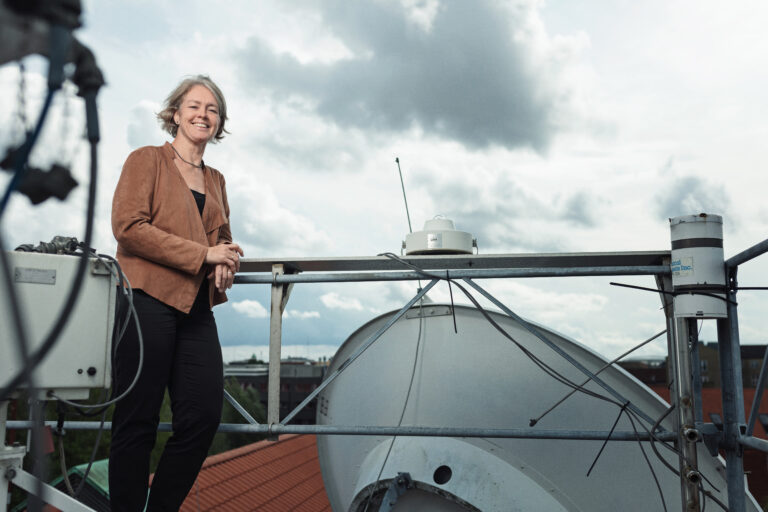
Marianne Thyrring became director general of the Danish Meteorological Institute (DMI) in 2013 after many years working in the fields of climate and the environment for the European Commission as well as various ministries in Denmark, including the Ministry of Environment. “I was always curious about the scientific and operational parts of climate and environmental policies, which is what led me to DMI,” she says.

During her earlier years at DMI, Thyrring was involved in making the organization more public-facing and making better use of the large stores of weather-related data it held. “This kind of work really fuels me,” she explains. “In simple terms I like to make things better by implementing change. I am very proud of where DMI is today. DMI has been able to change its profile from a conservative monopoly to a modern public agency focusing on the societal value we can deliver.”

Thyrring notes that during her career to date she has mainly worked in male-dominated environments. “Even though we are working to change this and make the playing field level, I believe that development in gender equality is rather slow. The main reason is that it is still difficult to get female candidates to apply for the very top positions.”

Although the shift to gender equality is slow, Thyrring is seeing more females joining the met industry. “In the past 10 years we have recruited more female meteorologists than male, for example,” she says. “We are also seeing an increase in female climate researchers at DMI, contributing to our diversity.”

To help it achieve equality, DMI has established a network specifically for female leaders, which facilitates mutual support and the exchange of experiences. “By creating this network we aim to empower and inspire our female leaders while promoting an inclusive culture within the organization at DMI,” Thyrring says. “We are convinced that diverse leadership will contribute to a more dynamic and innovative organization.”

Looking at what the future holds for DMI in general, Thyrring continues, “I would like us to take a closer look at our work culture to try to increase productivity. We want to cultivate a culture marked by mutual trust and respect, where all team members can be themselves.”

DMI is also preparing for the start of operation of its new supercomputer, which is being developed alongside met services in Iceland, Ireland and the Netherlands, and is due to come online in late spring 2024. “This will provide earlier and more accurate weather forecasts than ever before and enable us to deliver better weather warnings,” comments Thyrring. “The collaboration, known as the United Weather Centres-West (UWC-W), will also bring changes in our respective organizations as there will be considerable economies of scale when four countries come together to share the same computer and data model.

“Another project that has been a major focus at DMI is that we have been tasked with predicting land-based flooding. We already issue warnings for heavy rainfall, as well as flooding from the sea, but we have not previously been authorized to develop a warning service for river and stream flooding. This initiative was prompted by the devastating floods that hit central Europe in 2021. One of the most important tasks is to give the public and the emergency services the opportunity through our warnings to react fast.”

A longer version of this article originally appeared in the January 2023 issue of Meteorological Technology International. To view the magazine in full, click here.

Previous ArticleNSF NCAR satellites deployed to measure air quality over four countries in Asia
Next Article Finnish Meteorological Institute develops precision meteorology system for agriculture monitoring

Read Similar Stories

Features

FEATURE: How the Arctic oscillation fueled widespread winter storms

April 9, 20265 Mins Read
Features

EXCLUSIVE INTERVIEW: Chris Hyde, energy lead at Meteomatics

March 19, 20264 Mins Read
Features

EXCLUSIVE INTERVIEW: Mausumi Dikpati, NSF NCAR senior scientist

March 5, 20265 Mins Read
Latest News

Northumbria University secures £4m to study Earth’s radiation belts

April 16, 2026

AI model improves real-time prediction of wildfire spread

April 16, 2026

Study identifies atmospheric trigger behind flash droughts in Puerto Rico

April 15, 2026

Receive breaking stories and features in your inbox each week, for free


Enter your email address:


Supplier Spotlights
  • Meteomatics AG
Getting in Touch
  • Contact Us / Advertise
  • Meet the Editors
  • Media Pack
  • Free Weekly E-Newsletter
Our Social Channels
  • Facebook
  • LinkedIn
© 2026 UKi Media & Events a division of UKIP Media & Events Ltd
  • Cookie Policy
  • Privacy Policy
  • Terms and Conditions
  • Notice and Takedown Policy

Type above and press Enter to search. Press Esc to cancel.