


Close Menu
Meteorological Technology International
  • News
    • A-E
      • Agriculture
      • Automated Weather Stations
      • Aviation
      • Climate Measurement
      • Data
      • Developing Countries
      • Digital Applications
      • Early Warning Systems
      • Extreme Weather
    • G-P
      • Hydrology
      • Lidar
      • Lightning Detection
      • New Appointments
      • Nowcasting
      • Numerical Weather Prediction
      • Polar Weather
    • R-S
      • Radar
      • Rainfall
      • Remote Sensing
      • Renewable Energy
      • Satellites
      • Solar
      • Space Weather
      • Supercomputers
    • T-Z
      • Training
      • Transport
      • Weather Instruments
      • Wind
      • World Meteorological Organization
      • Meteorological Technology World Expo
  • Features
  • Online Magazines
    • January 2026
    • April 2025
    • January 2025
    • September 2024
    • April 2024
    • Archive Issues
    • Subscribe Free!
  • Opinion
  • Videos
  • Supplier Spotlight
  • Expo
LinkedIn X (Twitter) Facebook
  • Sign-up for Free Weekly E-Newsletter
  • Meet the Editors
  • Contact Us
  • Media Pack
LinkedIn Facebook
Subscribe
Meteorological Technology International
  • News
      • Agriculture
      • Automated Weather Stations
      • Aviation
      • Climate Measurement
      • Data
      • Developing Countries
      • Digital Applications
      • Early Warning Systems
      • Extreme Weather
      • Hydrology
      • Lidar
      • Lightning Detection
      • New Appointments
      • Nowcasting
      • Numerical Weather Prediction
      • Polar Weather
      • Radar
      • Rainfall
      • Remote Sensing
      • Renewable Energy
      • Satellites
      • Solar
      • Space Weather
      • Supercomputers
      • Training
      • Transport
      • Weather Instruments
      • Wind
      • World Meteorological Organization
      • Meteorological Technology World Expo
  • Features
  • Online Magazines
    1. January 2026
    2. September 2025
    3. April 2025
    4. January 2025
    5. September 2024
    6. April 2024
    7. January 2024
    8. September 2023
    9. April 2023
    10. Archive Issues
    11. Subscribe Free!
    Featured
    November 27, 2025

    In this Issue – January 2026

    By Hazel KingNovember 27, 2025
    Recent

    In this Issue – January 2026

    November 27, 2025

    In this Issue – September 2025

    August 11, 2025

    In this Issue – April 2025

    April 15, 2025
  • Opinion
  • Videos
  • Supplier Spotlight
  • Expo
Facebook LinkedIn
Subscribe
Meteorological Technology International
Extreme Weather

AI model improves real-time prediction of wildfire spread

Alex PackBy Alex PackApril 16, 20263 Mins Read
Share LinkedIn Facebook Twitter Email
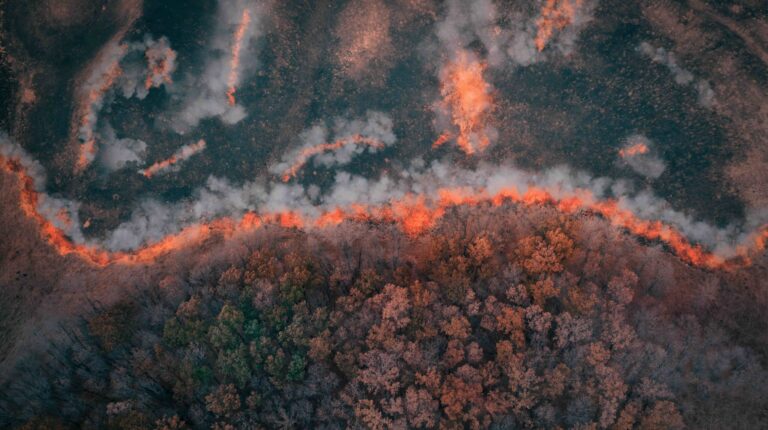
A strip of Dry Grass sets Fire to Trees in dry Forest: Forest fire - Aerial drone top view. Forest fire: fire with smoke from the height of a bird flight.
Share
LinkedIn Facebook Twitter Email

Researchers at the USC Viterbi School of Engineering have developed an artificial intelligence model capable of predicting wildfire spread in near real time by combining satellite data, terrain information and fire simulations.

The system builds on earlier work led by Assad Oberai, Hughes Professor of Aerospace and Mechanical Engineering, and the Computation and Data Driven Discovery (CD3) group. The updated model integrates multiple satellite data sources to improve accuracy and reduce uncertainty in forecasting fire behavior.

The research follows growing concern over increasingly intense wildfires, particularly in regions such as Southern California, where large-scale events have caused widespread damage in recent years.

“Due to changing climate we’re seeing more of these extremely intense fires — those that burn very fast and very bright,” said Oberai.

The model combines data from NASA’s VIIRS satellite system, which provides high-resolution thermal imagery, with observations from the GOES geostationary satellite, which updates every five minutes. While VIIRS offers detailed spatial data, GOES provides continuous temporal coverage, enabling more accurate estimation of when a fire begins.

“We’re still using data from VIIRS, but now we’re bringing in observations from a geostationary satellite, GOES, to obtain a more accurate measurement of the ignition time,” Oberai said. “That addition, and the fact that the new model accounts for terrain means that it makes better informed and therefore, more accurate predictions.”

By incorporating ignition timing, the model can better assess how quickly a fire is spreading. This information is critical for forecasting future behavior and supporting decision-making during active incidents.

“If you know how a fire has initially spread, you can make a more accurate prediction of where it’s going to go next,” Oberai said. “Ignition time is key to that understanding.”

The updated system also factors in terrain conditions, such as slope and elevation, which influence fire movement. In addition, it is trained on simulations of real wildfire events, enabling it to capture variations in weather, vegetation and topography.

According to the researchers, the model’s reconstructions closely match high-resolution infrared fire perimeter data collected by aircraft, indicating improved predictive performance.

“When it comes to effectively fighting a fire, this tool has the power to provide real-time estimates and a type of aerial view of what the fire looks like at any given instant,” Oberai said.

The team said the aim is to make the technology available to first responders and wildfire planners as fire seasons become longer and more severe.

Related news, European Commission sets out strategy to address growing wildfire risk

Previous ArticleStudy identifies atmospheric trigger behind flash droughts in Puerto Rico
Next Article Northumbria University secures £4m to study Earth’s radiation belts

Read Similar Stories

Space Weather

Northumbria University secures £4m to study Earth’s radiation belts

April 16, 20262 Mins Read
Climate Measurement

Study identifies atmospheric trigger behind flash droughts in Puerto Rico

April 15, 20263 Mins Read
Satellites

AI tool uses weather satellite data to map ocean currents in near real time

April 14, 20263 Mins Read
Latest News

Northumbria University secures £4m to study Earth’s radiation belts

April 16, 2026

AI model improves real-time prediction of wildfire spread

April 16, 2026

Study identifies atmospheric trigger behind flash droughts in Puerto Rico

April 15, 2026

Receive breaking stories and features in your inbox each week, for free


Enter your email address:


Supplier Spotlights
  • Raymetrics
Getting in Touch
  • Contact Us / Advertise
  • Meet the Editors
  • Media Pack
  • Free Weekly E-Newsletter
Our Social Channels
  • Facebook
  • LinkedIn
© 2026 UKi Media & Events a division of UKIP Media & Events Ltd
  • Cookie Policy
  • Privacy Policy
  • Terms and Conditions
  • Notice and Takedown Policy

Type above and press Enter to search. Press Esc to cancel.