


Close Menu
Meteorological Technology International
  • News
    • A-E
      • Agriculture
      • Automated Weather Stations
      • Aviation
      • Climate Measurement
      • Data
      • Developing Countries
      • Digital Applications
      • Early Warning Systems
      • Extreme Weather
    • G-P
      • Hydrology
      • Lidar
      • Lightning Detection
      • New Appointments
      • Nowcasting
      • Numerical Weather Prediction
      • Polar Weather
    • R-S
      • Radar
      • Rainfall
      • Remote Sensing
      • Renewable Energy
      • Satellites
      • Solar
      • Space Weather
      • Supercomputers
    • T-Z
      • Training
      • Transport
      • Weather Instruments
      • Wind
      • World Meteorological Organization
      • Meteorological Technology World Expo
  • Features
  • Online Magazines
    • January 2026
    • April 2025
    • January 2025
    • September 2024
    • April 2024
    • Archive Issues
    • Subscribe Free!
  • Opinion
  • Videos
  • Supplier Spotlight
  • Expo
LinkedIn X (Twitter) Facebook
  • Sign-up for Free Weekly E-Newsletter
  • Meet the Editors
  • Contact Us
  • Media Pack
LinkedIn Facebook
Subscribe
Meteorological Technology International
  • News
      • Agriculture
      • Automated Weather Stations
      • Aviation
      • Climate Measurement
      • Data
      • Developing Countries
      • Digital Applications
      • Early Warning Systems
      • Extreme Weather
      • Hydrology
      • Lidar
      • Lightning Detection
      • New Appointments
      • Nowcasting
      • Numerical Weather Prediction
      • Polar Weather
      • Radar
      • Rainfall
      • Remote Sensing
      • Renewable Energy
      • Satellites
      • Solar
      • Space Weather
      • Supercomputers
      • Training
      • Transport
      • Weather Instruments
      • Wind
      • World Meteorological Organization
      • Meteorological Technology World Expo
  • Features
  • Online Magazines
    1. January 2026
    2. September 2025
    3. April 2025
    4. January 2025
    5. September 2024
    6. April 2024
    7. January 2024
    8. September 2023
    9. April 2023
    10. Archive Issues
    11. Subscribe Free!
    Featured
    November 27, 2025

    In this Issue – January 2026

    By Hazel KingNovember 27, 2025
    Recent

    In this Issue – January 2026

    November 27, 2025

    In this Issue – September 2025

    August 11, 2025

    In this Issue – April 2025

    April 15, 2025
  • Opinion
  • Videos
  • Supplier Spotlight
  • Expo
Facebook LinkedIn
Subscribe
Meteorological Technology International
Data

University of Texas engineer awarded US$740,000 to improve storm predictions with machine learning

Elizabeth BakerBy Elizabeth BakerJuly 29, 20253 Mins Read
Share LinkedIn Facebook Twitter Email
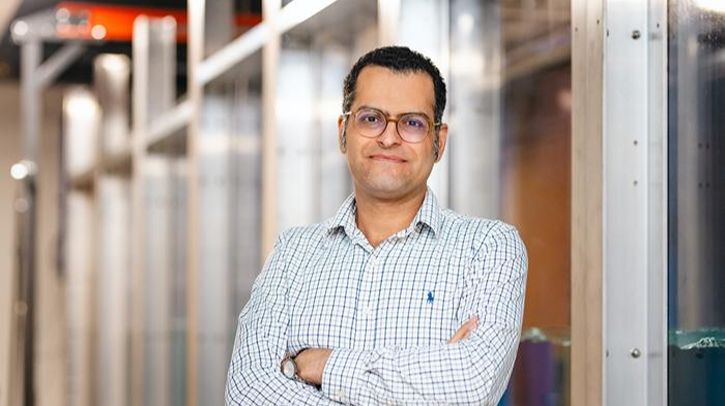
Dr Kianoosh Yousefi, assistant professor of mechanical engineering at The University of Texas at Dallas, smiles into the camera with his arms crossed
Credit: The University of Texas at Dallas
Share
LinkedIn Facebook Twitter Email

Dr Kianoosh Yousefi, assistant professor of mechanical engineering in the Erik Jonsson School of Engineering and Computer ScienceĀ at the University of Texas at Dallas, has received an Office of Naval Research 2025 Young Investigator Program (YIP) award of US$742,345 over three years to improve hurricane forecasting with machine learning (ML).

At UT Dallas, researchers are studying sea spray, particularly spume, or foam, droplets, in the lab to develop a model based on machine learning (ML) to improve hurricane forecasting. The model incorporates the effects of the spray generation function, which quantifies the rate at which droplets form.

Technology stack

The goal of the research is to provide more accurate tropical storm forecasting without the need for expensive, difficult-to-access experimental methods. Yousefi and his team of researchers are using simulations and lab experiments involving a new wind-wave research tunnel. The tunnel, which has a 40ft-long water tank, can generate breaking waves so that the researchers can capture high-resolution data on spume droplets, which are as small as 20µm, the width of a strand of human hair.

The researchers use high-speed shadowgraph imaging, a technique involving a high-speed camera to record the motion, size and shape of objects, such as the size and velocity of spume droplets.

ā€œWe are working to capture detailed information that will help us estimate the speed and momentum of spume droplets so we can better understand how sea spray is transported under different wind-wave conditions,ā€ Yousefi said. ā€œI am honored and very excited to receive support through the YIP award to advance this research.ā€

The resulting ML model will consider wave profile, wave slope, wind speed and other relevant parameters to improve the prediction of spray generation and its effects on storm intensity.

Yousefi’s Young Investigator Program award

The award program supports academic, tenure-track scientists and engineers who have received their doctorate or equivalent degree in the past seven years and who show exceptional promise for doing creative research.

ā€œDr Yousefi’s YIP award will enable him to make important advances in understanding sea spray dynamics and could meaningfully improve weather forecasting models in densely populated coastal regions,ā€ said Dr Edward White, professor and department head of mechanical engineering and Jonsson School Chair. ā€œThis is an exceptionally challenging area for experimental measurements, and his approach to this, combined with high-fidelity numerical simulations, exemplifies the cutting-edge science he and the rest of mechanical engineering continue to pioneer in solving complex challenges.ā€

Yousefi, who joined UTD in 2023, is the principal investigator for the Flow Dynamics and Turbulence Laboratory, which focuses on the study of turbulent air-sea interaction processes, including surface waves and the accompanying generation of turbulence, spray, bubbles, airflow separation and breaking waves.

The new award recognizes Yousefi’s contribution to the fields of physical oceanography and turbulent air-sea interactions and builds on his research supported by a previous National Science Foundation award to study air-sea interactions in collaboration with researchers at Columbia University.

In related news, Yunyao Li, assistant professor in the University of Texas at Arlington’s Department of Earth and Environmental Sciences, was recently chosen by NASA to develop an early warning system to alert communities when wildfire smoke may make the air unsafe to breathe. Read the full story here

Previous ArticleIndia unveils 14 meteorological tools as it celebrates 19th anniversary of Ministry of Earth Sciences founding
Next Article NOAA Research develops AI-powered weather forecast model

Read Similar Stories

Extreme Weather

AI model improves real-time prediction of wildfire spread

April 16, 20263 Mins Read
Climate Measurement

Study identifies atmospheric trigger behind flash droughts in Puerto Rico

April 15, 20263 Mins Read
Satellites

AI tool uses weather satellite data to map ocean currents in near real time

April 14, 20263 Mins Read
Latest News

Northumbria University secures Ā£4m to study Earth’s radiation belts

April 16, 2026

AI model improves real-time prediction of wildfire spread

April 16, 2026

Study identifies atmospheric trigger behind flash droughts in Puerto Rico

April 15, 2026

Receive breaking stories and features in your inbox each week, for free


Enter your email address:


Supplier Spotlights
  • LCJ Capteurs
Getting in Touch
  • Contact Us / Advertise
  • Meet the Editors
  • Media Pack
  • Free Weekly E-Newsletter
Our Social Channels
  • Facebook
  • LinkedIn
Ā© 2026 UKi Media & Events a division of UKIP Media & Events Ltd
  • Cookie Policy
  • Privacy Policy
  • Terms and Conditions
  • Notice and Takedown Policy

Type above and press Enter to search. Press Esc to cancel.