



Close Menu
Meteorological Technology International
  • News
    • A-E
      • Agriculture
      • Automated Weather Stations
      • Aviation
      • Climate Measurement
      • Data
      • Developing Countries
      • Digital Applications
      • Early Warning Systems
      • Extreme Weather
    • G-P
      • Hydrology
      • Lidar
      • Lightning Detection
      • New Appointments
      • Nowcasting
      • Numerical Weather Prediction
      • Polar Weather
    • R-S
      • Radar
      • Rainfall
      • Remote Sensing
      • Renewable Energy
      • Satellites
      • Solar
      • Space Weather
      • Supercomputers
    • T-Z
      • Training
      • Transport
      • Weather Instruments
      • Wind
      • World Meteorological Organization
      • Meteorological Technology World Expo
  • Features
  • Online Magazines
    • January 2026
    • April 2025
    • January 2025
    • September 2024
    • April 2024
    • Archive Issues
    • Subscribe Free!
  • Opinion
  • Videos
  • Supplier Spotlight
  • Expo
LinkedIn X (Twitter) Facebook
  • Sign-up for Free Weekly E-Newsletter
  • Meet the Editors
  • Contact Us
  • Media Pack
LinkedIn Facebook
Subscribe
Meteorological Technology International
  • News
      • Agriculture
      • Automated Weather Stations
      • Aviation
      • Climate Measurement
      • Data
      • Developing Countries
      • Digital Applications
      • Early Warning Systems
      • Extreme Weather
      • Hydrology
      • Lidar
      • Lightning Detection
      • New Appointments
      • Nowcasting
      • Numerical Weather Prediction
      • Polar Weather
      • Radar
      • Rainfall
      • Remote Sensing
      • Renewable Energy
      • Satellites
      • Solar
      • Space Weather
      • Supercomputers
      • Training
      • Transport
      • Weather Instruments
      • Wind
      • World Meteorological Organization
      • Meteorological Technology World Expo
  • Features
  • Online Magazines
    1. January 2026
    2. September 2025
    3. April 2025
    4. January 2025
    5. September 2024
    6. April 2024
    7. January 2024
    8. September 2023
    9. April 2023
    10. Archive Issues
    11. Subscribe Free!
    Featured
    November 27, 2025

    In this Issue – January 2026

    By Hazel KingNovember 27, 2025
    Recent

    In this Issue – January 2026

    November 27, 2025

    In this Issue – September 2025

    August 11, 2025

    In this Issue – April 2025

    April 15, 2025
  • Opinion
  • Videos
  • Supplier Spotlight
  • Expo
Facebook LinkedIn
Subscribe
Meteorological Technology International
Data

AI model improves accuracy of five-day regional weather forecasting

Elizabeth BakerBy Elizabeth BakerJuly 25, 20252 Mins Read
Share LinkedIn Facebook Twitter Email
Two people walk down Yangshuo west street in the rain
Share
LinkedIn Facebook Twitter Email

Researchers at Northwestern Polytechnical University in China have proposed a novel deep learning-based framework that they say improves the accuracy of regional forecasts, even when data is limited. The study has been published in Atmospheric and Oceanic Science Letters.

Developing the AI model

The method integrates three major systems: the use of semantic segmentation models originally designed for medical image analysis; a learnable Gaussian noise mechanism that improves the model’s robustness; and a cascade prediction strategy that breaks the forecasting task into manageable stages.

“Our goal was to make regional forecasting smarter, faster and more reliable, even in data-limited scenarios,” said associate professor Congqi Cao, corresponding author of the study. “This is especially valuable for areas where a dense network of meteorological observations is not available.”

The method was tested on the East China Regional AI Medium Range Weather Forecasting Competition dataset, which includes 10 years of reanalysis data from ERA5. The task involved using past atmospheric variables to predict five key surface weather indicators – including temperature, wind and precipitation – every six hours for the next five days.
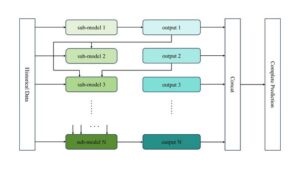
A diagram illustrates the process of cascaded prediction.
Credit: Congqi Cao

Research results

According to the researchers, the model achieved significant improvements in prediction performance, outperforming many mainstream global AI forecasting models. Specifically, the method reduced temperature forecast errors by 9.3%, improved the precipitation F1-score by 6.8% and lowered wind speed errors by 12.5%.

“This is the first time semantic segmentation and learnable noise mechanisms have been used together for regional weather forecasting,” explained Prof. Cao. “It opens up new possibilities for accurate forecasting in other data-scarce regions.”

Looking ahead, the team plans to extend its method to real-time systems and apply it to more regions across China. They state that they hope their work will eventually serve public safety, agriculture and disaster prevention needs – delivering smarter, faster and more local forecasts when they matter most.

In related news, a team of scientists from the IBS Center for Climate Physics (ICCP), Pusan National University in South Korea and the Alfred Wegener Institute, Helmholtz Centre for Polar and Marine Research (AWI) recently created a high-resolution climate model. According to the research, published in the open-access journal Earth System Dynamics, the model provides unprecedented insights into Earth’s future climate and its variability. Read the full story here

Previous ArticleOPINION: Equipping the world with accurate hydrological data
Next Article India unveils 14 meteorological tools as it celebrates 19th anniversary of Ministry of Earth Sciences founding

Read Similar Stories

Climate Measurement

Study identifies atmospheric trigger behind flash droughts in Puerto Rico

April 15, 20263 Mins Read
Satellites

AI tool uses weather satellite data to map ocean currents in near real time

April 14, 20263 Mins Read
Climate Measurement

New tool speeds up climate model evaluation

April 13, 20262 Mins Read
Latest News

Northumbria University secures £4m to study Earth’s radiation belts

April 16, 2026

AI model improves real-time prediction of wildfire spread

April 16, 2026

Study identifies atmospheric trigger behind flash droughts in Puerto Rico

April 15, 2026

Receive breaking stories and features in your inbox each week, for free


Enter your email address:


Supplier Spotlights
  • Raymetrics
Getting in Touch
  • Contact Us / Advertise
  • Meet the Editors
  • Media Pack
  • Free Weekly E-Newsletter
Our Social Channels
  • Facebook
  • LinkedIn
© 2026 UKi Media & Events a division of UKIP Media & Events Ltd
  • Cookie Policy
  • Privacy Policy
  • Terms and Conditions
  • Notice and Takedown Policy

Type above and press Enter to search. Press Esc to cancel.