


Close Menu
Meteorological Technology International
  • News
    • A-E
      • Agriculture
      • Automated Weather Stations
      • Aviation
      • Climate Measurement
      • Data
      • Developing Countries
      • Digital Applications
      • Early Warning Systems
      • Extreme Weather
    • G-P
      • Hydrology
      • Lidar
      • Lightning Detection
      • New Appointments
      • Nowcasting
      • Numerical Weather Prediction
      • Polar Weather
    • R-S
      • Radar
      • Rainfall
      • Remote Sensing
      • Renewable Energy
      • Satellites
      • Solar
      • Space Weather
      • Supercomputers
    • T-Z
      • Training
      • Transport
      • Weather Instruments
      • Wind
      • World Meteorological Organization
      • Meteorological Technology World Expo
  • Features
  • Online Magazines
    • January 2026
    • April 2025
    • January 2025
    • September 2024
    • April 2024
    • Archive Issues
    • Subscribe Free!
  • Opinion
  • Videos
  • Supplier Spotlight
  • Expo
LinkedIn X (Twitter) Facebook
  • Sign-up for Free Weekly E-Newsletter
  • Meet the Editors
  • Contact Us
  • Media Pack
LinkedIn Facebook
Subscribe
Meteorological Technology International
  • News
      • Agriculture
      • Automated Weather Stations
      • Aviation
      • Climate Measurement
      • Data
      • Developing Countries
      • Digital Applications
      • Early Warning Systems
      • Extreme Weather
      • Hydrology
      • Lidar
      • Lightning Detection
      • New Appointments
      • Nowcasting
      • Numerical Weather Prediction
      • Polar Weather
      • Radar
      • Rainfall
      • Remote Sensing
      • Renewable Energy
      • Satellites
      • Solar
      • Space Weather
      • Supercomputers
      • Training
      • Transport
      • Weather Instruments
      • Wind
      • World Meteorological Organization
      • Meteorological Technology World Expo
  • Features
  • Online Magazines
    1. January 2026
    2. September 2025
    3. April 2025
    4. January 2025
    5. September 2024
    6. April 2024
    7. January 2024
    8. September 2023
    9. April 2023
    10. Archive Issues
    11. Subscribe Free!
    Featured
    November 27, 2025

    In this Issue – January 2026

    By Hazel KingNovember 27, 2025
    Recent

    In this Issue – January 2026

    November 27, 2025

    In this Issue – September 2025

    August 11, 2025

    In this Issue – April 2025

    April 15, 2025
  • Opinion
  • Videos
  • Supplier Spotlight
  • Expo
Facebook LinkedIn
Subscribe
Meteorological Technology International
Early Warning Systems

FAMU-FSU College of Engineering creates new research method for extreme weather predictions

Elizabeth BakerBy Elizabeth BakerDecember 11, 20243 Mins Read
Share LinkedIn Facebook Twitter Email
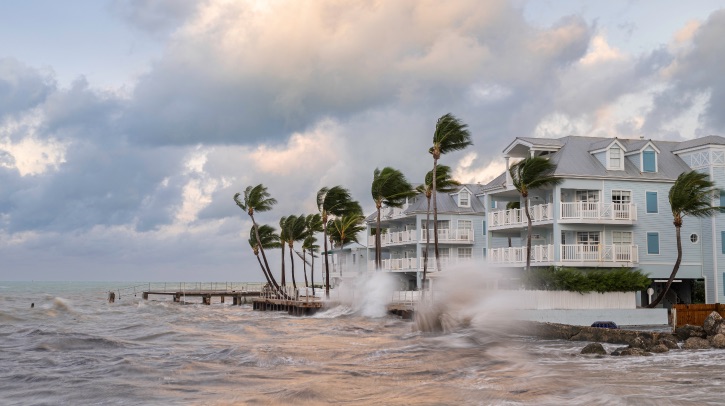
Researchers at the FAMU-FSU College of Engineering have created a new hybrid statistical technique for predicting extreme heat and heavy rainfall in South Florida.
Share
LinkedIn Facebook Twitter Email

Researchers at the FAMU-FSU College of Engineering have created a new hybrid statistical technique for predicting extreme heat and heavy rainfall in South Florida.

According to the research, published in the American Geophysical Union’s Earth’s Future journal, the technique promises more accurate climate predictions for local communities and infrastructure planning.

“Many of the techniques used in climate downscaling and bias correction research are limited in prediction of extreme weather events,” said Ebrahim Ahmadisharaf, lead researcher at the joint college’s Resilient Infrastructure & Disaster Response (RIDER) Center. “They use methods that give us the big picture but have limitations.”

Advancing weather prediction models

The study reveals that while current bias correction techniques effectively predict light and moderate rainfall and average temperatures, they fall short when forecasting extreme weather events. To address this gap, researchers developed a technique called EQM-LIN (empirical quantile mapping with linear correction).

Using data from 20 weather stations across South Florida, the new method combines two statistical approaches to provide more precise climate projections than existing global climate models.

“We found the hybrid technique is especially good at predicting extreme climate variables, namely precipitation and air temperature,” Ahmadisharaf said. “Our projection shows that in the future, South Florida will likely experience slight decreases in precipitation in the summer and an increase in the fall.”

Practical applications

The research has immediate practical value for infrastructure planning and community protection. The technique helps stakeholders identify areas vulnerable to potential flooding and assess at-risk infrastructure.

“The results can bolster the resilience of our infrastructure and local communities against climate-related hazards,” Ahmadisharaf said.

Future directions

The multi-station analysis approach offers a promising framework for understanding and preparing for future climatic challenges, but researchers acknowledged that ongoing refinement of the statistical bias correction technique is necessary. Future studies may incorporate regional climate models for even more precise local projections.

“Further improving the bias correction of extreme events and investigating the structure of compound climatic events under future climate remains a priority,” said lead author and postdoctoral researcher Leila Rahimi.

The project, partially funded by an Everglades Foundation fellowship, will expand beyond South Florida with support from the Pensacola and Perdido Bays Estuary Program (PPBEP) and the National Academies of Sciences, Engineering and Medicine (NASEM).

Collaborative research effort

The study brought together experts from multiple institutions, including FAMU-FSU Engineering’s Civil and Environmental Engineering Department; Florida State University’s Department of Earth, Ocean, and Atmospheric Science; the University of California, Irvine; Oak Ridge National Laboratory; Jackson State University; and the South Florida Water Management District.

In related news, India’s Ministry of Earth Sciences (MoES) has recently begun exploring the integration of AI technologies into weather and climate forecasting systems and physics-based numerical models. Click here to read the full story.

Previous ArticleEUMETSAT’s first Meteosat Third Generation satellite becomes operational
Next Article EXCLUSIVE INTERVIEW: Dr Junhong Wang, WMO

Read Similar Stories

Extreme Weather

AI model improves real-time prediction of wildfire spread

April 16, 20263 Mins Read
Climate Measurement

Study identifies atmospheric trigger behind flash droughts in Puerto Rico

April 15, 20263 Mins Read
Climate Measurement

Regional training aims to improve flood forecasting in Central Africa

April 1, 20263 Mins Read
Latest News

Northumbria University secures £4m to study Earth’s radiation belts

April 16, 2026

AI model improves real-time prediction of wildfire spread

April 16, 2026

Study identifies atmospheric trigger behind flash droughts in Puerto Rico

April 15, 2026

Receive breaking stories and features in your inbox each week, for free


Enter your email address:


Supplier Spotlights
  • EUMETSAT
Getting in Touch
  • Contact Us / Advertise
  • Meet the Editors
  • Media Pack
  • Free Weekly E-Newsletter
Our Social Channels
  • Facebook
  • LinkedIn
© 2026 UKi Media & Events a division of UKIP Media & Events Ltd
  • Cookie Policy
  • Privacy Policy
  • Terms and Conditions
  • Notice and Takedown Policy

Type above and press Enter to search. Press Esc to cancel.