


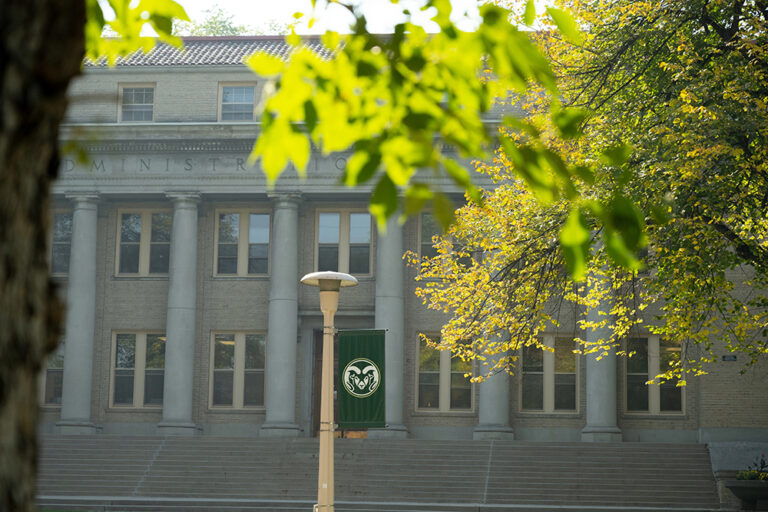
The US National Science Foundation (NSF) has made the Colorado-Wyoming Climate Resilience Engine (CO-WY Engine) an inaugural NSF Regional Innovation Engine (NSF Engines) awardee. The CO-WY Engine will initially receive up to US$15m for the next two years, totalling up to US$160m over 10 years.
The research hub focuses on supporting partnerships to help communities monitor, mitigate and adapt to climate change in the West and beyond. The program focuses on developing measurement and analysis technologies that will help accelerate the adoption of climate and community resiliency solutions. Initial capabilities will be demonstrated in the fields of soil carbon, wildfire resilience, methane quantification, extreme weather and water management. The effort will also help build the workforce needed to implement these solutions.
Partners on the project include the Colorado School of Mines, the University of Wyoming, University of Colorado Boulder, the University of Northern Colorado and the University of Colorado Denver. Workforce development efforts will be led by the community college systems of Colorado and Wyoming, along with Metropolitan State University of Denver and TalentCO. Other support comes from five federal labs, tribal communities, and a collection of industry partners in both states that will be involved in the project.
CSU will play a lead role in project governance, in establishing the technology roadmap, and in working with industry and entrepreneurial partners to accelerate widespread adoption of the solutions developed.
Amy Parsons, president of CSU, said, “The collaborative nature of the large project, the workforce development aspects and the focus on getting solutions out of the lab and into the world matched with the university’s core mission as a land-grant institution. The CO-WY Engine is a groundbreaking opportunity to create impact and address climate adaptation, workforce readiness and community resilience. CSU is honored to engage in this effort with our partners across the region and we look forward to the important work we will accomplish together.”
Northern Colorado-based Innosphere Ventures will lead the CO-WY Engine. CSU and Innosphere have a 25-year partnership around growing the region’s high-tech entrepreneurship ecosystem, including commercialization efforts, incubation programs and supporting founders who are launching science and tech startups.
“The CO-WY Engine will be instrumental in bringing technology-driven solutions to life, growing our two-state economy, and reshaping our region’s approach to climate resilience,” said Mike Freeman, CEO of Innosphere Ventures and incoming CEO for the CO-WY Climate Resilience Engine. “In 10 years, the CO-WY Engine will generate significant economic impact for our region, including 22,000 new climate technology-related jobs, US$1.5bn in regional GDP impact, more than US$1bn in private capital formation, train or reskill more than 2,000 individuals, and distribute US$80m in commercialization grants to startups in the climate technology sector.”
The engine effort includes a distinct community focus. It includes several components to expand regional economic development activity as well as opportunities for stakeholders – particularly under-represented communities – to participate.
Cassandra Moseley, vice president for research at CSU, noted that six of CSU’s colleges were involved in the project proposal, in addition to institutional partners at the Cooperative Institute for Research in the Atmosphere, the Colorado Climate Center, and the Urban Water Innovation Network, among others.
“CSU has vast experience and expertise in translating research into practical solutions that are ready for the field and create tangible impact – particularly when it comes to sustainability,” she said. “Our researchers are looking forward to this opportunity to elevate our connection with our peers and to collaboratively support the entire region’s ability to measure, monitor and predict its changing environment and mitigate potential socioeconomic impacts on our communities.”
Bryan Willson, Energy Institute executive director at CSU, said the new project will continue university-wide efforts to improve the ability to measure, predict, mitigate and adapt to a changing environment. “Energy Institute researchers have a 30-year history of developing solutions in this space and working with partners in industry, government and the non-profit sector to implement the solutions at large scale,” said Willson, who is also a professor in the Department of Mechanical Engineering.
“This interdisciplinary work coming out of the CO-WY Engine will increase the economic viability of carbon and climate solutions and help to educate the workforce of tomorrow that we will need to operate them.”
Read more of the latest climate measurement updates from the meteorological technology industry, here.