


Close Menu
Meteorological Technology International
  • News
    • A-E
      • Agriculture
      • Automated Weather Stations
      • Aviation
      • Climate Measurement
      • Data
      • Developing Countries
      • Digital Applications
      • Early Warning Systems
      • Extreme Weather
    • G-P
      • Hydrology
      • Lidar
      • Lightning Detection
      • New Appointments
      • Nowcasting
      • Numerical Weather Prediction
      • Polar Weather
    • R-S
      • Radar
      • Rainfall
      • Remote Sensing
      • Renewable Energy
      • Satellites
      • Solar
      • Space Weather
      • Supercomputers
    • T-Z
      • Training
      • Transport
      • Weather Instruments
      • Wind
      • World Meteorological Organization
      • Meteorological Technology World Expo
  • Features
  • Online Magazines
    • January 2026
    • April 2025
    • January 2025
    • September 2024
    • April 2024
    • Archive Issues
    • Subscribe Free!
  • Opinion
  • Videos
  • Supplier Spotlight
  • Expo
LinkedIn X (Twitter) Facebook
  • Sign-up for Free Weekly E-Newsletter
  • Meet the Editors
  • Contact Us
  • Media Pack
LinkedIn Facebook
Subscribe
Meteorological Technology International
  • News
      • Agriculture
      • Automated Weather Stations
      • Aviation
      • Climate Measurement
      • Data
      • Developing Countries
      • Digital Applications
      • Early Warning Systems
      • Extreme Weather
      • Hydrology
      • Lidar
      • Lightning Detection
      • New Appointments
      • Nowcasting
      • Numerical Weather Prediction
      • Polar Weather
      • Radar
      • Rainfall
      • Remote Sensing
      • Renewable Energy
      • Satellites
      • Solar
      • Space Weather
      • Supercomputers
      • Training
      • Transport
      • Weather Instruments
      • Wind
      • World Meteorological Organization
      • Meteorological Technology World Expo
  • Features
  • Online Magazines
    1. January 2026
    2. September 2025
    3. April 2025
    4. January 2025
    5. September 2024
    6. April 2024
    7. January 2024
    8. September 2023
    9. April 2023
    10. Archive Issues
    11. Subscribe Free!
    Featured
    November 27, 2025

    In this Issue – January 2026

    By Hazel KingNovember 27, 2025
    Recent

    In this Issue – January 2026

    November 27, 2025

    In this Issue – September 2025

    August 11, 2025

    In this Issue – April 2025

    April 15, 2025
  • Opinion
  • Videos
  • Supplier Spotlight
  • Expo
Facebook LinkedIn
Subscribe
Meteorological Technology International
Extreme Weather

India’s Ministry of Earth Sciences explores AI-powered real-time flood forecasting system

Elizabeth BakerBy Elizabeth BakerNovember 29, 20243 Mins Read
Share LinkedIn Facebook Twitter Email
The Ministry of Earth Sciences (MoES) has begun exploring integrating artificial intelligence (AI) technologies into weather and climate forecasting systems and physics-based numerical models.
Share
LinkedIn Facebook Twitter Email

India’s Ministry of Earth Sciences (MoES) has begun exploring the integration of AI technologies into weather and climate forecasting systems and physics-based numerical models.

This initiative is part of a broader strategy to enhance the accuracy and efficiency of meteorological predictions for various sectors, including agriculture, disaster management and urban planning. This information was given by the Union Minister of State (Independent Charge) for Science & Technology and Earth Science, Dr Jitendra Singh, in a written reply in the Rajya Sabha (the Upper House of the Indian Parliament) today.

Key projects

As part of the initiative, MoES has established a specialized virtual center at the Indian Institute of Tropical Meteorology (IITM) in Pune. This center focuses on leveraging AI, machine learning (ML) and deep learning (DL) techniques to advance Earth sciences. It has reportedly already developed several AI/ML-based applications tailored for localized predictions and the analysis of weather and climate patterns.

Additionally, several research institutes under MoES are working to incorporate AI/ML methodologies into their research activities and operational frameworks. This collaborative approach is intended to ensure a comprehensive application of AI technologies across Earth sciences.

Alongside this, the ministry has taken various steps to strengthen the observational and forecasting infrastructure across the country to improve the monitoring of extreme weather events and weather forecast accuracy. MoES says it has adopted new technologies at various stages, including the augmentation of observational networks, numerical AI-ML modeling, forecasting methodology, visualization and dissemination of forecasts and warnings to various stakeholders.

Updating infrastructure

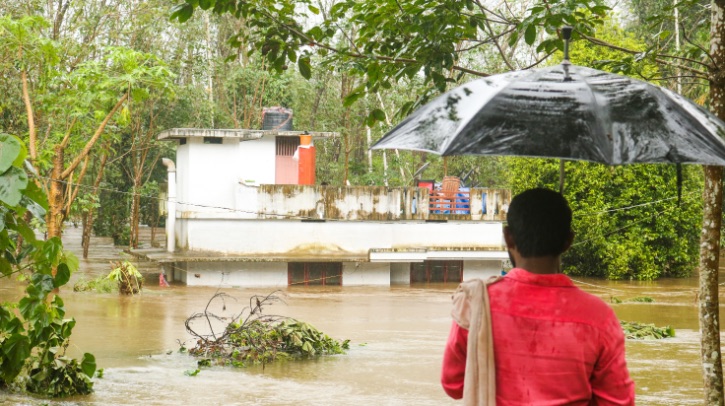
As a part of non-structural flood management, the Central Water Commission (CWC) issues station-specific flood forecasts to concerned stakeholders at identified river locations. This includes inflow forecasts at identified reservoirs for proper reservoir regulation.

Flood forecasts are issued by CWC at 340 stations (140 inflow forecast stations + 200 level forecast stations) as per standard operating procedure (SOP). The network has been established in consultation with state government/project authorities and also includes stations on the river passing through/nearby metropolitan cities. The dissemination of flood forecasts is done through a dedicated website. In addition to short-range forecasts, CWC prepares seven-day advisory flood forecasts through basin-specific mathematical models using India Meteorological Department (IMD) weather forecast products and near-real-time satellite rainfall estimates. These flood advisories are disseminated through the web portal for stakeholders.

Currently, 39 Doppler weather radars (DWRs) are installed at various locations across the country to help with round-the-clock weather monitoring and forecasting. Further augmentation of the observational network is envisaged to strengthen the weather research and forecasting infrastructure.

In related news, the India Meteorological Department (IMD) has launched gram panchayat-level weather forecasts. A gram panchayat is a village council. Click here to read the full story.

Previous ArticleVIDEO: R2Home displays reusable radiosonde gliders
Next Article Finnish Meteorological Institute to cut €4.4m before 2025

Read Similar Stories

Extreme Weather

AI model improves real-time prediction of wildfire spread

April 16, 20263 Mins Read
Climate Measurement

Study identifies atmospheric trigger behind flash droughts in Puerto Rico

April 15, 20263 Mins Read
Climate Measurement

Regional training aims to improve flood forecasting in Central Africa

April 1, 20263 Mins Read
Latest News

Northumbria University secures £4m to study Earth’s radiation belts

April 16, 2026

AI model improves real-time prediction of wildfire spread

April 16, 2026

Study identifies atmospheric trigger behind flash droughts in Puerto Rico

April 15, 2026

Receive breaking stories and features in your inbox each week, for free


Enter your email address:


Supplier Spotlights
  • Sommer GmbH
Getting in Touch
  • Contact Us / Advertise
  • Meet the Editors
  • Media Pack
  • Free Weekly E-Newsletter
Our Social Channels
  • Facebook
  • LinkedIn
© 2026 UKi Media & Events a division of UKIP Media & Events Ltd
  • Cookie Policy
  • Privacy Policy
  • Terms and Conditions
  • Notice and Takedown Policy

Type above and press Enter to search. Press Esc to cancel.