


Close Menu
Meteorological Technology International
  • News
    • A-E
      • Agriculture
      • Automated Weather Stations
      • Aviation
      • Climate Measurement
      • Data
      • Developing Countries
      • Digital Applications
      • Early Warning Systems
      • Extreme Weather
    • G-P
      • Hydrology
      • Lidar
      • Lightning Detection
      • New Appointments
      • Nowcasting
      • Numerical Weather Prediction
      • Polar Weather
    • R-S
      • Radar
      • Rainfall
      • Remote Sensing
      • Renewable Energy
      • Satellites
      • Solar
      • Space Weather
      • Supercomputers
    • T-Z
      • Training
      • Transport
      • Weather Instruments
      • Wind
      • World Meteorological Organization
      • Meteorological Technology World Expo
  • Features
  • Online Magazines
    • January 2026
    • April 2025
    • January 2025
    • September 2024
    • April 2024
    • Archive Issues
    • Subscribe Free!
  • Opinion
  • Videos
  • Supplier Spotlight
  • Expo
LinkedIn X (Twitter) Facebook
  • Sign-up for Free Weekly E-Newsletter
  • Meet the Editors
  • Contact Us
  • Media Pack
LinkedIn Facebook
Subscribe
Meteorological Technology International
  • News
      • Agriculture
      • Automated Weather Stations
      • Aviation
      • Climate Measurement
      • Data
      • Developing Countries
      • Digital Applications
      • Early Warning Systems
      • Extreme Weather
      • Hydrology
      • Lidar
      • Lightning Detection
      • New Appointments
      • Nowcasting
      • Numerical Weather Prediction
      • Polar Weather
      • Radar
      • Rainfall
      • Remote Sensing
      • Renewable Energy
      • Satellites
      • Solar
      • Space Weather
      • Supercomputers
      • Training
      • Transport
      • Weather Instruments
      • Wind
      • World Meteorological Organization
      • Meteorological Technology World Expo
  • Features
  • Online Magazines
    1. January 2026
    2. September 2025
    3. April 2025
    4. January 2025
    5. September 2024
    6. April 2024
    7. January 2024
    8. September 2023
    9. April 2023
    10. Archive Issues
    11. Subscribe Free!
    Featured
    November 27, 2025

    In this Issue – January 2026

    By Hazel KingNovember 27, 2025
    Recent

    In this Issue – January 2026

    November 27, 2025

    In this Issue – September 2025

    August 11, 2025

    In this Issue – April 2025

    April 15, 2025
  • Opinion
  • Videos
  • Supplier Spotlight
  • Expo
Facebook LinkedIn
Subscribe
Meteorological Technology International
Early Warning Systems

Shanghai’s MAZU-Urban early warning system rolls out globally

Alex PackBy Alex PackNovember 24, 20253 Mins Read
Share LinkedIn Facebook Twitter Email
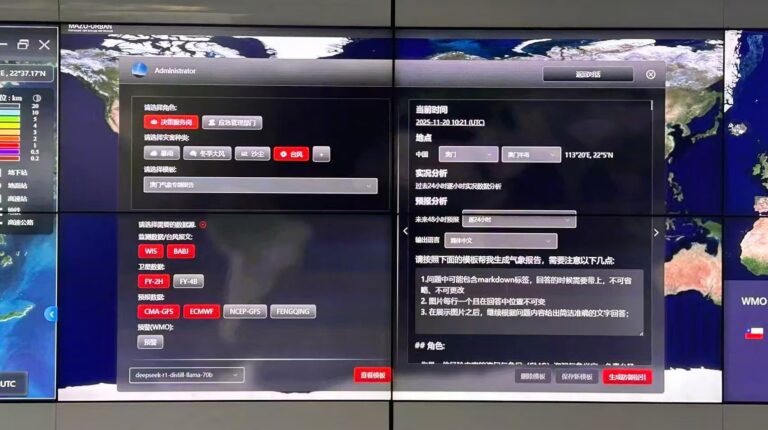
Shanghai’s MAZU-Urban early warning system rolls out globally.
The interface of MAZU-Urban. Credit: CMA
Share
LinkedIn Facebook Twitter Email

The China Meteorological Administration (CMA) has launched a new AI-driven multi-hazard early warning system, MAZU-Urban, which it says is a ‘joint action’ for the UN’s Early Warnings for All initiative. It is intended to create an “early warning service network” and share “practical experience and technological achievements” with global partners.

The MAZU framework aims to support global progress toward the UN goal of universal early-warning coverage by sharing China’s operational experience, tools and digital technologies with international partners. As part of the launch, CMA has donated the MAZU-Urban system to meteorological representatives from Djibouti and Mongolia.

Developed by the Shanghai Meteorological Service together with the National Meteorological Centre, China Unicom Shanghai, the Shanghai Academy for Science and Intelligence, the Shanghai Artificial Intelligence Laboratory and others, MAZU-Urban integrates advanced algorithms, multisource data, cloud-based early warning system products and meteorological open-source models. It also incorporates an Africa-region numerical model developed in Shanghai.

The platform combines knowledge-enhanced AI, multimodal data fusion and deep reasoning techniques to produce region-specific forecast and warning products. It supports the full warning chain, including risk knowledge, monitoring and early warning, warning dissemination and emergency response.

In response to the practical needs of regions such as Macao, China and Mongolia, the R&D team developed role-specific and hazard-specific workflow prompts for disaster prevention and mitigation guidelines. These guide large language models to engage in in-depth reasoning and dynamically generate preventive strategies tailored to local conditions.

MAZU-Urban uses a “three-terminal integrated” architecture:

  • An all-in-one machine for professional decision-makers;
  • A tablet interface tailored to sectors such as ports and shipping;
  • A mobile terminal that reaches the public, delivering intelligent Q&A services, disaster alerts and evacuation guidance.

The system has been in trial operation since January 2025 in 35 countries and territories across Asia, Africa and Oceania.

At the 2025 SDG Cities Global Conference, the Shanghai Meteorological Service outlined a new international co-construction plan for MAZU-Urban. Within China, the platform is also being expanded into climate-related health applications. In Shanghai’s Fengxian District, meteorological and health agencies are jointly developing risk forecasts for cardiovascular and cerebrovascular diseases under a new Health + Meteorology project.

A district-level climate-related health risk monitoring and assessment platform has been established to display real-time disease risk levels, high-risk population trends and localized hazard information, providing a reference for government and industry regulatory departments to assess and respond to future health risks.

In related news, CMA launches first AI-powered meteorological service

Previous ArticleGoogle launches its most advanced AI forecasting model – WeatherNext 2
Next Article MetOp-SG-B1 satellite enters third round of pre-launch tests ahead of 2026 launch

Read Similar Stories

Climate Measurement

Regional training aims to improve flood forecasting in Central Africa

April 1, 20263 Mins Read
Early Warning Systems

European Commission sets out strategy to address growing wildfire risk

March 31, 20263 Mins Read
Rainfall

New research to improve flash flood warnings in rural Virginia

March 17, 20263 Mins Read
Latest News

Northumbria University secures £4m to study Earth’s radiation belts

April 16, 2026

AI model improves real-time prediction of wildfire spread

April 16, 2026

Study identifies atmospheric trigger behind flash droughts in Puerto Rico

April 15, 2026

Receive breaking stories and features in your inbox each week, for free


Enter your email address:


Supplier Spotlights
  • ROTRONIC AG
Getting in Touch
  • Contact Us / Advertise
  • Meet the Editors
  • Media Pack
  • Free Weekly E-Newsletter
Our Social Channels
  • Facebook
  • LinkedIn
© 2026 UKi Media & Events a division of UKIP Media & Events Ltd
  • Cookie Policy
  • Privacy Policy
  • Terms and Conditions
  • Notice and Takedown Policy

Type above and press Enter to search. Press Esc to cancel.