

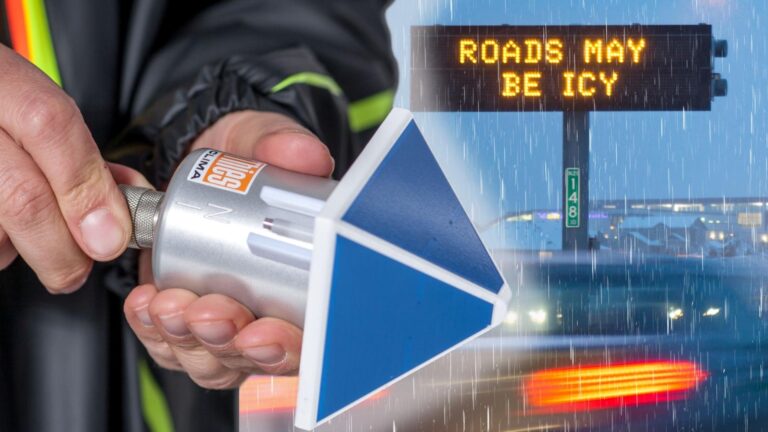
Thies Clima has launched the Thies Clima Precipitation Analyzer, which uses solid-liquid precipitation analysis technology to inform safety measures for black ice.
Freezing rain (colloquially known as black ice) is a meteorological phenomenon in which raindrops fall through a layer of air close to the ground whose temperature is less than 0°C. If the precipitation does not crystallize but cools down to below 0°C without a phase change, it is called supercooled precipitation. When such liquid precipitation hits the ground, black ice forms. It occurs as supercooled fog, super-cooled drizzle and supercooled rain (FZFG, FZDZ, FZRA).
The Precipitation Analyzer is suitable for early warning systems in applications where icing is a safety risk. With its method for early detection, the device contributes to efficient winter maintenance and the timely initiation of safety measures.
With the technology, it can detect and measure different types of precipitation, especially supercooled precipitation. With its pyramidal measuring surface made of special ceramic material and resistant glass coating, precise surface temperatures are recorded. The analyzer uses the evaluation of temperature peaks to detect crystallization heat and the changing dielectric properties of water and ice as measuring principles. This enables users to accurately distinguish and quantify precipitation events, including phase changes. The instrument was developed and tested in cooperation with the German Weather Service (DWD) for use at airports.
The precipitation analysis recognizes all precipitation types, intensities, wetting phases and phase changes, for example, freezing fog (FZFG), freezing drizzle (FZDZ), freezing rain (FZRA), black ice supercooled water on the sensor, hail, ice, drizzle, rain, sleet, dew, hoarfrost. It has four sensor surfaces whose electrical capacitance changes upon wetting. This is combined with a calorimetric measurement method in which the released crystallization heat is measured and evaluated as a characteristic temperature increase. In addition, the capacitance of the device is determined at several frequencies, which makes it possible to distinguish between solid and liquid wetting of the device. By using these measurement principles, such as the evaluation of characteristic temperature peaks and the changing dielectric properties of water and ice, the precipitation analyzer offers a new method to distinguish and quantify solid and liquid precipitation events, especially supercooled precipitation components.
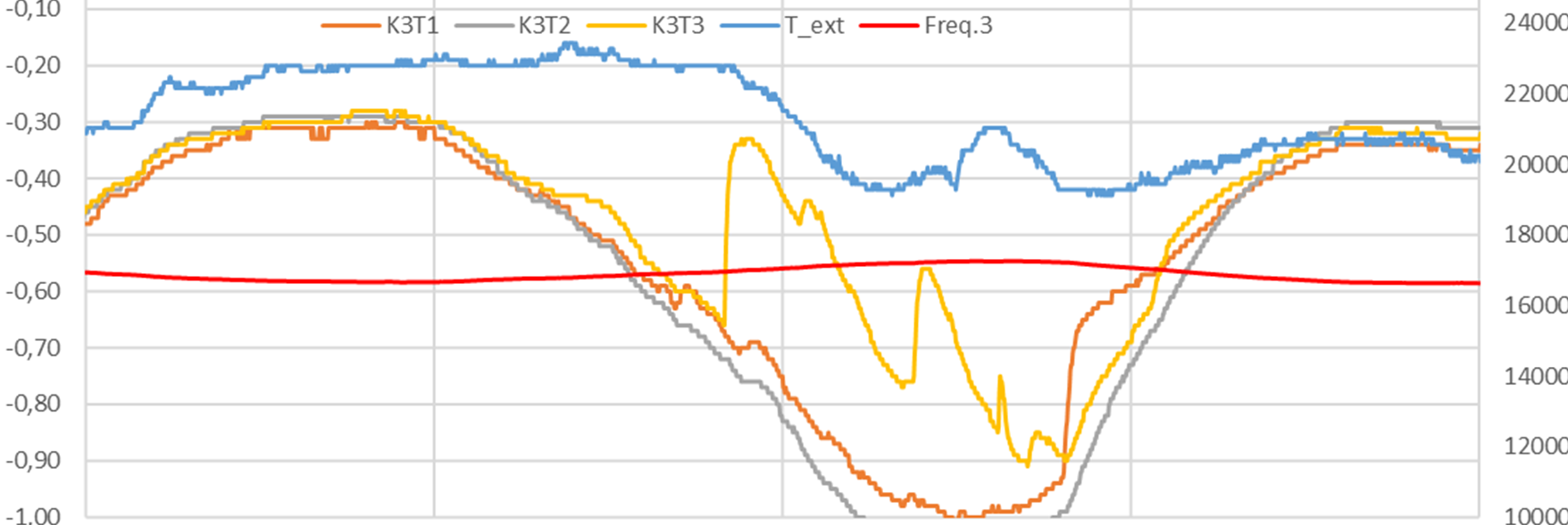
Additionally, not only the precipitation amount and intensity are recorded, but also phase changes during the precipitation process are precisely determined. The temperature peak detection identifies even the smallest supercooled precipitation components in otherwise normal-appearing precipitation events and thus warns of the acute danger of slippery conditions, e.g. freezing rain and sleet. The device indicates impending icing even before the dangerous formation of black ice by reliably detecting supercooled liquid components on the sensor.
The Thies Clima Precipitation Analyzer enables automated METAR Code issuance of supercooled precipitation (FZRA, FZDZ, FZFG). This technology, which safely warns of icing hazards on wings and on the tarmac in air traffic, also lends itself to economical icing warning in the following applications:
- The technology warns in real time of icing hazards on roads, bridges, shipping routes, and ports.
- Timely icing warnings enable the protection of wind turbines and power lines from structural damage.
- Black ice warnings provide real-time protection from hazards by giving fast and accurate detection for timely warning of slippery roads, and fractures in trees and buildings.
- Its precise warnings enable rapid initiation of protective measures (clearing services, closures, etc.) and avoid damage.
The Precipitation Analyzer extends existing smart weather stations’ data on sub-freezing precipitation fractions and black ice.
Read more of the latest weather instruments updates from the meteorological technology industry, here.