


Close Menu
Meteorological Technology International
  • News
    • A-E
      • Agriculture
      • Automated Weather Stations
      • Aviation
      • Climate Measurement
      • Data
      • Developing Countries
      • Digital Applications
      • Early Warning Systems
      • Extreme Weather
    • G-P
      • Hydrology
      • Lidar
      • Lightning Detection
      • New Appointments
      • Nowcasting
      • Numerical Weather Prediction
      • Polar Weather
    • R-S
      • Radar
      • Rainfall
      • Remote Sensing
      • Renewable Energy
      • Satellites
      • Solar
      • Space Weather
      • Supercomputers
    • T-Z
      • Training
      • Transport
      • Weather Instruments
      • Wind
      • World Meteorological Organization
      • Meteorological Technology World Expo
  • Features
  • Online Magazines
    • January 2026
    • April 2025
    • January 2025
    • September 2024
    • April 2024
    • Archive Issues
    • Subscribe Free!
  • Opinion
  • Videos
  • Supplier Spotlight
  • Expo
LinkedIn X (Twitter) Facebook
  • Sign-up for Free Weekly E-Newsletter
  • Meet the Editors
  • Contact Us
  • Media Pack
LinkedIn Facebook
Subscribe
Meteorological Technology International
  • News
      • Agriculture
      • Automated Weather Stations
      • Aviation
      • Climate Measurement
      • Data
      • Developing Countries
      • Digital Applications
      • Early Warning Systems
      • Extreme Weather
      • Hydrology
      • Lidar
      • Lightning Detection
      • New Appointments
      • Nowcasting
      • Numerical Weather Prediction
      • Polar Weather
      • Radar
      • Rainfall
      • Remote Sensing
      • Renewable Energy
      • Satellites
      • Solar
      • Space Weather
      • Supercomputers
      • Training
      • Transport
      • Weather Instruments
      • Wind
      • World Meteorological Organization
      • Meteorological Technology World Expo
  • Features
  • Online Magazines
    1. January 2026
    2. September 2025
    3. April 2025
    4. January 2025
    5. September 2024
    6. April 2024
    7. January 2024
    8. September 2023
    9. April 2023
    10. Archive Issues
    11. Subscribe Free!
    Featured
    November 27, 2025

    In this Issue – January 2026

    By Hazel KingNovember 27, 2025
    Recent

    In this Issue – January 2026

    November 27, 2025

    In this Issue – September 2025

    August 11, 2025

    In this Issue – April 2025

    April 15, 2025
  • Opinion
  • Videos
  • Supplier Spotlight
  • Expo
Facebook LinkedIn
Subscribe
Meteorological Technology International
World Meteorological Organization

“Concrete actions” needed to save future generations, warns WMO chief

Dan SymondsBy Dan SymondsApril 7, 20224 Mins Read
Share LinkedIn Facebook Twitter Email
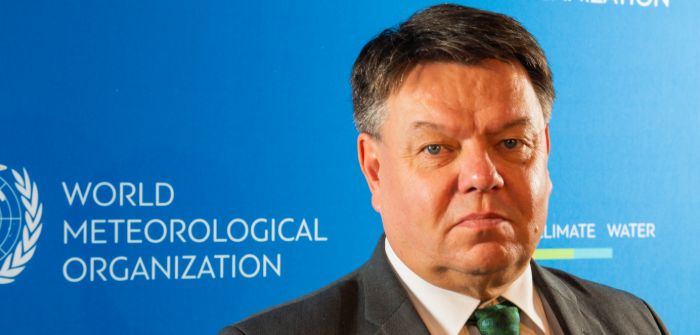
Petteri Taalas, WMO secretary-general - credit: WMO
Share
LinkedIn Facebook Twitter Email

Without immediate and deep emissions reductions across all sectors, limiting global warming to 1.5°C is beyond reach, warns the latest Intergovernmental Panel on Climate Change (IPCC) report.

However, the report did find increasing evidence of climate action. In 2010-2019 average annual global greenhouse gas emissions were at their highest levels in human history, but the rate of growth has slowed. Since 2010, there have been sustained decreases of up to 85% in the costs of solar and wind energy, and batteries. An increasing range of policies and laws have enhanced energy efficiency, reduced rates of deforestation, and accelerated the deployment of renewable energy, according to the report.

Hoesung Lee, IPCC chair, said, “We are at a crossroads. The decisions we make now can secure a livable future. We have the tools and know-how required to limit warming. I am encouraged by climate action being taken in many countries. There are policies, regulations and market instruments that are proving effective. If these are scaled up and applied more widely and equitably, they can support deep emissions reductions and stimulate innovation.”

The Summary for Policymakers of the IPCC Working Group III report Climate Change 2022: Mitigation of Climate Change was approved on April 4, 2022, by 195 member governments of the IPCC, through a virtual approval session. It is the third instalment of the IPCC’s Sixth Assessment Report (AR6) and follows reports on the physical science basis and on impacts and adaptation.

United Nations Secretary-General António Guterres said the latest report was “a litany of broken climate promises … a file of shame.”

“Choices made by countries now will make or break the commitment to 1.5°C. A shift to renewables will mend our broken global energy mix and offer hope to millions of people suffering climate impacts today. Climate promises and plans must be turned into reality and action, now. It is time to stop burning our planet and start investing in the abundant renewable energy all around us,” he said.

Prof. Petteri Taalas, WMO secretary-general, said the IPCC reports showed that every corner of Earth is already affected by climate change and that every region in the world has an impact on climate change problem today. “To conclude we have two urgent challenges ahead of us. Adaptation and mitigation. Financing, visionary political initiatives and concrete actions are needed for the sake of the welfare of current and future generations and our biosphere,” he said.

According to the report, limiting global warming will require major transitions in the energy sector. This will involve a substantial reduction in fossil fuel use, widespread electrification, improved energy efficiency, and use of alternative fuels (such as hydrogen).

In the scenarios assessed, limiting warming to around 1.5°C (2.7°F) requires global greenhouse gas emissions to peak before 2025 at the latest, and be reduced by 43% by 2030. At the same time, methane would also need to be reduced by about a third. However, even if this is achieved, it is almost inevitable that this temperature threshold will be exceeded but that a return to below it could be achieved by the end of the century.

Jim Skea, IPCC Working Group III co-chair, said, “It’s now or never, if we want to limit global warming to 1.5°C (2.7°F). Without immediate and deep emissions reductions across all sectors, it will be impossible.”

The report states that the global temperature will stabilize when carbon dioxide emissions reach net zero. For 1.5°C (2.7°F), this means achieving net-zero carbon dioxide emissions globally in the early 2050s; for 2°C (3.6°F), it is in the early 2070s.

The assessment shows that limiting warming to around 2°C (3.6°F) still requires global greenhouse gas emissions to peak before 2025 at the latest, and be reduced by a quarter by 2030.

To read the full IPCC report, click here.

Previous ArticleResearch uses ocean modeling to demonstrate link between GHGs and rising sea levels
Next Article Vaisala achieves fifth place in Financial Times’s Climate Leaders 2022 list

Read Similar Stories

Extreme Weather

AI model improves real-time prediction of wildfire spread

April 16, 20263 Mins Read
Climate Measurement

Study identifies atmospheric trigger behind flash droughts in Puerto Rico

April 15, 20263 Mins Read
Satellites

AI tool uses weather satellite data to map ocean currents in near real time

April 14, 20263 Mins Read
Latest News

Northumbria University secures £4m to study Earth’s radiation belts

April 16, 2026

AI model improves real-time prediction of wildfire spread

April 16, 2026

Study identifies atmospheric trigger behind flash droughts in Puerto Rico

April 15, 2026

Receive breaking stories and features in your inbox each week, for free


Enter your email address:


Supplier Spotlights
  • REMTECH
Getting in Touch
  • Contact Us / Advertise
  • Meet the Editors
  • Media Pack
  • Free Weekly E-Newsletter
Our Social Channels
  • Facebook
  • LinkedIn
© 2026 UKi Media & Events a division of UKIP Media & Events Ltd
  • Cookie Policy
  • Privacy Policy
  • Terms and Conditions
  • Notice and Takedown Policy

Type above and press Enter to search. Press Esc to cancel.