


Close Menu
Meteorological Technology International
  • News
    • A-E
      • Agriculture
      • Automated Weather Stations
      • Aviation
      • Climate Measurement
      • Data
      • Developing Countries
      • Digital Applications
      • Early Warning Systems
      • Extreme Weather
    • G-P
      • Hydrology
      • Lidar
      • Lightning Detection
      • New Appointments
      • Nowcasting
      • Numerical Weather Prediction
      • Polar Weather
    • R-S
      • Radar
      • Rainfall
      • Remote Sensing
      • Renewable Energy
      • Satellites
      • Solar
      • Space Weather
      • Supercomputers
    • T-Z
      • Training
      • Transport
      • Weather Instruments
      • Wind
      • World Meteorological Organization
      • Meteorological Technology World Expo
  • Features
  • Online Magazines
    • January 2026
    • April 2025
    • January 2025
    • September 2024
    • April 2024
    • Archive Issues
    • Subscribe Free!
  • Opinion
  • Videos
  • Supplier Spotlight
  • Expo
LinkedIn X (Twitter) Facebook
  • Sign-up for Free Weekly E-Newsletter
  • Meet the Editors
  • Contact Us
  • Media Pack
LinkedIn Facebook
Subscribe
Meteorological Technology International
  • News
      • Agriculture
      • Automated Weather Stations
      • Aviation
      • Climate Measurement
      • Data
      • Developing Countries
      • Digital Applications
      • Early Warning Systems
      • Extreme Weather
      • Hydrology
      • Lidar
      • Lightning Detection
      • New Appointments
      • Nowcasting
      • Numerical Weather Prediction
      • Polar Weather
      • Radar
      • Rainfall
      • Remote Sensing
      • Renewable Energy
      • Satellites
      • Solar
      • Space Weather
      • Supercomputers
      • Training
      • Transport
      • Weather Instruments
      • Wind
      • World Meteorological Organization
      • Meteorological Technology World Expo
  • Features
  • Online Magazines
    1. January 2026
    2. September 2025
    3. April 2025
    4. January 2025
    5. September 2024
    6. April 2024
    7. January 2024
    8. September 2023
    9. April 2023
    10. Archive Issues
    11. Subscribe Free!
    Featured
    November 27, 2025

    In this Issue – January 2026

    By Hazel KingNovember 27, 2025
    Recent

    In this Issue – January 2026

    November 27, 2025

    In this Issue – September 2025

    August 11, 2025

    In this Issue – April 2025

    April 15, 2025
  • Opinion
  • Videos
  • Supplier Spotlight
  • Expo
Facebook LinkedIn
Subscribe
Meteorological Technology International
Data

NASA completes spacecraft for TRACERS solar wind mission

Elizabeth BakerBy Elizabeth BakerNovember 20, 20244 Mins Read
Share LinkedIn Facebook Twitter Email
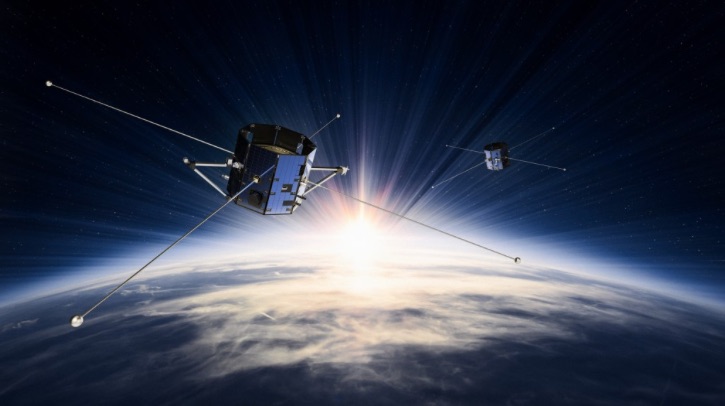
The twin spacecraft of NASA’s TRACERS (Tandem Reconnection and Cusp Electrodynamics Reconnaissance Satellites) mission have been completed, in preparation for launch in 2025.
An artist’s concept depicts NASA’s Tandem Reconnection and Cusp Electrodynamics Reconnaissance Satellites (TRACERS) satellites in space. TRACERS will fly through Earth’s magnetic cusp to study magnetic interactions between Earth and the solar wind. Credit: Millennium Space Systems
Share
LinkedIn Facebook Twitter Email

The twin spacecraft for NASA’s TRACERS (Tandem Reconnection and Cusp Electrodynamics Reconnaissance Satellites) mission have recently been completed, in preparation for launch in 2025.

Satellite construction

The TRACERS mission is led by David Miles at the University of Iowa and managed by the Southwest Research Institute in San Antonio. NASA’s Heliophysics Explorers Program Office at the agency’s Goddard Space Flight Center in Greenbelt, Maryland, provides mission oversight to the project for the agency’s Heliophysics Division at NASA Headquarters in Washington.

Millennium Space Systems, a Boeing company, finished building the two satellites for the TRACERS mission in October 2024. The team is completing the integration of the TRACERS instruments, and the two satellites will then enter the testing phase. Once testing is completed, the spacecraft will be shipped to Vandenberg Space Force Base in California for integration with the launch vehicle.
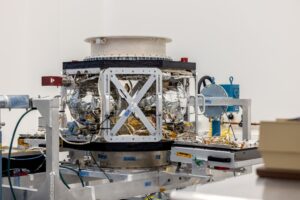
A completed satellite for the TRACERS mission sits on a support structure in a clean room. Credit: Millennium Space Systems

“It’s exciting to see the TRACERS instruments and the two spacecraft come together. The team is making excellent progress toward launch,” said David Miles, TRACERS principal investigator at the University of Iowa in Iowa City.

The mission successfully passed a critical review, called Key Decision Point D, on August 8, 2024, preparing TRACERS to achieve a target launch readiness date no earlier than April 2025. With the successful review, TRACERS moved into Phase D, the official transition from the mission’s development stage to the delivery of the spacecraft, testing, assembly and integration into the launch vehicle in preparation for launch.

“This team has been truly incredible,” said Skyler Kleinschmidt, TRACERS program executive at NASA Headquarters in Washington. “Building a spacecraft is never easy, but seeing the team work together through all of the challenges that they have encountered is inspiring.”

Research goals

The TRACERS mission is a pair of satellites that will study how the solar wind, the continuous stream of ionized particles escaping the sun and pouring out into space, interacts with Earth’s magnetosphere, the region around Earth dominated by our planet’s magnetic field. The mission will help answer questions about how the sun influences Earth, and ultimately drives space weather that affects technology and communications.

Specifically, TRACERS will study the phenomenon of magnetic reconnection, an explosive transfer of energy that can happen when two magnetic fields meet.

Magnetic reconnection happens throughout space but is of particular relevance to us where the solar wind first meets Earth’s magnetosphere, a region known as the magnetopause. A reconnection event can shoot solar wind particles, normally diverted around Earth, directly into our atmosphere at high speeds. These particles ignite the northern and southern lights, known as aurora, and help drive space weather on Earth. The researchers at NASA highlight that understanding space weather patterns is paramount in the world’s increasingly technologically driven society, as space weather events can affect our power grids and communications satellites, and create potentially hazardous conditions for astronauts.

To study magnetic reconnection at Earth’s magnetopause, TRACERS’ twin satellites will fly in tandem – one behind the other – through the polar cusps, funnel-shaped regions where Earth’s magnetic field opens over the north and south poles. This will enable scientists to observe how quickly reconnection changes and evolves by comparing data collected by each satellite.

In related news, NASA’s Jet Propulsion Laboratory recently awarded a concept study contract to Spire Global to develop space-based capabilities for a wildfire early detection warning and active monitoring system. Spire will partner with OroraTech, a space-based thermal intelligence company, to design a comprehensive and scalable solution. Click here to read the full story.

Previous ArticleVaisala releases radiosonde soundings cybersecurity solution
Next Article Australia and Japan to expand meteorological satellite collaboration

Read Similar Stories

Space Weather

Northumbria University secures £4m to study Earth’s radiation belts

April 16, 20262 Mins Read
Extreme Weather

AI model improves real-time prediction of wildfire spread

April 16, 20263 Mins Read
Satellites

AI tool uses weather satellite data to map ocean currents in near real time

April 14, 20263 Mins Read
Latest News

Northumbria University secures £4m to study Earth’s radiation belts

April 16, 2026

AI model improves real-time prediction of wildfire spread

April 16, 2026

Study identifies atmospheric trigger behind flash droughts in Puerto Rico

April 15, 2026

Receive breaking stories and features in your inbox each week, for free


Enter your email address:


Supplier Spotlights
  • GAMIC GmbH
Getting in Touch
  • Contact Us / Advertise
  • Meet the Editors
  • Media Pack
  • Free Weekly E-Newsletter
Our Social Channels
  • Facebook
  • LinkedIn
© 2026 UKi Media & Events a division of UKIP Media & Events Ltd
  • Cookie Policy
  • Privacy Policy
  • Terms and Conditions
  • Notice and Takedown Policy

Type above and press Enter to search. Press Esc to cancel.