


Close Menu
Meteorological Technology International
  • News
    • A-E
      • Agriculture
      • Automated Weather Stations
      • Aviation
      • Climate Measurement
      • Data
      • Developing Countries
      • Digital Applications
      • Early Warning Systems
      • Extreme Weather
    • G-P
      • Hydrology
      • Lidar
      • Lightning Detection
      • New Appointments
      • Nowcasting
      • Numerical Weather Prediction
      • Polar Weather
    • R-S
      • Radar
      • Rainfall
      • Remote Sensing
      • Renewable Energy
      • Satellites
      • Solar
      • Space Weather
      • Supercomputers
    • T-Z
      • Training
      • Transport
      • Weather Instruments
      • Wind
      • World Meteorological Organization
      • Meteorological Technology World Expo
  • Features
  • Online Magazines
    • January 2026
    • April 2025
    • January 2025
    • September 2024
    • April 2024
    • Archive Issues
    • Subscribe Free!
  • Opinion
  • Videos
  • Supplier Spotlight
  • Expo
LinkedIn X (Twitter) Facebook
  • Sign-up for Free Weekly E-Newsletter
  • Meet the Editors
  • Contact Us
  • Media Pack
LinkedIn Facebook
Subscribe
Meteorological Technology International
  • News
      • Agriculture
      • Automated Weather Stations
      • Aviation
      • Climate Measurement
      • Data
      • Developing Countries
      • Digital Applications
      • Early Warning Systems
      • Extreme Weather
      • Hydrology
      • Lidar
      • Lightning Detection
      • New Appointments
      • Nowcasting
      • Numerical Weather Prediction
      • Polar Weather
      • Radar
      • Rainfall
      • Remote Sensing
      • Renewable Energy
      • Satellites
      • Solar
      • Space Weather
      • Supercomputers
      • Training
      • Transport
      • Weather Instruments
      • Wind
      • World Meteorological Organization
      • Meteorological Technology World Expo
  • Features
  • Online Magazines
    1. January 2026
    2. September 2025
    3. April 2025
    4. January 2025
    5. September 2024
    6. April 2024
    7. January 2024
    8. September 2023
    9. April 2023
    10. Archive Issues
    11. Subscribe Free!
    Featured
    November 27, 2025

    In this Issue – January 2026

    By Hazel KingNovember 27, 2025
    Recent

    In this Issue – January 2026

    November 27, 2025

    In this Issue – September 2025

    August 11, 2025

    In this Issue – April 2025

    April 15, 2025
  • Opinion
  • Videos
  • Supplier Spotlight
  • Expo
Facebook LinkedIn
Subscribe
Meteorological Technology International
Rainfall

Poorest populations to bear brunt of future heat waves

Dan SymondsBy Dan SymondsFebruary 11, 20222 Mins Read
Share LinkedIn Facebook Twitter Email
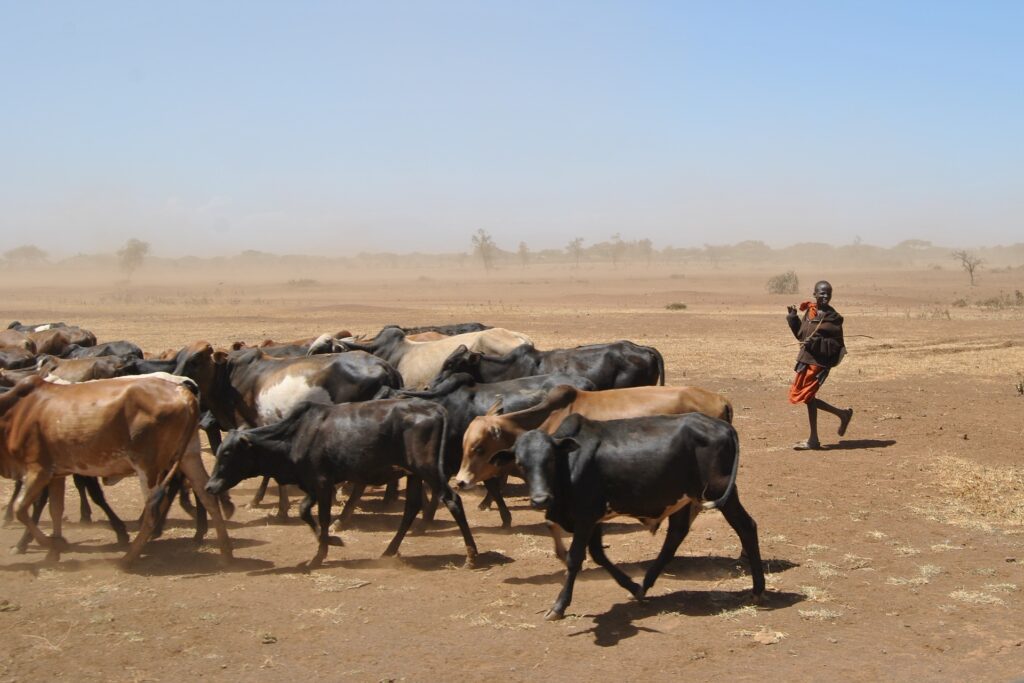
People and ecosystems least able to cope with climate change are being the hardest hit, according to the latest IPCC report - Credit: Pixabay
Share
LinkedIn Facebook Twitter Email

Lower income populations currently face a 40% higher exposure to heat waves than people with higher incomes, and this inequality is expected to rise as temperatures increase, according to a new study.

By the end of the century, the poorest 25% of the world’s population will be exposed to heat waves at a rate equivalent to the rest of the population combined.

Poorer populations may be hit with a one-two punch of more heat waves from climate change due to their location and a lack of access to heat adaptations such as air conditioning.

The study analyzed historical income data, climate records and heat adaptations to quantify the level of heat wave exposure that people in different income levels face around the world. Exposure to heat waves was measured by the number of people exposed to heat waves times the number of heat wave days. Researchers paired those observations with climate models to predict how exposure will change over the next eight decades.
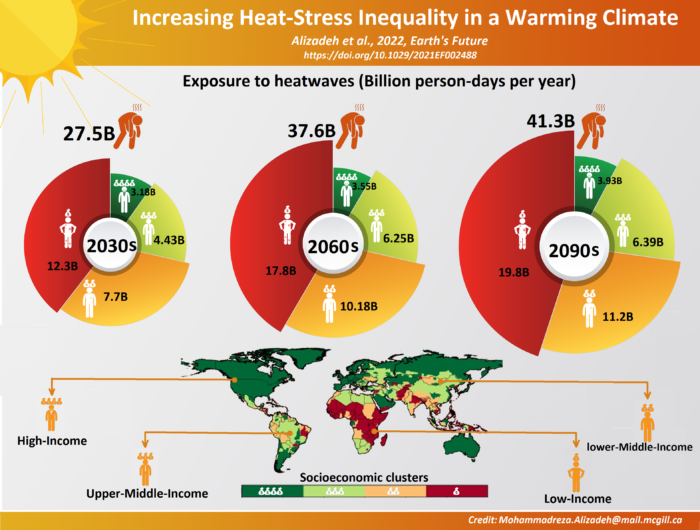
Credit: Mohammad Reza Alizadeh (CC BY 4.0)

Published in the AGU journal Earth’s Future, the study found the lowest-income quarter of the world’s population will face a pronounced increase in exposure to heat waves by 2100, even taking into account access to air conditioning, cool air shelters, safety regulations for outdoor workers and heat safety awareness campaigns. The highest-income quarter, comparatively, will experience little change in exposure as their ability to keep up with climate change is generally greater.

People in the lowest-income population quarter will face 23 more days of heat waves per year than those in the highest income quarters by 2100. Many populous, low-income regions are in the already-warm tropics, and their populations are expected to grow, contributing to the discrepancies in heat wave exposure.

Mojtaba Sadegh, lead author and a climatologist at Boise State University, said, “We expected to see a discrepancy, but seeing one quarter of the world facing as much exposure as the other three quarters combined… that was surprising.”

Sadegh hopes the study will prompt innovations into affordable, energy-efficient cooling solutions as well as highlight the need for short-term solutions. “We need to raise awareness of dangers and heat safety, and to improve early warning systems — and access to those early warning systems,” he said.

To download a copy of the paper, click here.

Previous ArticleResearchers warn of rapid retreat of glaciers in West Antarctica
Next Article EUMETSAT researchers help exploit satellite data for weather forecasting

Read Similar Stories

Extreme Weather

AI model improves real-time prediction of wildfire spread

April 16, 20263 Mins Read
Climate Measurement

Study identifies atmospheric trigger behind flash droughts in Puerto Rico

April 15, 20263 Mins Read
Satellites

AI tool uses weather satellite data to map ocean currents in near real time

April 14, 20263 Mins Read
Latest News

Northumbria University secures £4m to study Earth’s radiation belts

April 16, 2026

AI model improves real-time prediction of wildfire spread

April 16, 2026

Study identifies atmospheric trigger behind flash droughts in Puerto Rico

April 15, 2026

Receive breaking stories and features in your inbox each week, for free


Enter your email address:


Supplier Spotlights
  • Adolf Thies GmbH & Co. KG
Getting in Touch
  • Contact Us / Advertise
  • Meet the Editors
  • Media Pack
  • Free Weekly E-Newsletter
Our Social Channels
  • Facebook
  • LinkedIn
© 2026 UKi Media & Events a division of UKIP Media & Events Ltd
  • Cookie Policy
  • Privacy Policy
  • Terms and Conditions
  • Notice and Takedown Policy

Type above and press Enter to search. Press Esc to cancel.