


Close Menu
Meteorological Technology International
  • News
    • A-E
      • Agriculture
      • Automated Weather Stations
      • Aviation
      • Climate Measurement
      • Data
      • Developing Countries
      • Digital Applications
      • Early Warning Systems
      • Extreme Weather
    • G-P
      • Hydrology
      • Lidar
      • Lightning Detection
      • New Appointments
      • Nowcasting
      • Numerical Weather Prediction
      • Polar Weather
    • R-S
      • Radar
      • Rainfall
      • Remote Sensing
      • Renewable Energy
      • Satellites
      • Solar
      • Space Weather
      • Supercomputers
    • T-Z
      • Training
      • Transport
      • Weather Instruments
      • Wind
      • World Meteorological Organization
      • Meteorological Technology World Expo
  • Features
  • Online Magazines
    • January 2026
    • April 2025
    • January 2025
    • September 2024
    • April 2024
    • Archive Issues
    • Subscribe Free!
  • Opinion
  • Videos
  • Supplier Spotlight
  • Expo
LinkedIn X (Twitter) Facebook
  • Sign-up for Free Weekly E-Newsletter
  • Meet the Editors
  • Contact Us
  • Media Pack
LinkedIn Facebook
Subscribe
Meteorological Technology International
  • News
      • Agriculture
      • Automated Weather Stations
      • Aviation
      • Climate Measurement
      • Data
      • Developing Countries
      • Digital Applications
      • Early Warning Systems
      • Extreme Weather
      • Hydrology
      • Lidar
      • Lightning Detection
      • New Appointments
      • Nowcasting
      • Numerical Weather Prediction
      • Polar Weather
      • Radar
      • Rainfall
      • Remote Sensing
      • Renewable Energy
      • Satellites
      • Solar
      • Space Weather
      • Supercomputers
      • Training
      • Transport
      • Weather Instruments
      • Wind
      • World Meteorological Organization
      • Meteorological Technology World Expo
  • Features
  • Online Magazines
    1. January 2026
    2. September 2025
    3. April 2025
    4. January 2025
    5. September 2024
    6. April 2024
    7. January 2024
    8. September 2023
    9. April 2023
    10. Archive Issues
    11. Subscribe Free!
    Featured
    November 27, 2025

    In this Issue – January 2026

    By Hazel KingNovember 27, 2025
    Recent

    In this Issue – January 2026

    November 27, 2025

    In this Issue – September 2025

    August 11, 2025

    In this Issue – April 2025

    April 15, 2025
  • Opinion
  • Videos
  • Supplier Spotlight
  • Expo
Facebook LinkedIn
Subscribe
Meteorological Technology International
Hydrology

University of Washington study improves understanding of snow sublimation

Elizabeth BakerBy Elizabeth BakerJune 7, 20243 Mins Read
Share LinkedIn Facebook Twitter Email
The University of Washington has lead a study to improve the understanding of the sublimation of snow.
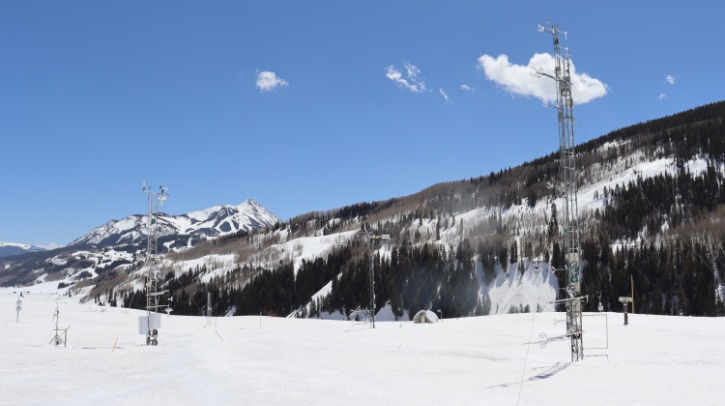
The ISFS tower configuration was called the "Bermuda Triangle" because the main weather towers were positioned in a triangle to gather data from a variety of angles and account for changing wind direction. The arms extending from the towers contain a combination of sonic anemometers/gas analyzers that take measurements, which helps scientists to determine what happens to snow and water vapor at differing heights. Credit: Rosalyn Stilling, ©UCAR
Share
LinkedIn Facebook Twitter Email
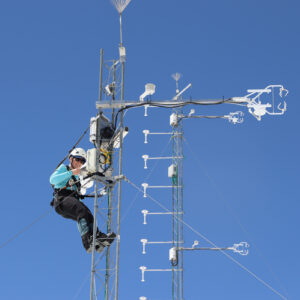
Software engineer Isabel Suhr climbs an ISFS weather tower to clean radiometers. Credit: Rosalyn Stilling, ©UCAR

In a study published in the Bulletin of the American Meteorological Society, a team of scientists has filled longstanding gaps in the process of sublimation – the process by which snow transforms directly from a solid (snow) to a gas (water vapor).

Sublimation study methodology

The research was led by Jessica Lundquist at the University of Washington, with co-authors at the University of Washington, Aspen Global Change Institute (AGCI) and the US National Science Foundation National Center for Atmospheric Research (NSF NCAR). It was based on observations taken during the 2022-2023 Sublimation of Snow Project, in which scientists used a battery of instruments to collect data on wind speed, snowfall and blowing snow at a site outside Crested Butte, Colorado.

Comprehensive results
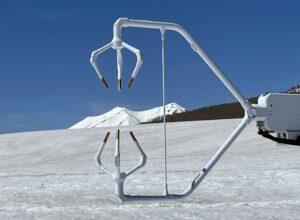
The three-pronged claws on this sonic anemometer are 3D wind sensors that use sound to measure wind direction and speed. Credit: Rosalyn Stilling, ©UCAR

The new research shows that most water loss to sublimation occurs after the release of widely used April 1 runoff forecasts, which are critical for water management decisions. The SOS Project’s extensive instrument array also revealed that the majority of the mid-winter sublimation occurs during blowing snow conditions, although most of that snow was redistributed elsewhere and not lost to sublimation. This redistribution affects the timing of melt and the magnitude of late-season runoff.

According to the scientists, the project has produced the most comprehensive examination to date of how snow sublimates in a mountain environment. Such information is expected to be crucial for water managers who need to decide whether to hold or release reservoir water as the spring runoff begins.

“These findings are really important for our ability to model the amount and timing of runoff for seasonal forecasts and future climate projections,” said NSF NCAR scientist Ethan Gutmann, a co-author of the study. “If we don’t understand the processes that control historical runoff, we cannot be as confident in our predictions.”
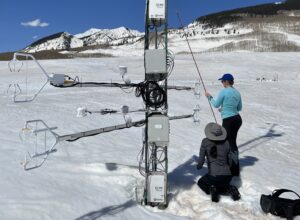
NCAR scientist Jacqueline Witte (kneeling) and software engineer Isabel Suhr (standing) measure the distance between sonic anemometer arms on an Integrated Surface Flux System (ISFS) weather tower. As the snowpack melts, they move the instruments down to stay close to the surface. This enables them to collect data on what happens to snow and water vapor at different levels in the air. Credit: Rosalyn Stilling, ©UCAR

In related news, the US National Science Foundation National Center for Atmospheric Research (NSF NCAR) has launched the Cold Air Outbreak Experiment in the Sub-Arctic Region (CAESAR) field campaign, which will see researchers fly into the Arctic to study marine cold air outbreaks (CAOs). Click here to read the full story.

Previous ArticleFEATURE: How did Stanford University and the University of Florida create a model to simulate urban flood risk with an eye to equity?
Next Article WMO Executive Council discusses early warnings and greenhouse gas monitoring

Read Similar Stories

Climate Measurement

Study identifies atmospheric trigger behind flash droughts in Puerto Rico

April 15, 20263 Mins Read
Climate Measurement

Regional training aims to improve flood forecasting in Central Africa

April 1, 20263 Mins Read
Rainfall

New research to improve flash flood warnings in rural Virginia

March 17, 20263 Mins Read
Latest News

Northumbria University secures £4m to study Earth’s radiation belts

April 16, 2026

AI model improves real-time prediction of wildfire spread

April 16, 2026

Study identifies atmospheric trigger behind flash droughts in Puerto Rico

April 15, 2026

Receive breaking stories and features in your inbox each week, for free


Enter your email address:


Supplier Spotlights
  • ELDES S.r.l.
Getting in Touch
  • Contact Us / Advertise
  • Meet the Editors
  • Media Pack
  • Free Weekly E-Newsletter
Our Social Channels
  • Facebook
  • LinkedIn
© 2026 UKi Media & Events a division of UKIP Media & Events Ltd
  • Cookie Policy
  • Privacy Policy
  • Terms and Conditions
  • Notice and Takedown Policy

Type above and press Enter to search. Press Esc to cancel.