


Close Menu
Meteorological Technology International
  • News
    • A-E
      • Agriculture
      • Automated Weather Stations
      • Aviation
      • Climate Measurement
      • Data
      • Developing Countries
      • Digital Applications
      • Early Warning Systems
      • Extreme Weather
    • G-P
      • Hydrology
      • Lidar
      • Lightning Detection
      • New Appointments
      • Nowcasting
      • Numerical Weather Prediction
      • Polar Weather
    • R-S
      • Radar
      • Rainfall
      • Remote Sensing
      • Renewable Energy
      • Satellites
      • Solar
      • Space Weather
      • Supercomputers
    • T-Z
      • Training
      • Transport
      • Weather Instruments
      • Wind
      • World Meteorological Organization
      • Meteorological Technology World Expo
  • Features
  • Online Magazines
    • January 2026
    • April 2025
    • January 2025
    • September 2024
    • April 2024
    • Archive Issues
    • Subscribe Free!
  • Opinion
  • Videos
  • Supplier Spotlight
  • Expo
LinkedIn X (Twitter) Facebook
  • Sign-up for Free Weekly E-Newsletter
  • Meet the Editors
  • Contact Us
  • Media Pack
LinkedIn Facebook
Subscribe
Meteorological Technology International
  • News
      • Agriculture
      • Automated Weather Stations
      • Aviation
      • Climate Measurement
      • Data
      • Developing Countries
      • Digital Applications
      • Early Warning Systems
      • Extreme Weather
      • Hydrology
      • Lidar
      • Lightning Detection
      • New Appointments
      • Nowcasting
      • Numerical Weather Prediction
      • Polar Weather
      • Radar
      • Rainfall
      • Remote Sensing
      • Renewable Energy
      • Satellites
      • Solar
      • Space Weather
      • Supercomputers
      • Training
      • Transport
      • Weather Instruments
      • Wind
      • World Meteorological Organization
      • Meteorological Technology World Expo
  • Features
  • Online Magazines
    1. January 2026
    2. September 2025
    3. April 2025
    4. January 2025
    5. September 2024
    6. April 2024
    7. January 2024
    8. September 2023
    9. April 2023
    10. Archive Issues
    11. Subscribe Free!
    Featured
    November 27, 2025

    In this Issue – January 2026

    By Hazel KingNovember 27, 2025
    Recent

    In this Issue – January 2026

    November 27, 2025

    In this Issue – September 2025

    August 11, 2025

    In this Issue – April 2025

    April 15, 2025
  • Opinion
  • Videos
  • Supplier Spotlight
  • Expo
Facebook LinkedIn
Subscribe
Meteorological Technology International
Polar Weather

Computer simulations highlight links between permafrost, soil moisture and warming temperatures

Elizabeth BakerBy Elizabeth BakerOctober 17, 20243 Mins Read
Share LinkedIn Facebook Twitter Email
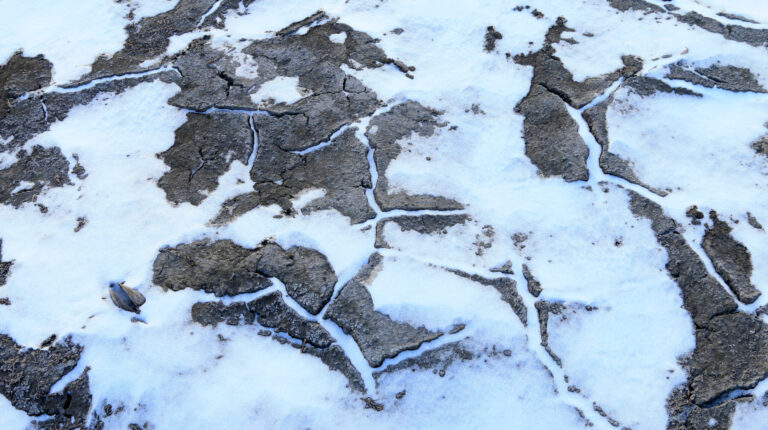
Computer simulations highlight links between permafrost, soil moisture and warming temperatures.
Share
LinkedIn Facebook Twitter Email

A study published in the journal Nature Communications by an international team of climate scientists and permafrost experts shows that, according to new climate computer model simulations, global warming will accelerate permafrost thawing and, as a result, lead to an abrupt intensification of wildfires in the Subarctic and Arctic regions of northern Canada and Siberia.

The study, led by the Institute for Basic Science in South Korea and co-authored by a scientist at the US National Science Foundation National Center for Atmospheric Research (NSF NCAR), looks at permafrost and wildfire interactions in simulations run using data generated by the NSF NCAR-based Community Earth System Model 2.

According to the Institute for Basic Science, this is the first model of its kind. It captures the coupling between soil water, permafrost and wildfires in an integrated way. To better separate the anthropogenic effect of increasing greenhouse gas emissions from naturally occurring variations in climate, the scientists used an ensemble of 50 past-to-future simulations covering the period from 1850-2100 CE (SSP3-7.0 greenhouse gas emission scenario), which was recently conducted by scientists from the IBS Center for Climate Physics in Busan, South Korea and the National Center for Atmospheric Research in Boulder, Colorado on the IBS supercomputer Aleph.

With this ensemble modeling approach, the team demonstrated that by the mid to late 21st century, anthropogenic permafrost thawing in the Subarctic and Arctic regions will be quite extensive. In many areas, the excess soil water can drain quickly, which leads to a sudden drop in soil moisture, subsequent surface warming and atmospheric drying

“These conditions will intensify wildfires,” said Dr In-Won Kim, lead author of the study and a postdoctoral researcher at the IBS Center for Climate Physics. “In the second half of this century, our model simulations show an abrupt switch from virtually no fires to very intensive fires within just a few years.”

The researchers also found that these future trends will be exacerbated by the fact that vegetation biomass is likely to increase in high-latitude areas due to increasing atmospheric CO2 concentrations. This so-called CO2 fertilization effect therefore provides extra fire fuel.

“To better simulate the future degradation of the complex permafrost landscape, it is necessary to further improve small-scale hydrological processes in Earth system models using extended observational datasets,” commented associate professor Hanna Lee, co-author of the study at the Norwegian University of Science and Technology in Trondheim.

Prof. Axel Timmermann, co-author of the study and director of the ICCP and a distinguished professor at Pusan National University, concluded, “Wildfires release carbon dioxide and black and organic carbon into the atmosphere, which can affect climate and feedback to the permafrost thawing processes in the Arctic. However, interactions between fire emissions and the atmospheric processes have not been fully integrated into Earth system computer models yet. Further consideration of this aspect would be the next step.”

“It’s an intriguing and troubling cascade of changes that ends up driving this Earth system feedback,” said NSF NCAR scientist Will Wieder, a co-author and land modeling expert who helped interpret the computer simulation results.

In related news, The US National Science Foundation National Center for Atmospheric Research (NSF NCAR) recently ran simulations on the Cheyenne supercomputer at the NCAR-Wyoming Supercomputing Center to tease out the influence of Kelvin waves – the large-scale atmospheric waves that can extend more than 1,600km into the atmosphere and shape global weather patterns – and anticipate clusters of hurricanes days to weeks in advance. Click here to read the full story.

Previous ArticleSnowflake motion analysis could improve rain forecasts, University of Reading reports
Next Article NCEO receives five-year £8.6m NERC investment

Read Similar Stories

Climate Measurement

Windracers ULTRA drones to be deployed in Greenland on glacier surveying mission

March 12, 20263 Mins Read
Climate Measurement

Unmanned Antarctica atmospheric observation experiment advances in China

February 10, 20262 Mins Read
Climate Measurement

Robotic Argo float sends back first ocean transect beneath East Antarctic ice shelf

December 11, 20252 Mins Read
Latest News

Northumbria University secures £4m to study Earth’s radiation belts

April 16, 2026

AI model improves real-time prediction of wildfire spread

April 16, 2026

Study identifies atmospheric trigger behind flash droughts in Puerto Rico

April 15, 2026

Receive breaking stories and features in your inbox each week, for free


Enter your email address:


Supplier Spotlights
  • Baron
Getting in Touch
  • Contact Us / Advertise
  • Meet the Editors
  • Media Pack
  • Free Weekly E-Newsletter
Our Social Channels
  • Facebook
  • LinkedIn
© 2026 UKi Media & Events a division of UKIP Media & Events Ltd
  • Cookie Policy
  • Privacy Policy
  • Terms and Conditions
  • Notice and Takedown Policy

Type above and press Enter to search. Press Esc to cancel.