


Close Menu
Meteorological Technology International
  • News
    • A-E
      • Agriculture
      • Automated Weather Stations
      • Aviation
      • Climate Measurement
      • Data
      • Developing Countries
      • Digital Applications
      • Early Warning Systems
      • Extreme Weather
    • G-P
      • Hydrology
      • Lidar
      • Lightning Detection
      • New Appointments
      • Nowcasting
      • Numerical Weather Prediction
      • Polar Weather
    • R-S
      • Radar
      • Rainfall
      • Remote Sensing
      • Renewable Energy
      • Satellites
      • Solar
      • Space Weather
      • Supercomputers
    • T-Z
      • Training
      • Transport
      • Weather Instruments
      • Wind
      • World Meteorological Organization
      • Meteorological Technology World Expo
  • Features
  • Online Magazines
    • January 2026
    • April 2025
    • January 2025
    • September 2024
    • April 2024
    • Archive Issues
    • Subscribe Free!
  • Opinion
  • Videos
  • Supplier Spotlight
  • Expo
LinkedIn X (Twitter) Facebook
  • Sign-up for Free Weekly E-Newsletter
  • Meet the Editors
  • Contact Us
  • Media Pack
LinkedIn Facebook
Subscribe
Meteorological Technology International
  • News
      • Agriculture
      • Automated Weather Stations
      • Aviation
      • Climate Measurement
      • Data
      • Developing Countries
      • Digital Applications
      • Early Warning Systems
      • Extreme Weather
      • Hydrology
      • Lidar
      • Lightning Detection
      • New Appointments
      • Nowcasting
      • Numerical Weather Prediction
      • Polar Weather
      • Radar
      • Rainfall
      • Remote Sensing
      • Renewable Energy
      • Satellites
      • Solar
      • Space Weather
      • Supercomputers
      • Training
      • Transport
      • Weather Instruments
      • Wind
      • World Meteorological Organization
      • Meteorological Technology World Expo
  • Features
  • Online Magazines
    1. January 2026
    2. September 2025
    3. April 2025
    4. January 2025
    5. September 2024
    6. April 2024
    7. January 2024
    8. September 2023
    9. April 2023
    10. Archive Issues
    11. Subscribe Free!
    Featured
    November 27, 2025

    In this Issue – January 2026

    By Hazel KingNovember 27, 2025
    Recent

    In this Issue – January 2026

    November 27, 2025

    In this Issue – September 2025

    August 11, 2025

    In this Issue – April 2025

    April 15, 2025
  • Opinion
  • Videos
  • Supplier Spotlight
  • Expo
Facebook LinkedIn
Subscribe
Meteorological Technology International
Oceans

Ocean observing for climate resilience remains ‘subcritical’ despite global advances, says new GOOS report

Alex PackBy Alex PackNovember 20, 20252 Mins Read
Share LinkedIn Facebook Twitter Email
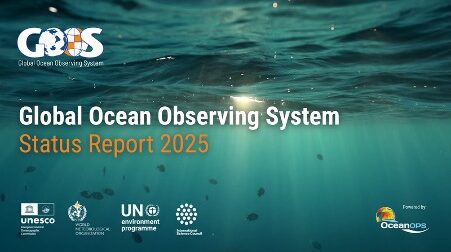
Ocean observing for climate resilience remains ‘subcritical’ despite global advances, says new GOOS report.
Share
LinkedIn Facebook Twitter Email

A new report from the Global Ocean Observing System (GOOS) shows that while ocean observing for climate resilience, operational services, ocean health and sustainable economies is advancing, services remain at risk without stronger, coordinated investment and more diversified partnerships.

The GOOS Status Report 2025, released today, November 20, shows progress and vulnerabilities in the global capacity to deliver the essential information required to address growing societal needs and protect the oceans.

It highlights the critical role ocean observations play in accurate climate projections, weather and extreme weather event forecasts, timely early warnings and biodiversity conservation.

GOOS, led by the Intergovernmental Oceanographic Commission (IOC) of UNESCO, leads and coordinates the global system of sustained ocean observations. The interactive report offers an up-to-date overview of the global ocean observing system and its observing networks monitored by OceanOPS, the joint WMO and IOC operational center of GOOS.

It also explains how ocean observations are guiding science and policy, and provides potential responses to some of the major challenges facing the oceans today.

Key highlights include:

  • Progress and gaps in predicting the Atlantic Meridional Overturning Circulation – the ocean current system that affects the climate;
  • Using ocean data to improve El Niño forecasts and early warning systems in South America;
  • How elephant seals are collecting first-of-its-kind data to support Southern Ocean management and conservation;
  • Building South Africa’s ocean observing capacity through co-design with local communities and other stakeholders;
  • A new initiative to transform 10,000 commercial vessels into real-time meteorological and oceanographic observatories.

Despite the advances to date, the GOOS Status Report 2025 also warns that the global ocean observing system remains subcritical, with uneven coverage, declining drifting buoy- and ship-based observations, and heavy reliance on a small number of contributors. The report calls for long-term, coordinated investment by governments, and stronger engagement with the private sector to secure a resilient and future-ready system.

GOOS director Joanna Post said, “A new economic mindset is needed for GOOS: one that ensures long-term, coordinated investment in ocean observing as a shared global critical infrastructure – securing its future and unlocking its full potential for people and the planet.”

In related news, the number of countries with multi-hazard early warning systems reaches record high, says UN and WMO report

Previous ArticleWMO rolls out first portals on new Community Platform
Next Article Google launches its most advanced AI forecasting model – WeatherNext 2

Read Similar Stories

Climate Measurement

Study identifies atmospheric trigger behind flash droughts in Puerto Rico

April 15, 20263 Mins Read
Satellites

AI tool uses weather satellite data to map ocean currents in near real time

April 14, 20263 Mins Read
Climate Measurement

New tool speeds up climate model evaluation

April 13, 20262 Mins Read
Latest News

Northumbria University secures £4m to study Earth’s radiation belts

April 16, 2026

AI model improves real-time prediction of wildfire spread

April 16, 2026

Study identifies atmospheric trigger behind flash droughts in Puerto Rico

April 15, 2026

Receive breaking stories and features in your inbox each week, for free


Enter your email address:


Supplier Spotlights
  • GAMIC GmbH
Getting in Touch
  • Contact Us / Advertise
  • Meet the Editors
  • Media Pack
  • Free Weekly E-Newsletter
Our Social Channels
  • Facebook
  • LinkedIn
© 2026 UKi Media & Events a division of UKIP Media & Events Ltd
  • Cookie Policy
  • Privacy Policy
  • Terms and Conditions
  • Notice and Takedown Policy

Type above and press Enter to search. Press Esc to cancel.