


Close Menu
Meteorological Technology International
  • News
    • A-E
      • Agriculture
      • Automated Weather Stations
      • Aviation
      • Climate Measurement
      • Data
      • Developing Countries
      • Digital Applications
      • Early Warning Systems
      • Extreme Weather
    • G-P
      • Hydrology
      • Lidar
      • Lightning Detection
      • New Appointments
      • Nowcasting
      • Numerical Weather Prediction
      • Polar Weather
    • R-S
      • Radar
      • Rainfall
      • Remote Sensing
      • Renewable Energy
      • Satellites
      • Solar
      • Space Weather
      • Supercomputers
    • T-Z
      • Training
      • Transport
      • Weather Instruments
      • Wind
      • World Meteorological Organization
      • Meteorological Technology World Expo
  • Features
  • Online Magazines
    • January 2026
    • April 2025
    • January 2025
    • September 2024
    • April 2024
    • Archive Issues
    • Subscribe Free!
  • Opinion
  • Videos
  • Supplier Spotlight
  • Expo
LinkedIn X (Twitter) Facebook
  • Sign-up for Free Weekly E-Newsletter
  • Meet the Editors
  • Contact Us
  • Media Pack
LinkedIn Facebook
Subscribe
Meteorological Technology International
  • News
      • Agriculture
      • Automated Weather Stations
      • Aviation
      • Climate Measurement
      • Data
      • Developing Countries
      • Digital Applications
      • Early Warning Systems
      • Extreme Weather
      • Hydrology
      • Lidar
      • Lightning Detection
      • New Appointments
      • Nowcasting
      • Numerical Weather Prediction
      • Polar Weather
      • Radar
      • Rainfall
      • Remote Sensing
      • Renewable Energy
      • Satellites
      • Solar
      • Space Weather
      • Supercomputers
      • Training
      • Transport
      • Weather Instruments
      • Wind
      • World Meteorological Organization
      • Meteorological Technology World Expo
  • Features
  • Online Magazines
    1. January 2026
    2. September 2025
    3. April 2025
    4. January 2025
    5. September 2024
    6. April 2024
    7. January 2024
    8. September 2023
    9. April 2023
    10. Archive Issues
    11. Subscribe Free!
    Featured
    November 27, 2025

    In this Issue – January 2026

    By Hazel KingNovember 27, 2025
    Recent

    In this Issue – January 2026

    November 27, 2025

    In this Issue – September 2025

    August 11, 2025

    In this Issue – April 2025

    April 15, 2025
  • Opinion
  • Videos
  • Supplier Spotlight
  • Expo
Facebook LinkedIn
Subscribe
Meteorological Technology International
Oceans

National Oceanography Centre to provide underwater glider data for Met Office

Elizabeth BakerBy Elizabeth BakerMarch 6, 20242 Mins Read
Share LinkedIn Facebook Twitter Email
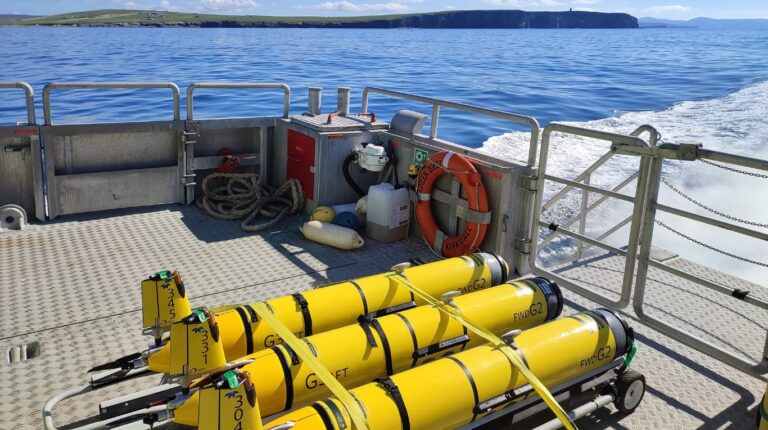
Photo credit: National Oceanography Centre
Share
LinkedIn Facebook Twitter Email

Underwater gliders, operated by engineers from the UK’s National Oceanography Centre (NOC), will navigate through the North Sea taking measurements – such as salinity and temperature – for the Met Office in near real-time.

The project, which will operate for the next three years, aims to improve the collection and distribution of data from the North Sea. The new temperature and salinity data will be fed daily into Met Office forecast models and is part of a wider program to increase the amount of observational data for ingestion into models run on the new supercomputer. It will support the Met Office’s continuous work to improve forecast accuracy.

According to the partners, NOC’s specialist team of engineers has extensive experience in remotely operating gliders in challenging conditions and can provide the infrastructure for the Met Office to gather more accurate real-time ocean data.

Jim Trice, observations network manager at the Met Office, said, “Understanding the relationship between the atmosphere and the ocean is key to improving understanding of weather and climate. This data has given us greater insight into vital aspects that form the weather systems that affect us every day.”

Stephen Woodward, engineering manager at the NOC, said, “NOC excels in supplying innovative technology, which includes our state-of-the-art gliders, to institutions like the Met Office. The gliders we are providing are capable of operating independently for long periods of time, whilst their cutting-edge sensors excel at gathering crucial information about the state of our oceans.

“Securing a better understanding of ocean circulation and the data gathering potential of gliders is a key driving factor behind the project. It will be vital to inform future ocean modeling conditions and weather patterns. In time, this will support decision making in vital UK services, such as search and rescue, counter-pollution and ocean biodiversity.”

Dr Charlotte Williams, a physical oceanographer at NOC, concluded, “Over the next three years the NOC gliders will collect an unprecedented amount of data from the North Sea that will feed into Met Office forecasting simulations. This data will consist of what will be thousands of measurements of the temperature and salt content of the North Sea, important drivers in ocean-atmosphere interactions.”

For more top insights into automated ocean monitoring from NOC and the Met Office, read Meteorological Technology International’s exclusive feature, ‘What do new international regulations mean for automated ocean monitoring?’, here.

Previous ArticleWMO holds third SERCOM-3 session to develop early warning systems and adaptation tools
Next Article UCD to appoint a full professor of data science for weather and climate

Read Similar Stories

Climate Measurement

Windracers ULTRA drones to be deployed in Greenland on glacier surveying mission

March 12, 20263 Mins Read
Early Warning Systems

Water cycle instability drove global water-related disasters in 2025

January 20, 20263 Mins Read
Oceans

Oceans absorb record heat, driving extreme weather, according to international study led by Chinese Academy of Sciences

January 12, 20262 Mins Read
Latest News

Northumbria University secures £4m to study Earth’s radiation belts

April 16, 2026

AI model improves real-time prediction of wildfire spread

April 16, 2026

Study identifies atmospheric trigger behind flash droughts in Puerto Rico

April 15, 2026

Receive breaking stories and features in your inbox each week, for free


Enter your email address:


Supplier Spotlights
  • REMTECH
Getting in Touch
  • Contact Us / Advertise
  • Meet the Editors
  • Media Pack
  • Free Weekly E-Newsletter
Our Social Channels
  • Facebook
  • LinkedIn
© 2026 UKi Media & Events a division of UKIP Media & Events Ltd
  • Cookie Policy
  • Privacy Policy
  • Terms and Conditions
  • Notice and Takedown Policy

Type above and press Enter to search. Press Esc to cancel.