


Close Menu
Meteorological Technology International
  • News
    • A-E
      • Agriculture
      • Automated Weather Stations
      • Aviation
      • Climate Measurement
      • Data
      • Developing Countries
      • Digital Applications
      • Early Warning Systems
      • Extreme Weather
    • G-P
      • Hydrology
      • Lidar
      • Lightning Detection
      • New Appointments
      • Nowcasting
      • Numerical Weather Prediction
      • Polar Weather
    • R-S
      • Radar
      • Rainfall
      • Remote Sensing
      • Renewable Energy
      • Satellites
      • Solar
      • Space Weather
      • Supercomputers
    • T-Z
      • Training
      • Transport
      • Weather Instruments
      • Wind
      • World Meteorological Organization
      • Meteorological Technology World Expo
  • Features
  • Online Magazines
    • January 2026
    • April 2025
    • January 2025
    • September 2024
    • April 2024
    • Archive Issues
    • Subscribe Free!
  • Opinion
  • Videos
  • Supplier Spotlight
  • Expo
LinkedIn X (Twitter) Facebook
  • Sign-up for Free Weekly E-Newsletter
  • Meet the Editors
  • Contact Us
  • Media Pack
LinkedIn Facebook
Subscribe
Meteorological Technology International
  • News
      • Agriculture
      • Automated Weather Stations
      • Aviation
      • Climate Measurement
      • Data
      • Developing Countries
      • Digital Applications
      • Early Warning Systems
      • Extreme Weather
      • Hydrology
      • Lidar
      • Lightning Detection
      • New Appointments
      • Nowcasting
      • Numerical Weather Prediction
      • Polar Weather
      • Radar
      • Rainfall
      • Remote Sensing
      • Renewable Energy
      • Satellites
      • Solar
      • Space Weather
      • Supercomputers
      • Training
      • Transport
      • Weather Instruments
      • Wind
      • World Meteorological Organization
      • Meteorological Technology World Expo
  • Features
  • Online Magazines
    1. January 2026
    2. September 2025
    3. April 2025
    4. January 2025
    5. September 2024
    6. April 2024
    7. January 2024
    8. September 2023
    9. April 2023
    10. Archive Issues
    11. Subscribe Free!
    Featured
    November 27, 2025

    In this Issue – January 2026

    By Hazel KingNovember 27, 2025
    Recent

    In this Issue – January 2026

    November 27, 2025

    In this Issue – September 2025

    August 11, 2025

    In this Issue – April 2025

    April 15, 2025
  • Opinion
  • Videos
  • Supplier Spotlight
  • Expo
Facebook LinkedIn
Subscribe
Meteorological Technology International
Hydrology

German hydrographic agency to deploy smart monitoring buoys

Elizabeth BakerBy Elizabeth BakerJuly 23, 20252 Mins Read
Share LinkedIn Facebook Twitter Email
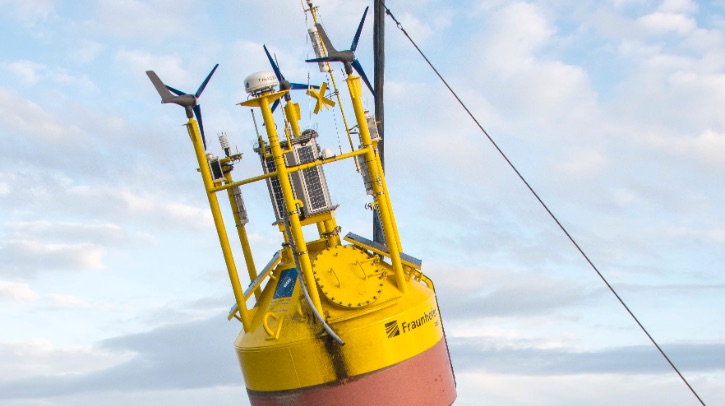
A smart monitoring buoy features photovoltaic modules and wind generators.
Credit: Claudia Thomsen/BSH
Share
LinkedIn Facebook Twitter Email

Bundesamt für Seeschifffahrt und Hydrographie (BSH), the Federal Maritime and Hydrographic Agency of Germany, is to add smart monitoring buoys to its monitoring network. The buoys are intended to help the BSH optimize its monitoring network by enabling it to operate even more effectively and cost-effectively.
Collecting meteorological data

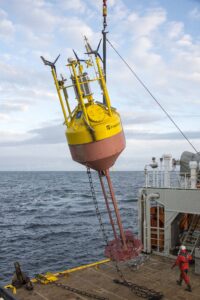
Developed by the Fraunhofer Institute and adapted to the BSH‘s specific needs, the modern monitoring buoys provide data on temperature, salinity and oxygen, among other things. The data can be transmitted directly from the seabed to the BSH via satellite. Power is supplied by photovoltaic modules and wind generators on the buoy.

Helge Heegewaldt, president of BSH, said, “In the future, BSH ships will be able to deploy the buoys – they can be maintained onshore and are less expensive to operate. They also provide data from a range of up to 250m above the sea level down to the seabed.”

Deploying the buoys

As the first tests were successful, and the first buoy is scheduled to be fully operational this year. The smart monitoring buoys will be deployed in the North Sea and Baltic Sea to supplement the existing stationary measurement platforms already there.

In related news, SUN Fleet, a fleet of uncrewed surface vehicles, recently joined the Global Ocean Observing System to monitor numerous GOOS essential ocean variables and measure important air-sea exchanges in remote areas and under harsh conditions. Read the full story here

Previous ArticleEUMETSAT takes control of Meteosat Third Generation Sounder 1 satellite
Next Article Chiba University-led research team uses x-ray imaging to improve space weather predictions

Read Similar Stories

Climate Measurement

Study identifies atmospheric trigger behind flash droughts in Puerto Rico

April 15, 20263 Mins Read
Climate Measurement

Regional training aims to improve flood forecasting in Central Africa

April 1, 20263 Mins Read
Rainfall

New research to improve flash flood warnings in rural Virginia

March 17, 20263 Mins Read
Latest News

Northumbria University secures £4m to study Earth’s radiation belts

April 16, 2026

AI model improves real-time prediction of wildfire spread

April 16, 2026

Study identifies atmospheric trigger behind flash droughts in Puerto Rico

April 15, 2026

Receive breaking stories and features in your inbox each week, for free


Enter your email address:


Supplier Spotlights
  • Baron
Getting in Touch
  • Contact Us / Advertise
  • Meet the Editors
  • Media Pack
  • Free Weekly E-Newsletter
Our Social Channels
  • Facebook
  • LinkedIn
© 2026 UKi Media & Events a division of UKIP Media & Events Ltd
  • Cookie Policy
  • Privacy Policy
  • Terms and Conditions
  • Notice and Takedown Policy

Type above and press Enter to search. Press Esc to cancel.