


Close Menu
Meteorological Technology International
  • News
    • A-E
      • Agriculture
      • Automated Weather Stations
      • Aviation
      • Climate Measurement
      • Data
      • Developing Countries
      • Digital Applications
      • Early Warning Systems
      • Extreme Weather
    • G-P
      • Hydrology
      • Lidar
      • Lightning Detection
      • New Appointments
      • Nowcasting
      • Numerical Weather Prediction
      • Polar Weather
    • R-S
      • Radar
      • Rainfall
      • Remote Sensing
      • Renewable Energy
      • Satellites
      • Solar
      • Space Weather
      • Supercomputers
    • T-Z
      • Training
      • Transport
      • Weather Instruments
      • Wind
      • World Meteorological Organization
      • Meteorological Technology World Expo
  • Features
  • Online Magazines
    • January 2026
    • April 2025
    • January 2025
    • September 2024
    • April 2024
    • Archive Issues
    • Subscribe Free!
  • Opinion
  • Videos
  • Supplier Spotlight
  • Expo
LinkedIn X (Twitter) Facebook
  • Sign-up for Free Weekly E-Newsletter
  • Meet the Editors
  • Contact Us
  • Media Pack
LinkedIn Facebook
Subscribe
Meteorological Technology International
  • News
      • Agriculture
      • Automated Weather Stations
      • Aviation
      • Climate Measurement
      • Data
      • Developing Countries
      • Digital Applications
      • Early Warning Systems
      • Extreme Weather
      • Hydrology
      • Lidar
      • Lightning Detection
      • New Appointments
      • Nowcasting
      • Numerical Weather Prediction
      • Polar Weather
      • Radar
      • Rainfall
      • Remote Sensing
      • Renewable Energy
      • Satellites
      • Solar
      • Space Weather
      • Supercomputers
      • Training
      • Transport
      • Weather Instruments
      • Wind
      • World Meteorological Organization
      • Meteorological Technology World Expo
  • Features
  • Online Magazines
    1. January 2026
    2. September 2025
    3. April 2025
    4. January 2025
    5. September 2024
    6. April 2024
    7. January 2024
    8. September 2023
    9. April 2023
    10. Archive Issues
    11. Subscribe Free!
    Featured
    November 27, 2025

    In this Issue – January 2026

    By Hazel KingNovember 27, 2025
    Recent

    In this Issue – January 2026

    November 27, 2025

    In this Issue – September 2025

    August 11, 2025

    In this Issue – April 2025

    April 15, 2025
  • Opinion
  • Videos
  • Supplier Spotlight
  • Expo
Facebook LinkedIn
Subscribe
Meteorological Technology International
Hydrology

Caltech uses machine learning to improve monsoon rainfall predictions

Elizabeth BakerBy Elizabeth BakerApril 2, 20243 Mins Read
Share LinkedIn Facebook Twitter Email
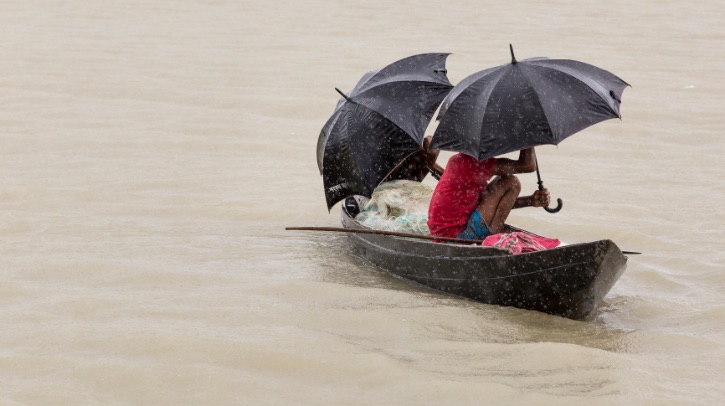
Men in a wooden canoe sheltering under umbrellas from the monsoon rain, in Bangladesh.
Share
LinkedIn Facebook Twitter Email

Caltech has released a machine-learning-based forecast that has been shown to more accurately predict the South Asian monsoon rainfall 10 to 30 days in advance.

Caltech’s research 

A paper describing the method, titled Improved subseasonal prediction of South Asian monsoon rainfall using data-driven forecasts of oscillatory modes, appeared in the Proceedings of the National Academy of Sciences on April 1, 2024.

The research was led by Eviatar Bach, the Foster and Coco Stanback Postdoctoral Scholar Research Associate in Environmental Science and Engineering, who works in the laboratories of Tapio Schneider, the Theodore Y Wu Professor of Environmental Science and Engineering and JPL senior research scientist; and Andrew Stuart, the Bren Professor of Computing and Mathematical Sciences.

“There is a lot of concern about how climate change will affect the monsoon and other weather events like hurricanes, heatwaves, and so on,” Bach said. “Improving predictions on shorter timescales is an important part of responding to climate change because we need to be able to improve preparedness for these events.”

Revolutionizing numerical modeling

According to the researchers, this tool represents a significant improvement on current forecasts that use numerical modeling rather than artificial intelligence (AI) to make predictions.

Current models use numerical modeling – computer simulations of the atmosphere based on the physics equations describing the motion of fluids. Because of the chaotic nature of recording and modeling the atmosphere’s numerous instabilities, the maximum predictable time for large-scale weather is usually around 10 days. Predicting the long-time average behavior of the atmosphere – that is, the climate – is also possible, but predicting the weather in the time interval between two weeks to several months has been a challenge with numerical models.

With South Asian monsoons, rain tends to fall in cycles of intense bursts followed by dry spells. These cycles are known as monsoon intraseasonal oscillations (MISOs). In the new research, Bach and his collaborators added a machine-learning component to current numerical models. This enabled the researchers to gather data about the MISOs and make better predictions of the rainfall on the elusive two-to-four-week timescale. The resulting model was able to improve the correlations of the predictions with observations by up to 70%.

“In the past few years, there has been an increased interest in using machine learning for weather prediction,” Bach added. “Our work shows that a combination of machine learning and more traditional numerical modeling can produce accurate results.”

Collaborators

In addition to Bach, co-authors are V Krishnamurthy and Jagadish Shukla of George Mason University; Safa Mote of Portland State University; A Surjalal Sharma and Eugenia Kalnay of the University of Maryland; and Michael Ghil of École Normale Supérieure in Paris, UCLA, and Imperial College London. Funding was provided by India’s Ministry of Earth Sciences, NASA and the National Science Foundation. The Foster and Coco Stanback Postdoctoral Fellowship supports innovative and creative early career scientists working in global environmental science, including research in areas such as climate adaptation and mitigation, environmental microbiology, terrestrial and marine biogeochemistry, glaciology, paleo-climatology, atmospheric chemistry and composition, physical oceanography, and climate dynamics.

In related news, Caltech recently created bionic jellyfish for deep ocean data collection. Click here to read the full story.

Previous ArticleVaisala launches air quality sensor for city pollutant identification
Next Article ICPAC’s early warning system project receives funding from CRAF’d

Read Similar Stories

Climate Measurement

Study identifies atmospheric trigger behind flash droughts in Puerto Rico

April 15, 20263 Mins Read
Climate Measurement

Regional training aims to improve flood forecasting in Central Africa

April 1, 20263 Mins Read
Rainfall

New research to improve flash flood warnings in rural Virginia

March 17, 20263 Mins Read
Latest News

Northumbria University secures £4m to study Earth’s radiation belts

April 16, 2026

AI model improves real-time prediction of wildfire spread

April 16, 2026

Study identifies atmospheric trigger behind flash droughts in Puerto Rico

April 15, 2026

Receive breaking stories and features in your inbox each week, for free


Enter your email address:


Supplier Spotlights
  • Synoptic Data PBC
Getting in Touch
  • Contact Us / Advertise
  • Meet the Editors
  • Media Pack
  • Free Weekly E-Newsletter
Our Social Channels
  • Facebook
  • LinkedIn
© 2026 UKi Media & Events a division of UKIP Media & Events Ltd
  • Cookie Policy
  • Privacy Policy
  • Terms and Conditions
  • Notice and Takedown Policy

Type above and press Enter to search. Press Esc to cancel.