


Close Menu
Meteorological Technology International
  • News
    • A-E
      • Agriculture
      • Automated Weather Stations
      • Aviation
      • Climate Measurement
      • Data
      • Developing Countries
      • Digital Applications
      • Early Warning Systems
      • Extreme Weather
    • G-P
      • Hydrology
      • Lidar
      • Lightning Detection
      • New Appointments
      • Nowcasting
      • Numerical Weather Prediction
      • Polar Weather
    • R-S
      • Radar
      • Rainfall
      • Remote Sensing
      • Renewable Energy
      • Satellites
      • Solar
      • Space Weather
      • Supercomputers
    • T-Z
      • Training
      • Transport
      • Weather Instruments
      • Wind
      • World Meteorological Organization
      • Meteorological Technology World Expo
  • Features
  • Online Magazines
    • January 2026
    • April 2025
    • January 2025
    • September 2024
    • April 2024
    • Archive Issues
    • Subscribe Free!
  • Opinion
  • Videos
  • Supplier Spotlight
  • Expo
LinkedIn X (Twitter) Facebook
  • Sign-up for Free Weekly E-Newsletter
  • Meet the Editors
  • Contact Us
  • Media Pack
LinkedIn Facebook
Subscribe
Meteorological Technology International
  • News
      • Agriculture
      • Automated Weather Stations
      • Aviation
      • Climate Measurement
      • Data
      • Developing Countries
      • Digital Applications
      • Early Warning Systems
      • Extreme Weather
      • Hydrology
      • Lidar
      • Lightning Detection
      • New Appointments
      • Nowcasting
      • Numerical Weather Prediction
      • Polar Weather
      • Radar
      • Rainfall
      • Remote Sensing
      • Renewable Energy
      • Satellites
      • Solar
      • Space Weather
      • Supercomputers
      • Training
      • Transport
      • Weather Instruments
      • Wind
      • World Meteorological Organization
      • Meteorological Technology World Expo
  • Features
  • Online Magazines
    1. January 2026
    2. September 2025
    3. April 2025
    4. January 2025
    5. September 2024
    6. April 2024
    7. January 2024
    8. September 2023
    9. April 2023
    10. Archive Issues
    11. Subscribe Free!
    Featured
    November 27, 2025

    In this Issue – January 2026

    By Hazel KingNovember 27, 2025
    Recent

    In this Issue – January 2026

    November 27, 2025

    In this Issue – September 2025

    August 11, 2025

    In this Issue – April 2025

    April 15, 2025
  • Opinion
  • Videos
  • Supplier Spotlight
  • Expo
Facebook LinkedIn
Subscribe
Meteorological Technology International
Extreme Weather

India Meteorological Department releases National Climate Change Assessment report

Elizabeth BakerBy Elizabeth BakerDecember 20, 20243 Mins Read
Share LinkedIn Facebook Twitter Email
Share
LinkedIn Facebook Twitter Email

The Indian Institute of Tropical Meteorology’s (IITM) Centre for Climate Change Research has developed a new, state-of-the-art Earth system model (ESM) that has been used to create the National Climate Change Assessment report in order to support policy decisions on climate change, adaptation and mitigation.

According to the organization, this report is the first of its kind where a comprehensive discussion has been made regarding the impact of human-induced global climate change on the regional climate and monsoon of the Indian subcontinent, adjoining the Indian Ocean and the Himalayas.

Based on the available climate records, the report documents that the surface air temperature over India has risen by about 0.7°C during 1901–2018, which is accompanied by an increase in atmospheric moisture content. The sea surface temperatures in the tropical Indian Ocean also increased by about 1°C during 1951–2015. The report states that clear signatures of human-induced changes in climate have emerged over the Indian region, which it attributes to anthropogenic GHG and aerosols and changes in land use and land cover, and that these have contributed to an increase in the climatic extremes.

Mission Mausam

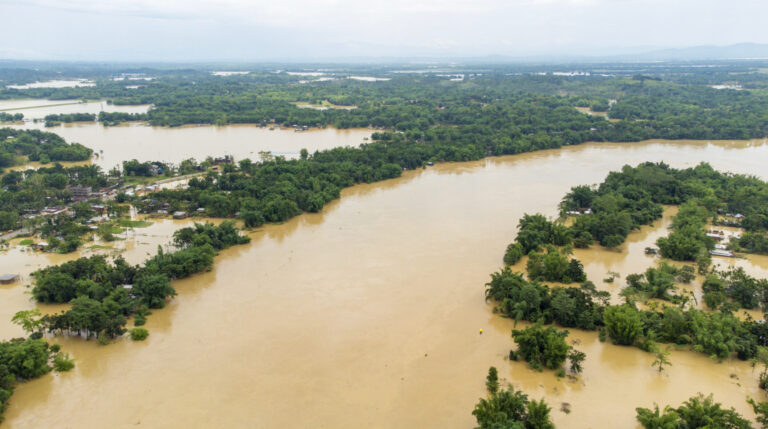
For this reason, the India Meteorological Department (IMD) has prepared a Climate Hazards and Vulnerability Atlas of India for the 13 most hazardous meteorological events, including cold waves, heat waves, floods, lightning, snowfall, dust storms, hailstorms, thunderstorms, fog, strong winds, extreme rainfall, droughts and cyclones, which is intended to safeguard the citizens living in the vulnerable regions.

The Union Cabinet has also approved the central sector scheme ‘Mission Mausam’ at an outlay of Rs2,000 crores (US$240m) over two years. The main aim of the mission is to make Bharat weather-ready and climate-smart and provide early warning to all. Mission Mausam is envisaged to be a multi-faceted and transformative initiative to tremendously boost India’s weather and climate-related science, research and services.

Mission Mausam is intended to cater to the weather and climate-sensitive sectors like agriculture, power, irrigation, shipping, water resource management, health, aviation, transportation, disaster management, off-shore oil management, public safety, etc., by mitigating the impact of climate change and extreme weather events and strengthening the resilience of the communities to severe weather phenomenon.

Early warning systems

IMD has also adopted new techniques and technology from time to time to detect, monitor and provide timely early warnings for disruptive weather events. Initiatives and developments have been taken to improve the monitoring and forecasting of weather events by augmenting the observational network, numerical weather prediction models and supercomputers.

IMD uses a forecasting system at seasonal to nowcast scale and implemented well-defined standard operating procedures (SOPs) for monitoring and forecasting weather hazards. IMD uses a dissemination system to share all severe weather information and early warnings with disaster management authorities and the general public through various platforms/channels for necessary preparedness and to support mitigation measures. These include social media, the common alert protocol, mobile apps, WhatsApp and APIs. As a result, the vulnerable population in rural and coastal areas can get evacuated on time to safe shelters, thereby reducing the human death toll to a bare minimum.

In related news, the 14th Asia-Oceania Meteorological Satellite Users’ Conference (AOMSUC-14) was recently held in New Delhi, India. Click here to read the full story.

Previous ArticleSouth African Weather Service and China Meteorological Administration partner on forecasting and early warning systems
Next Article Australia’s Bureau of Meteorology publishes preliminary climate summary for 2024

Read Similar Stories

Extreme Weather

AI model improves real-time prediction of wildfire spread

April 16, 20263 Mins Read
Climate Measurement

Study identifies atmospheric trigger behind flash droughts in Puerto Rico

April 15, 20263 Mins Read
Satellites

AI tool uses weather satellite data to map ocean currents in near real time

April 14, 20263 Mins Read
Latest News

Northumbria University secures £4m to study Earth’s radiation belts

April 16, 2026

AI model improves real-time prediction of wildfire spread

April 16, 2026

Study identifies atmospheric trigger behind flash droughts in Puerto Rico

April 15, 2026

Receive breaking stories and features in your inbox each week, for free


Enter your email address:


Supplier Spotlights
  • ELDES S.r.l.
Getting in Touch
  • Contact Us / Advertise
  • Meet the Editors
  • Media Pack
  • Free Weekly E-Newsletter
Our Social Channels
  • Facebook
  • LinkedIn
© 2026 UKi Media & Events a division of UKIP Media & Events Ltd
  • Cookie Policy
  • Privacy Policy
  • Terms and Conditions
  • Notice and Takedown Policy

Type above and press Enter to search. Press Esc to cancel.