


Close Menu
Meteorological Technology International
  • News
    • A-E
      • Agriculture
      • Automated Weather Stations
      • Aviation
      • Climate Measurement
      • Data
      • Developing Countries
      • Digital Applications
      • Early Warning Systems
      • Extreme Weather
    • G-P
      • Hydrology
      • Lidar
      • Lightning Detection
      • New Appointments
      • Nowcasting
      • Numerical Weather Prediction
      • Polar Weather
    • R-S
      • Radar
      • Rainfall
      • Remote Sensing
      • Renewable Energy
      • Satellites
      • Solar
      • Space Weather
      • Supercomputers
    • T-Z
      • Training
      • Transport
      • Weather Instruments
      • Wind
      • World Meteorological Organization
      • Meteorological Technology World Expo
  • Features
  • Online Magazines
    • January 2026
    • April 2025
    • January 2025
    • September 2024
    • April 2024
    • Archive Issues
    • Subscribe Free!
  • Opinion
  • Videos
  • Supplier Spotlight
  • Expo
LinkedIn X (Twitter) Facebook
  • Sign-up for Free Weekly E-Newsletter
  • Meet the Editors
  • Contact Us
  • Media Pack
LinkedIn Facebook
Subscribe
Meteorological Technology International
  • News
      • Agriculture
      • Automated Weather Stations
      • Aviation
      • Climate Measurement
      • Data
      • Developing Countries
      • Digital Applications
      • Early Warning Systems
      • Extreme Weather
      • Hydrology
      • Lidar
      • Lightning Detection
      • New Appointments
      • Nowcasting
      • Numerical Weather Prediction
      • Polar Weather
      • Radar
      • Rainfall
      • Remote Sensing
      • Renewable Energy
      • Satellites
      • Solar
      • Space Weather
      • Supercomputers
      • Training
      • Transport
      • Weather Instruments
      • Wind
      • World Meteorological Organization
      • Meteorological Technology World Expo
  • Features
  • Online Magazines
    1. January 2026
    2. September 2025
    3. April 2025
    4. January 2025
    5. September 2024
    6. April 2024
    7. January 2024
    8. September 2023
    9. April 2023
    10. Archive Issues
    11. Subscribe Free!
    Featured
    November 27, 2025

    In this Issue – January 2026

    By Hazel KingNovember 27, 2025
    Recent

    In this Issue – January 2026

    November 27, 2025

    In this Issue – September 2025

    August 11, 2025

    In this Issue – April 2025

    April 15, 2025
  • Opinion
  • Videos
  • Supplier Spotlight
  • Expo
Facebook LinkedIn
Subscribe
Meteorological Technology International
Climate Measurement

Climate change driving more intense wildfires, report warns

Alex PackBy Alex PackOctober 23, 20253 Mins Read
Share LinkedIn Facebook Twitter Email
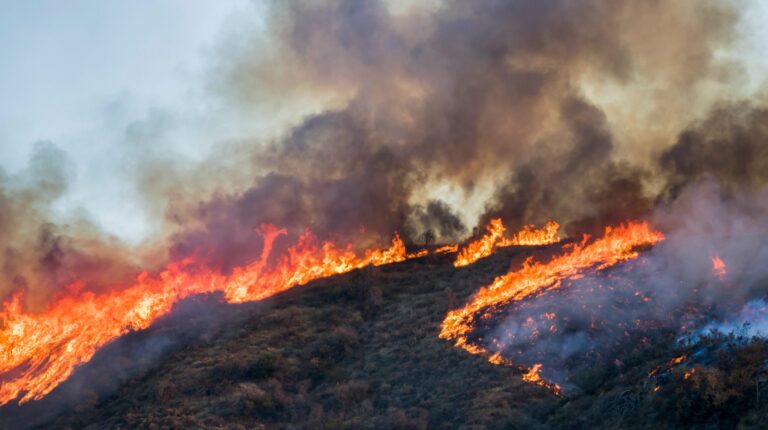
A wildfire burns on a hill, with smoke billowing into the sky
Share
LinkedIn Facebook Twitter Email

Severe heatwaves and droughts linked to human-driven climate change are making extreme wildfires increasingly frequent and destructive worldwide, according to the State of Wildfires 2024–25 report, co-led by ECMWF, the UK Centre for Ecology & Hydrology (UKCEH), the UK Met Office and the University of East Anglia (UEA).

Published in Earth System Science Data, the annual assessment provides mounting evidence that global warming is amplifying wildfire risk, with advanced satellite observations and modeling revealing that fires are now larger, longer lasting and more polluting than ever.

Between March 2024 and February 2025, wildfires burned 3.7 million km² globally – an area larger than India – emitting over eight billion metric tons of CO₂, around 10% above the average since 2023, driven by unusually intense forest fires regions such as South America, California and Canada.

In Southern California, January’s Los Angeles wildfires were estimated to be twice as likely and 25 times larger in today’s warmer climate than in a pre-industrial world. Fires in the Pantanal–Chiquitano region of South America were 35 times larger than they would have been without human-induced warming.

Creating dangerous conditions

The scientists’ advanced modeling identified the respective roles of weather, vegetation density and ignition sources in determining the most extreme events.

Report co-lead Dr Francesca Di Giuseppe of ECMWF explained, “Climate change is not only creating more dangerous fire-prone weather conditions, but it is also influencing the rates at which vegetation grows and provides fuel for the fires to spread.

“Our analyses detected the critical role of both extreme weather and fuel in the Los Angeles fires, with unusually wet weather in the preceding 30 months contributing to strong vegetation growth and laying the perfect foundations for wildfires to occur when unusually hot and dry conditions arrived in January.”

The amount and dryness of vegetation also played a critical role during the extreme wildfires in Amazonia and Congo, where abnormally dry forests and wetlands allowed fires to spread faster and further.

Future projections

Extreme fires like those in the Pantal-Chiquitano region – which previously might have occurred once in a lifetime – could happen every 15-20 years by the end of the century if global greenhouse gas emissions continue on their current path, the researchers said.

The report warns that without rapid global emissions cuts and improved land and fire management, extreme wildfire seasons like 2024–25 could become routine by century’s end. Land and fire management policies and practices can also help to mitigate damage.

Report co-lead Dr Matt Jones of the University of East Anglia said, “We urge world leaders at COP30 to make bold commitments to cut greenhouse gas emissions rapidly this decade. This is the single most powerful contribution that most developed nations can make to avoiding the worst impacts of extreme wildfires on living and future generations.”

In related news, Study finds climate change may lead to less frequent but more devastating hailstorms in Europe

Previous ArticleJauen International to distribute Vaisala weather solutions in South Korea
Next Article Royal Meteorological Society releases State of the Climate Report for the UK Energy Sector

Read Similar Stories

Extreme Weather

AI model improves real-time prediction of wildfire spread

April 16, 20263 Mins Read
Climate Measurement

Study identifies atmospheric trigger behind flash droughts in Puerto Rico

April 15, 20263 Mins Read
Satellites

AI tool uses weather satellite data to map ocean currents in near real time

April 14, 20263 Mins Read
Latest News

Northumbria University secures £4m to study Earth’s radiation belts

April 16, 2026

AI model improves real-time prediction of wildfire spread

April 16, 2026

Study identifies atmospheric trigger behind flash droughts in Puerto Rico

April 15, 2026

Receive breaking stories and features in your inbox each week, for free


Enter your email address:


Supplier Spotlights
  • GAMIC GmbH
Getting in Touch
  • Contact Us / Advertise
  • Meet the Editors
  • Media Pack
  • Free Weekly E-Newsletter
Our Social Channels
  • Facebook
  • LinkedIn
© 2026 UKi Media & Events a division of UKIP Media & Events Ltd
  • Cookie Policy
  • Privacy Policy
  • Terms and Conditions
  • Notice and Takedown Policy

Type above and press Enter to search. Press Esc to cancel.