


Close Menu
Meteorological Technology International
  • News
    • A-E
      • Agriculture
      • Automated Weather Stations
      • Aviation
      • Climate Measurement
      • Data
      • Developing Countries
      • Digital Applications
      • Early Warning Systems
      • Extreme Weather
    • G-P
      • Hydrology
      • Lidar
      • Lightning Detection
      • New Appointments
      • Nowcasting
      • Numerical Weather Prediction
      • Polar Weather
    • R-S
      • Radar
      • Rainfall
      • Remote Sensing
      • Renewable Energy
      • Satellites
      • Solar
      • Space Weather
      • Supercomputers
    • T-Z
      • Training
      • Transport
      • Weather Instruments
      • Wind
      • World Meteorological Organization
      • Meteorological Technology World Expo
  • Features
  • Online Magazines
    • January 2026
    • April 2025
    • January 2025
    • September 2024
    • April 2024
    • Archive Issues
    • Subscribe Free!
  • Opinion
  • Videos
  • Supplier Spotlight
  • Expo
LinkedIn X (Twitter) Facebook
  • Sign-up for Free Weekly E-Newsletter
  • Meet the Editors
  • Contact Us
  • Media Pack
LinkedIn Facebook
Subscribe
Meteorological Technology International
  • News
      • Agriculture
      • Automated Weather Stations
      • Aviation
      • Climate Measurement
      • Data
      • Developing Countries
      • Digital Applications
      • Early Warning Systems
      • Extreme Weather
      • Hydrology
      • Lidar
      • Lightning Detection
      • New Appointments
      • Nowcasting
      • Numerical Weather Prediction
      • Polar Weather
      • Radar
      • Rainfall
      • Remote Sensing
      • Renewable Energy
      • Satellites
      • Solar
      • Space Weather
      • Supercomputers
      • Training
      • Transport
      • Weather Instruments
      • Wind
      • World Meteorological Organization
      • Meteorological Technology World Expo
  • Features
  • Online Magazines
    1. January 2026
    2. September 2025
    3. April 2025
    4. January 2025
    5. September 2024
    6. April 2024
    7. January 2024
    8. September 2023
    9. April 2023
    10. Archive Issues
    11. Subscribe Free!
    Featured
    November 27, 2025

    In this Issue – January 2026

    By Hazel KingNovember 27, 2025
    Recent

    In this Issue – January 2026

    November 27, 2025

    In this Issue – September 2025

    August 11, 2025

    In this Issue – April 2025

    April 15, 2025
  • Opinion
  • Videos
  • Supplier Spotlight
  • Expo
Facebook LinkedIn
Subscribe
Meteorological Technology International
Digital Applications

Biden-Harris Administration invests US$250,000 in AI tool for wildland firefighting

Elizabeth BakerBy Elizabeth BakerMay 31, 20243 Mins Read
Share LinkedIn Facebook Twitter Email
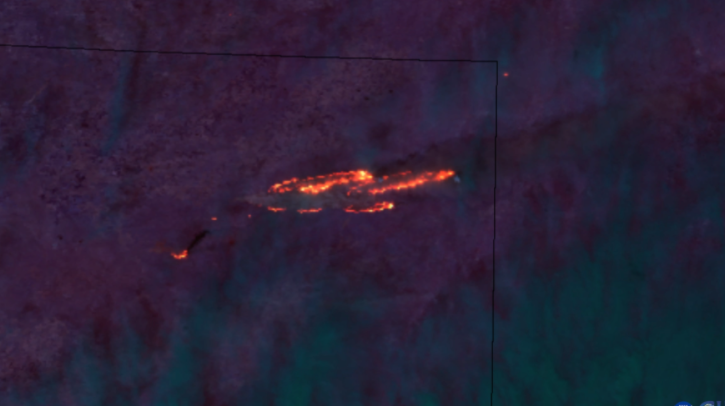
Biden-Harris Administration invests US$250,000 in AI tool for wildland firefighting A satellite image of the Texas Panhandle Fires
A high resolution view of Texas Panhandle Fires from satellite NOAA-20 NOAA-21 S-NPP, which shows how as the fast-moving cold front encounters the wildfires scorching Texas and Oklahoma, the fires are oriented from east-west to north-south following the new wind direction. Credit: NOAA
Share
LinkedIn Facebook Twitter Email

The Department of Commerce and NOAA have announced US$250,000 in funding to support the development of an artificial intelligence (AI) model, which is expected to improve fire weather forecasts through better lightning prediction.

NOAA’s customized AI model LightningCast

This funding is part of a larger Bipartisan Infrastructure Law (BIL) investment to improve fire weather research from President Biden’s Investing in America agenda. With the funding, the Center for Satellite Applications and Research, part of NOAA’s National Environmental Satellite, Data and Information Service (NESDIS), and the University of Wisconsin Cooperative Institute for Meteorological Satellite Studies (CIMSS) are creating a customized version of LightningCast.

This AI model uses imagery and data from the advanced baseline imager and the geostationary lightning mapper – both of which fly on NOAA’s geostationary satellites – to predict lightning strikes in the next hour at any given location, including those around wildland fires. This version of LightningCast includes a new interface, additional machine learning (ML) technology and fire-related data to increase its value for decision making.

The wildland fire-focused version of LightningCast began testing in August 2023, within the newly formed NOAA Fire Weather Testbed. Users will continue to explore the tool and provide feedback for this year’s wildland fire season. NOAA plans to transition LightningCast to an operational status in 2025.

“LightningCast is continuing to evolve to meet the demand for timely and actionable information,” said Mike Pavolonis, NESDIS Wildland Fire Program manager. “LightningCast is one of several new satellite-based tools NOAA is developing to address the increasing wildland fire challenge.”

Improving fire weather forecasts

“This investment, made possible thanks to President Biden’s Bipartisan Infrastructure Law, will significantly improve NOAA’s fire weather forecasts while safeguarding firefighters who risk their lives each day to serve Americans impacted by wildland fires,” said US Secretary of Commerce Gina Raimondo.

“Wildland fires pose a major threat to our nation,” said Michael C Morgan, assistant administrator of commerce for environmental observation and prediction at NOAA. “NOAA remains committed to finding ways to use AI, machine learning and other technologies to improve the accuracy of our forecasts and warnings, and better serve first responders as they work to protect lives and property.”

According to the National Interagency Fire Center, from 2013–2022, there were an average of 61,410 wildland fires annually, with an average of 7.2 million acres burned each year. In 2022 alone, 68,988 wildland fires burned 7.6 million acres.

In addition to the risk of lightning strikes, wildland firefighters also contend with new blazes ignited by lightning strikes. Incident meteorologists (IMETs) at NOAA’s National Weather Service use LightningCast to provide real-time information to wildland fire incident teams, which improves the safety and effectiveness of their wildland fire response.

In related news, the Biden-Harris Administration recently announced it would invest US$3.72m to support research on Great Lakes water-level forecasts, as part of President Biden’s Investing in America agenda, under the Bipartisan Infrastructure Law. Click here to read the full story.

Previous ArticleCASE STUDY: Trans-African Hydro-Meteorological Observatory
Next Article EUMETSAT to provide meteorological satellite data to African Union Commission

Read Similar Stories

Extreme Weather

AI model improves real-time prediction of wildfire spread

April 16, 20263 Mins Read
Climate Measurement

Study identifies atmospheric trigger behind flash droughts in Puerto Rico

April 15, 20263 Mins Read
Climate Measurement

New tool speeds up climate model evaluation

April 13, 20262 Mins Read
Latest News

Northumbria University secures £4m to study Earth’s radiation belts

April 16, 2026

AI model improves real-time prediction of wildfire spread

April 16, 2026

Study identifies atmospheric trigger behind flash droughts in Puerto Rico

April 15, 2026

Receive breaking stories and features in your inbox each week, for free


Enter your email address:


Supplier Spotlights
  • Synoptic Data PBC
Getting in Touch
  • Contact Us / Advertise
  • Meet the Editors
  • Media Pack
  • Free Weekly E-Newsletter
Our Social Channels
  • Facebook
  • LinkedIn
© 2026 UKi Media & Events a division of UKIP Media & Events Ltd
  • Cookie Policy
  • Privacy Policy
  • Terms and Conditions
  • Notice and Takedown Policy

Type above and press Enter to search. Press Esc to cancel.