


WMO has published a report on the year’s progress in strengthening early warning services and building resilience to extreme weather and climate change impacts in some of the world’s most vulnerable countries.
The Delivering on Early Warning Systems in Fragility and Conflict Contexts report demonstrates that despite the Covid-19 pandemic and its socio-economic fallout, the Climate Risk and Early Warning Systems (CREWS) initiative helped save lives, livelihoods and assets in these countries. The annual report outlines how CREWS partners adapt and seek solutions to deliver results in conflict-torn and fragile countries. Currently, 19 countries benefitting from CREWS national investments and regional projects are on the World Bank’s list of fragile and conflict-affected situations. This number will rise when pipeline projects become operational.
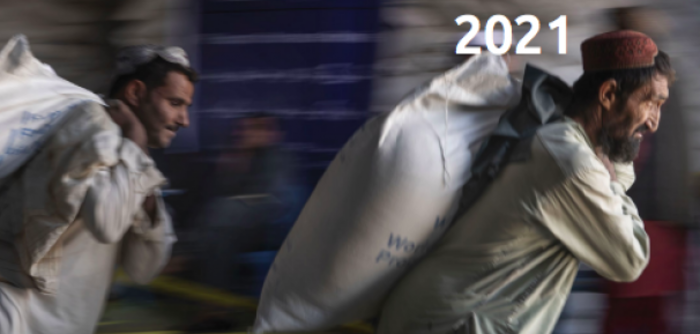
Examples include Afghanistan, Haiti, Chad, Mali, Niger, Cambodia and Laos. In Afghanistan’s highly food-insecure situation, reorienting project-developed tools helped aid and humanitarian agencies reach millions of people. In Haiti, Chad, Mali and Niger, progress was made despite multiple and simultaneous crises. These and other West African countries show that investment in institutional capacity-building is paying off as weather services have improved during uncertain times. These countries have also pushed forward on engaging and empowering women in disaster risk management. Organic and formal women leaders’ networks are now emerging to mobilize and warn communities before disaster strikes. Furthermore, a new initiative for Cambodia and Laos PDR will help strengthen climate adaptation and disaster resilience, building on previous Canadian-funded CREWS support for two of Asia’s most disaster-prone countries.
CREWS also took its first steps in implementing its five-year operational plan – Delivering at Scale 2021-2025. Through its partnership with the International Federation of Red Cross and Red Crescent Societies (IFRC), best practices for people-centered operations were identified. Work began on the Accelerated Support Window, a rapid financing system for quick and targeted high-priority assistance to be launched in 2022.
The report launch event highlighted the support of the financial contributors. CREWS members are Australia, Finland, France, Germany, Luxembourg, the Netherlands, Switzerland and the UK. Canada is also supporting CREWS projects. Also presented at the launch were the findings of the recently finalized project funded by Environment Canada and aligned with CREWS. Representatives from less-developed countries and small island developing states gave testimony on how CREWS projects protect lives and livelihoods on the ground.
The annual report was launched on May 24 at an event on the margins of the Global Platform for Disaster Risk Reduction in Bali, Indonesia. It was hosted by Mami Mizutori, the special representative of the secretary-general for disaster risk reduction and head of the UN Office for Disaster Risk Reduction, and attended by UN assistant secretary-general for climate action, Selwin Hart.
In the report foreword, Stéphane Crouzat, French climate ambassador and chair of the CREWS steering committee, said, “The 2021 CREWS Annual Report should give hope. The creativity and versatility of national, regional and implementing partners (the World Meteorological Organization, the World Bank Global Facility for Disaster Risk Reduction and the United Nations Office for Disaster Risk Reduction) allowed us to find solutions in complex crises and show our added value time and again. As global challenges mount, so does the case for investment in early warning. This report illustrates numerous and different ways CREWS projects are laying the foundations for potentially profound change. Together, we must build on these. By putting shoulder to the wheel, the rewards will be incalculable.”
He continued, “Sustained member support underlines the criticality of CREWS’ mandate and impact: our funding rose by 17% in 2021 through additional contributions from several donors. We also initiated private-sector and insurance-industry engagement, while various institutional diagnostics carried out across projects included alternative investment plans for sustainability. Nevertheless, our resource mobilization efforts will need stepping up to meet longer-term objectives and needs, the priority being to raise US$95m to meet our target of an additional US$107m by 2025.”
Hart said, “We need to scale up support for those on the frontlines of the climate crisis. Initiatives like CREWS deliver concrete results to those who need it most. One in three persons in a SIDS or LDC and six out of ten persons in Africa don’t have access to early warning systems. We have to collaborate and cooperate as we’ve never done before.”
Petteri Taalas, secretary-general of the WMO, said, “While years of disaster preparedness investment mean we are better at saving lives, economic losses continue to increase. Early warning systems are critically required for climate adaptation, yet less than half of WMO members have them. The UN secretary-general has asked WMO to spearhead new action to ensure every person is protected by early warning systems within five years. CREWS will play an essential role in helping us reach this target and protect the most vulnerable.”