


The WMO’s Regional Association for Africa met virtually from May 13-15, 2024, to address Africa’s challenges in weather-, water- and climate-related issues.
The meeting brought together heads of national meteorological and hydrological services throughout Africa to address critical concerns about strengthening observation networks, enhancing climate services, promoting sustainable water management and fostering regional cooperation.
Essential investments in observation infrastructure
In view of Africa’s exposure to extreme weather events, the regional association meeting discussed the importance of efficient and reliable climate-related services. It adopted resolutions and decisions to strengthen observational networks, improve forecasting systems and build capacity for climate adaptation and mitigation. It also highlighted the significance of sustainable water management practices, emphasizing monitoring of hydrological systems and promoting transboundary cooperation.
Accurate and timely weather, water and climate information was found to be essential for informed decision making. Therefore, investments in observation infrastructure and disseminating relevant information were highlighted as vital to the safety of life and property in the face of hazards such as tropical cyclones, droughts and floods.
Discussions at the three-day session also included flood and drought management, capacity development and integrated health science and services.
Overall, the virtual session focused on implementing the WMO Strategic Plan 2024–2027, addressing key priorities such as the implementation of the Global Basic Observing Network (GBON) and the WMO Information System (WIS), and advancing the WMO strategy for service delivery through digital transformation.
Additionally, the session addressed the effective implementation of resolutions, plugging existing gaps and providing input for future WMO activities. Participants, principally permanent representatives, hydrological advisers and stakeholders, are expected to actively shape strategies for a more resilient and sustainable Africa.
Leadership addresses
“The application of meteorological and hydrological knowledge is invaluable in safeguarding lives, protecting property, supporting sustainable development and fostering community resilience in the face of climate-related challenges,” stated WMO Secretary-General Celeste Saulo in an opening address. “Robust early warning systems for weather-related hazards, such as storms, floods and droughts, to safeguard lives, livelihoods and infrastructure are critical as about 60% of the African continent is not currently covered by early warning services.”
In his keynote address, Abdulla Al Mandous, president of the WMO, said, “WMO is working to ensure that Africa has the capacity to deliver the weather, climate and water services that are essential for sustainable development. This includes investing in education and training and supporting capacity enhancement of national meteorological and hydrological services.”
Fetene Teshome, president of the Regional Association for Africa (RAI) and permanent representative of the Federal Democratic Republic of Ethiopia to WMO, commented, “This regional association is conscious of implementing the Early Warnings for All in Africa, which seeks to strengthen national multi-hazard early warning/alert systems and to better enable an effective response to risks to ensure that every citizen is covered with early warnings by 2027.”
Extreme weather context
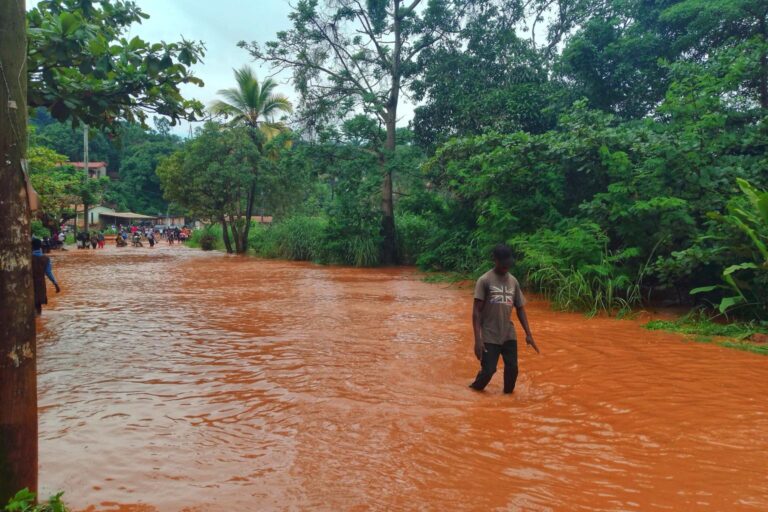
At the meeting, the gathered organizations pointed out that the importance of early warnings has been highlighted by extreme weather gripping different parts of the continent. Flooding from exceptionally heavy seasonal rainfall has reportedly caused hundreds of casualties in East Africa, destroying infrastructure and crops and killing livestock. Burundi, Ethiopia, Kenya, Somalia and the United Republic of Tanzania were found to be among the worst-hit countries.
According to the representatives, Southern Africa is currently facing an extreme environmental and humanitarian crisis as a severe drought grips the region, affecting countries including Zimbabwe, Zambia and Malawi.
The waning El Niño event, alongside a phenomenon known as the Indian Ocean Dipole, and high sea surface temperatures, are estimated to be playing a role. However, the excess energy trapped in the atmosphere and ocean by human-induced greenhouse gases is also recorded as having a major influence by turbocharging the extreme weather.
In related news, the Climate Risk and Early Warning Systems (CREWS) Initiative was recently granted US$7m in funding for a new three-year multi-hazard early warning systems (EWS) project in the Caribbean region. Click here to read the full story.