


Close Menu
Meteorological Technology International
  • News
    • A-E
      • Agriculture
      • Automated Weather Stations
      • Aviation
      • Climate Measurement
      • Data
      • Developing Countries
      • Digital Applications
      • Early Warning Systems
      • Extreme Weather
    • G-P
      • Hydrology
      • Lidar
      • Lightning Detection
      • New Appointments
      • Nowcasting
      • Numerical Weather Prediction
      • Polar Weather
    • R-S
      • Radar
      • Rainfall
      • Remote Sensing
      • Renewable Energy
      • Satellites
      • Solar
      • Space Weather
      • Supercomputers
    • T-Z
      • Training
      • Transport
      • Weather Instruments
      • Wind
      • World Meteorological Organization
      • Meteorological Technology World Expo
  • Features
  • Online Magazines
    • January 2026
    • April 2025
    • January 2025
    • September 2024
    • April 2024
    • Archive Issues
    • Subscribe Free!
  • Opinion
  • Videos
  • Supplier Spotlight
  • Expo
LinkedIn X (Twitter) Facebook
  • Sign-up for Free Weekly E-Newsletter
  • Meet the Editors
  • Contact Us
  • Media Pack
LinkedIn Facebook
Subscribe
Meteorological Technology International
  • News
      • Agriculture
      • Automated Weather Stations
      • Aviation
      • Climate Measurement
      • Data
      • Developing Countries
      • Digital Applications
      • Early Warning Systems
      • Extreme Weather
      • Hydrology
      • Lidar
      • Lightning Detection
      • New Appointments
      • Nowcasting
      • Numerical Weather Prediction
      • Polar Weather
      • Radar
      • Rainfall
      • Remote Sensing
      • Renewable Energy
      • Satellites
      • Solar
      • Space Weather
      • Supercomputers
      • Training
      • Transport
      • Weather Instruments
      • Wind
      • World Meteorological Organization
      • Meteorological Technology World Expo
  • Features
  • Online Magazines
    1. January 2026
    2. September 2025
    3. April 2025
    4. January 2025
    5. September 2024
    6. April 2024
    7. January 2024
    8. September 2023
    9. April 2023
    10. Archive Issues
    11. Subscribe Free!
    Featured
    November 27, 2025

    In this Issue – January 2026

    By Hazel KingNovember 27, 2025
    Recent

    In this Issue – January 2026

    November 27, 2025

    In this Issue – September 2025

    August 11, 2025

    In this Issue – April 2025

    April 15, 2025
  • Opinion
  • Videos
  • Supplier Spotlight
  • Expo
Facebook LinkedIn
Subscribe
Meteorological Technology International
Early Warning Systems

NPL and MSL detect earthquakes in Pacific Ocean using pioneering detection technique

Hazel KingBy Hazel KingMarch 28, 20253 Mins Read
Share LinkedIn Facebook Twitter Email
NPL and MSL detect earthquakes in Pacific Ocean using pioneering detection technique.
Share
LinkedIn Facebook Twitter Email

A team from the National Physical Laboratory (NSL) and the Measurement Standards Laboratory of New Zealand (MSL) has successfully detected a multitude of earthquakes in the Pacific Ocean using ultra-stable optical interferometry on undersea cables for the first time.

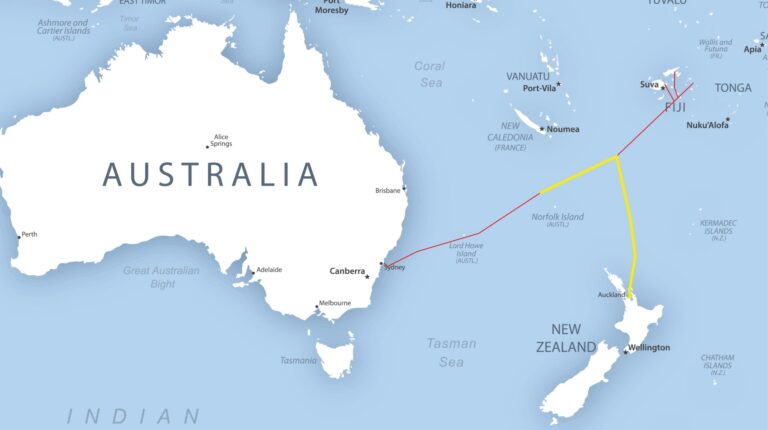
The team is performing ultra-sensitive optical measurements, converting a branch of the Southern Cross Next seafloor cable, which connects New Zealand to Australia, into an array of sensors for earthquakes and ocean currents. The technique uses the optical fiber inside the cable as the sensing element and gathers environmental data from the seabed, where no other permanent sensors exist.

The Pacific Ocean is a highly seismically active area. Since the measurements began in October 2024, the team has recorded more than 50 earthquakes, with epicenters from tens to hundreds of kilometers from the cable. This high rate of detection will drastically accelerate the research and refinement of the technique, which was previously tested in the less seismically active Atlantic Ocean.

Using NPL’s technique, the team will collect measurements until December 2025. These will be used to develop a worldwide monitoring network of seafloor sensors using the existing subsea infrastructure. According to NPL, this will help fill data gaps and improve understanding in several scientific areas, from seismology to oceanography and climate change.

Giuseppe Marra, principal scientist at NPL, commented, “We are very excited to have started detecting earthquakes and ocean currents in the Tasman Sea. This is the very first test of this technology in the Pacific Ocean; the waters surrounding New Zealand are the perfect laboratory to demonstrate the full potential of these innovative cable-based ocean monitoring techniques for Earth sciences and coastal population protection.

“This very successful UK-NZ project shows how exciting science can bring together countries at the opposite sides of the world. We look forward to more collaborative work with New Zealand.”

Tsunami experts at GNS Science (NZ) will analyze the data to assess its potential for detecting tsunamis and explore how these new technologies can complement more traditional approaches.

Bill Fry, a seismo-tectonophysicist at GNS, explained, “This is an awesome and creative example of leveraging existing data sources and expertise from around the world to increase our eyes and ears in the vast expanse of the Pacific Ocean. We believe that adding this new cabled data will complement other rich data sources and collectively deliver faster and better tsunami warnings that will save lives in New Zealand and across the Pacific.”

The Quantum Seismic Detection Project is enabled by the UK’s International Science Partnership Fund and supported by New Zealand’s Quantum Technologies Aotearoa program.

Previous ArticleNASA launches rockets from Alaska in Aurora experiment
Next Article UK Met Office to update power outage predictions for windstorms

Read Similar Stories

Climate Measurement

Regional training aims to improve flood forecasting in Central Africa

April 1, 20263 Mins Read
Early Warning Systems

European Commission sets out strategy to address growing wildfire risk

March 31, 20263 Mins Read
Rainfall

New research to improve flash flood warnings in rural Virginia

March 17, 20263 Mins Read
Latest News

Northumbria University secures £4m to study Earth’s radiation belts

April 16, 2026

AI model improves real-time prediction of wildfire spread

April 16, 2026

Study identifies atmospheric trigger behind flash droughts in Puerto Rico

April 15, 2026

Receive breaking stories and features in your inbox each week, for free


Enter your email address:


Supplier Spotlights
  • Synoptic Data PBC
Getting in Touch
  • Contact Us / Advertise
  • Meet the Editors
  • Media Pack
  • Free Weekly E-Newsletter
Our Social Channels
  • Facebook
  • LinkedIn
© 2026 UKi Media & Events a division of UKIP Media & Events Ltd
  • Cookie Policy
  • Privacy Policy
  • Terms and Conditions
  • Notice and Takedown Policy

Type above and press Enter to search. Press Esc to cancel.