


Close Menu
Meteorological Technology International
  • News
    • A-E
      • Agriculture
      • Automated Weather Stations
      • Aviation
      • Climate Measurement
      • Data
      • Developing Countries
      • Digital Applications
      • Early Warning Systems
      • Extreme Weather
    • G-P
      • Hydrology
      • Lidar
      • Lightning Detection
      • New Appointments
      • Nowcasting
      • Numerical Weather Prediction
      • Polar Weather
    • R-S
      • Radar
      • Rainfall
      • Remote Sensing
      • Renewable Energy
      • Satellites
      • Solar
      • Space Weather
      • Supercomputers
    • T-Z
      • Training
      • Transport
      • Weather Instruments
      • Wind
      • World Meteorological Organization
      • Meteorological Technology World Expo
  • Features
  • Online Magazines
    • January 2026
    • April 2025
    • January 2025
    • September 2024
    • April 2024
    • Archive Issues
    • Subscribe Free!
  • Opinion
  • Videos
  • Supplier Spotlight
  • Expo
LinkedIn X (Twitter) Facebook
  • Sign-up for Free Weekly E-Newsletter
  • Meet the Editors
  • Contact Us
  • Media Pack
LinkedIn Facebook
Subscribe
Meteorological Technology International
  • News
      • Agriculture
      • Automated Weather Stations
      • Aviation
      • Climate Measurement
      • Data
      • Developing Countries
      • Digital Applications
      • Early Warning Systems
      • Extreme Weather
      • Hydrology
      • Lidar
      • Lightning Detection
      • New Appointments
      • Nowcasting
      • Numerical Weather Prediction
      • Polar Weather
      • Radar
      • Rainfall
      • Remote Sensing
      • Renewable Energy
      • Satellites
      • Solar
      • Space Weather
      • Supercomputers
      • Training
      • Transport
      • Weather Instruments
      • Wind
      • World Meteorological Organization
      • Meteorological Technology World Expo
  • Features
  • Online Magazines
    1. January 2026
    2. September 2025
    3. April 2025
    4. January 2025
    5. September 2024
    6. April 2024
    7. January 2024
    8. September 2023
    9. April 2023
    10. Archive Issues
    11. Subscribe Free!
    Featured
    November 27, 2025

    In this Issue – January 2026

    By Hazel KingNovember 27, 2025
    Recent

    In this Issue – January 2026

    November 27, 2025

    In this Issue – September 2025

    August 11, 2025

    In this Issue – April 2025

    April 15, 2025
  • Opinion
  • Videos
  • Supplier Spotlight
  • Expo
Facebook LinkedIn
Subscribe
Meteorological Technology International
Data

Disaster Tech to integrate AI-powered forecasts into SaaS decision-support platform Pratus

Elizabeth BakerBy Elizabeth BakerJune 18, 20253 Mins Read
Share LinkedIn Facebook Twitter Email
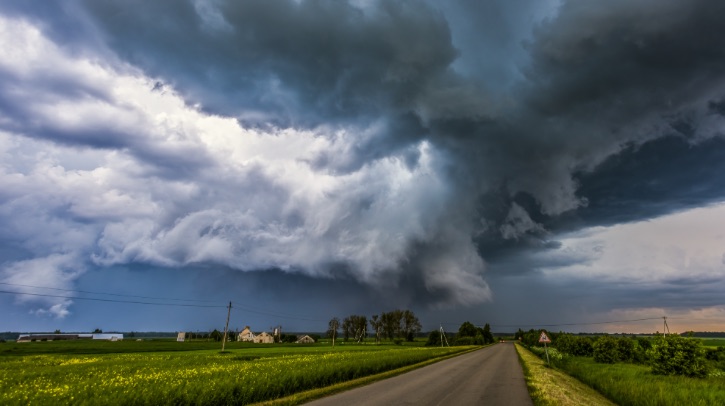
Dark storm clouds gather over a field, with a road running through the middle and green grass and crops on either side.
Share
LinkedIn Facebook Twitter Email

Disaster Tech has partnered with weather forecasting foundation model startup Silurian AI to advance extreme weather forecasting in its decision-support platform Pratus. This partnership “marks a significant leap forward” in delivering real-time, timely insights into tropical cyclones to decision-makers across the public and private sectors, Disaster Tech said.

Transforming crisis response

Silurian AI’s solution, GFT 1.2 (Generative Forecasting Transformer), is said to deliver high-resolution, regional AI-powered forecasts, providing a modern alternative to traditional physics-based models. Before launching Silurian AI, the team developed the Auora Foundation Model at Microsoft Research.

Pratus, developed by Disaster Tech, is a Software as a Service (SaaS) platform that consolidates situational intelligence, crisis action planning and operational exercises into a unified solution. The AI-powered platform is designed to help organizations act quickly, collaborate effectively and respond more efficiently during critical moments. Deployed on Microsoft Azure cloud and fully integrated into the Microsoft 365 ecosystem, including Teams and Copilot, Pratus enables organizations to manage real-world events without leaving the familiar workspace they rely on daily.

Silurian AI’s Atlantic Hurricane Forecast API brings ensemble-based storm tracking and predictive analytics to Pratus, enabling earlier and more accurate forecasts. A recent article published in Nature demonstrated how Silurian’s anchor technologies improved Atlantic tropical cyclone track accuracy by around 20%. Disaster Tech is expanding Pratus’s capabilities by integrating Silurian AI’s data alongside the platform’s existing National Hurricane Center (NHC) feed.

Upon initial integration, users will be able to view Silurian AI and NHC forecasts side by side, empowering decision-makers with comparative insights. This dual-model visibility supports the development of faster, more informed and resilient response strategies grounded in cutting-edge hurricane forecasting science. Following the initial rollout, the integration will expand to support additional extreme weather and ocean hazards.

Campaign for hurricane season

Disaster Tech will feature the Silurian AI GFT-C hurricane model through Pratus this hurricane season and will also host a series of activities during hurricane season to showcase this technology.

“Silurian has demonstrated robust peer-reviewed improvements to hurricane track prediction using novel AI methodologies; their AI-optimized tropical cyclone track predictions represent next-generation technologies that accelerate innovation in extreme weather impact prediction,” said Dr Jay Shafer, lead meteorologist at Disaster Tech who applies AI to assist humans in decision-making during crisis and to inform resilient business operations.

Jayesh Gupta, founder and CEO of Silurian AI, added, “We are proud to announce the integration of Silurian’s AI-driven GFT-C hurricane model with Disaster Tech’s Pratus platform. Pratus turns Silurian’s advanced hurricane guidance into actionable intelligence, enabling operators to anticipate hurricane impacts even earlier, safeguard critical infrastructure and keep communities powered when extreme weather strikes.”

In related news, the World Meteorological Organization’s Executive Council recently announced that, at its annual session, AI will be high on the council’s agenda due to its potential to revolutionize forecasts and help build resilience to more extreme weather and climate impacts. Read the full story here

Previous ArticleIndonesia contracts France and CLS to boost marine weather capabilities for €93m
Next Article EUMETSAT’s Meteosat-12 begins delivering prime geostationary meteorological satellite service for Europe

Read Similar Stories

Extreme Weather

AI model improves real-time prediction of wildfire spread

April 16, 20263 Mins Read
Climate Measurement

Study identifies atmospheric trigger behind flash droughts in Puerto Rico

April 15, 20263 Mins Read
Satellites

AI tool uses weather satellite data to map ocean currents in near real time

April 14, 20263 Mins Read
Latest News

Northumbria University secures £4m to study Earth’s radiation belts

April 16, 2026

AI model improves real-time prediction of wildfire spread

April 16, 2026

Study identifies atmospheric trigger behind flash droughts in Puerto Rico

April 15, 2026

Receive breaking stories and features in your inbox each week, for free


Enter your email address:


Supplier Spotlights
  • EWR Radar Systems
Getting in Touch
  • Contact Us / Advertise
  • Meet the Editors
  • Media Pack
  • Free Weekly E-Newsletter
Our Social Channels
  • Facebook
  • LinkedIn
© 2026 UKi Media & Events a division of UKIP Media & Events Ltd
  • Cookie Policy
  • Privacy Policy
  • Terms and Conditions
  • Notice and Takedown Policy

Type above and press Enter to search. Press Esc to cancel.