


Close Menu
Meteorological Technology International
  • News
    • A-E
      • Agriculture
      • Automated Weather Stations
      • Aviation
      • Climate Measurement
      • Data
      • Developing Countries
      • Digital Applications
      • Early Warning Systems
      • Extreme Weather
    • G-P
      • Hydrology
      • Lidar
      • Lightning Detection
      • New Appointments
      • Nowcasting
      • Numerical Weather Prediction
      • Polar Weather
    • R-S
      • Radar
      • Rainfall
      • Remote Sensing
      • Renewable Energy
      • Satellites
      • Solar
      • Space Weather
      • Supercomputers
    • T-Z
      • Training
      • Transport
      • Weather Instruments
      • Wind
      • World Meteorological Organization
      • Meteorological Technology World Expo
  • Features
  • Online Magazines
    • January 2026
    • April 2025
    • January 2025
    • September 2024
    • April 2024
    • Archive Issues
    • Subscribe Free!
  • Opinion
  • Videos
  • Supplier Spotlight
  • Expo
LinkedIn X (Twitter) Facebook
  • Sign-up for Free Weekly E-Newsletter
  • Meet the Editors
  • Contact Us
  • Media Pack
LinkedIn Facebook
Subscribe
Meteorological Technology International
  • News
      • Agriculture
      • Automated Weather Stations
      • Aviation
      • Climate Measurement
      • Data
      • Developing Countries
      • Digital Applications
      • Early Warning Systems
      • Extreme Weather
      • Hydrology
      • Lidar
      • Lightning Detection
      • New Appointments
      • Nowcasting
      • Numerical Weather Prediction
      • Polar Weather
      • Radar
      • Rainfall
      • Remote Sensing
      • Renewable Energy
      • Satellites
      • Solar
      • Space Weather
      • Supercomputers
      • Training
      • Transport
      • Weather Instruments
      • Wind
      • World Meteorological Organization
      • Meteorological Technology World Expo
  • Features
  • Online Magazines
    1. January 2026
    2. September 2025
    3. April 2025
    4. January 2025
    5. September 2024
    6. April 2024
    7. January 2024
    8. September 2023
    9. April 2023
    10. Archive Issues
    11. Subscribe Free!
    Featured
    November 27, 2025

    In this Issue – January 2026

    By Hazel KingNovember 27, 2025
    Recent

    In this Issue – January 2026

    November 27, 2025

    In this Issue – September 2025

    August 11, 2025

    In this Issue – April 2025

    April 15, 2025
  • Opinion
  • Videos
  • Supplier Spotlight
  • Expo
Facebook LinkedIn
Subscribe
Meteorological Technology International
Oceans

University of Washington forecasts Antarctic sea ice levels months in advance

Elizabeth BakerBy Elizabeth BakerDecember 18, 20243 Mins Read
Share LinkedIn Facebook Twitter Email
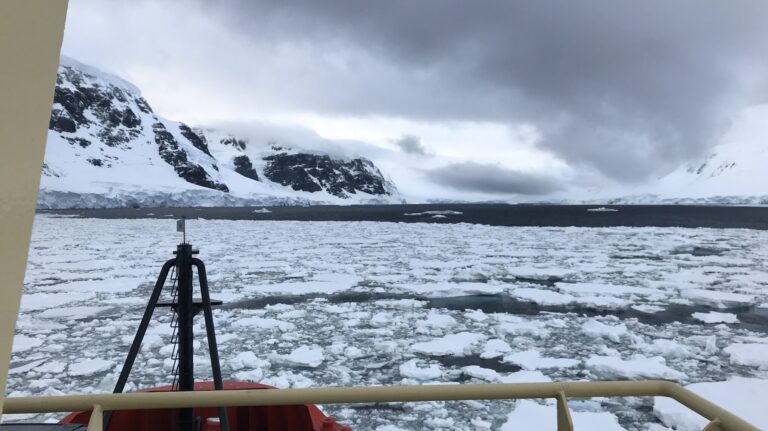
The sea ice off West Antarctica, seen here in October 2018 from a research vessel. New research explains and predicts the recent lows in winter sea ice around Antarctica. Credit: Hannah Dawson and University of Washington
Share
LinkedIn Facebook Twitter Email

University of Washington researchers have published an open-access study in Nature Communications Earth & Environment, which reveals that record-low Antarctic sea ice can be explained by wind patterns.

Understanding the record-low Antarctic Sea Ice

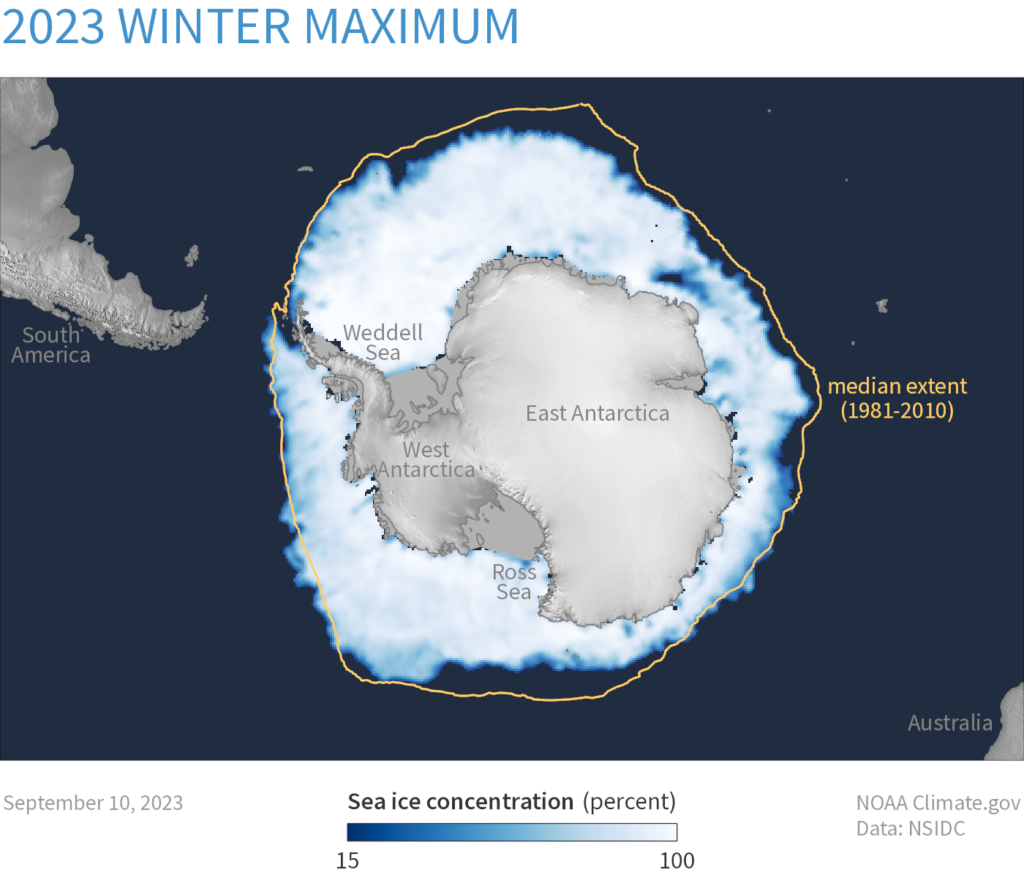
The research, funded by the National Science Foundation and the US Department of Energy, shows that the all-time record low Antarctic Sea Ice in 2023 can be explained by warm Southern Ocean conditions and patterns in the winds that circled Antarctica months earlier, enabling forecasts for sea ice coverage around the South Pole to be generated six or more months in advance. This could support regional and global weather and climate models.

“Since 2015, total Antarctic sea ice area has dramatically declined,” said lead author Zac Espinosa, a UW doctoral student in atmospheric and climate science. “State-of-the-art forecasting methods for sea ice generally struggle to produce reliable forecasts at such long leads. We show that winter Antarctic sea ice has significant predictability at six- to nine-month lead times.”

Updating the global climate simulation

The authors used a global climate model to simulate how ocean and air temperatures, including longer-term cycles like El Niño and La Niña, affect sea ice in the Southern Ocean. Results showed that the 2023 El Niño was less important than previously thought. Instead, an arching pattern of regional winds and their effects on ocean temperatures up to six months in advance could explain 70% of the 2023 record-low winter sea ice. These winds cause ocean mixing in the Southern Ocean that can pull deeper warm water up to the surface, thus suppressing sea ice growth. Winds can also push sea ice poleward toward Antarctica to prevent the sea ice edge from expanding north, transport heat from lower latitudes toward the poles, and generate ocean waves that break up sea ice. Using the same approach for the 2024 observations correctly predicted that this would be another low year for Southern Ocean sea ice cover.
Credit: NOAA

“It’s interesting that, despite how unusual the winter sea ice conditions were in 2023 and again in 2024, our results show they were remarkably predictable over six months in advance,” said co-author Edward Blanchard-Wrigglesworth, a UW research associate professor of atmospheric and climate science.

Although doctoral student Espinosa does most of his research with a computer, last summer he participated in a research expedition to study Arctic sea ice in the field.

“Antarctic sea ice is a major control on the rate of global warming and the stability of ice on the Antarctic continent,” Espinosa said. “In fact, the sea ice acts to buttress ice shelves, increasing their stability and slowing the rate of global sea level rise. This ice is also important for marine and coastal ecosystems.”

As summer arrives in the Southern Hemisphere, the current sea ice extent remains sparse around Antarctica, close to a record low for this time of the year.

“Our success at predicting these major sea ice loss events so far in advance demonstrates our understanding of the mechanism that caused them,” said co-author Cecilia Bitz, a UW professor of atmospheric and climate science. “Our model and methods are geared up to predict future sea ice loss events.”

In related news, the University of Washington recently examined a deep-learning approach to understanding how small changes to initial conditions impact weather forecasts and how deep-learning frameworks could result in near-perfect 10-day weather forecasts. Click here to read the full story.

Previous ArticleEurope launches Sentinel-1C radar satellite
Next Article South African Weather Service and China Meteorological Administration partner on forecasting and early warning systems

Read Similar Stories

Climate Measurement

Study identifies atmospheric trigger behind flash droughts in Puerto Rico

April 15, 20263 Mins Read
Satellites

AI tool uses weather satellite data to map ocean currents in near real time

April 14, 20263 Mins Read
Climate Measurement

New tool speeds up climate model evaluation

April 13, 20262 Mins Read
Latest News

Northumbria University secures £4m to study Earth’s radiation belts

April 16, 2026

AI model improves real-time prediction of wildfire spread

April 16, 2026

Study identifies atmospheric trigger behind flash droughts in Puerto Rico

April 15, 2026

Receive breaking stories and features in your inbox each week, for free


Enter your email address:


Supplier Spotlights
  • Meteorage
Getting in Touch
  • Contact Us / Advertise
  • Meet the Editors
  • Media Pack
  • Free Weekly E-Newsletter
Our Social Channels
  • Facebook
  • LinkedIn
© 2026 UKi Media & Events a division of UKIP Media & Events Ltd
  • Cookie Policy
  • Privacy Policy
  • Terms and Conditions
  • Notice and Takedown Policy

Type above and press Enter to search. Press Esc to cancel.