


Close Menu
Meteorological Technology International
  • News
    • A-E
      • Agriculture
      • Automated Weather Stations
      • Aviation
      • Climate Measurement
      • Data
      • Developing Countries
      • Digital Applications
      • Early Warning Systems
      • Extreme Weather
    • G-P
      • Hydrology
      • Lidar
      • Lightning Detection
      • New Appointments
      • Nowcasting
      • Numerical Weather Prediction
      • Polar Weather
    • R-S
      • Radar
      • Rainfall
      • Remote Sensing
      • Renewable Energy
      • Satellites
      • Solar
      • Space Weather
      • Supercomputers
    • T-Z
      • Training
      • Transport
      • Weather Instruments
      • Wind
      • World Meteorological Organization
      • Meteorological Technology World Expo
  • Features
  • Online Magazines
    • January 2026
    • April 2025
    • January 2025
    • September 2024
    • April 2024
    • Archive Issues
    • Subscribe Free!
  • Opinion
  • Videos
  • Supplier Spotlight
  • Expo
LinkedIn X (Twitter) Facebook
  • Sign-up for Free Weekly E-Newsletter
  • Meet the Editors
  • Contact Us
  • Media Pack
LinkedIn Facebook
Subscribe
Meteorological Technology International
  • News
      • Agriculture
      • Automated Weather Stations
      • Aviation
      • Climate Measurement
      • Data
      • Developing Countries
      • Digital Applications
      • Early Warning Systems
      • Extreme Weather
      • Hydrology
      • Lidar
      • Lightning Detection
      • New Appointments
      • Nowcasting
      • Numerical Weather Prediction
      • Polar Weather
      • Radar
      • Rainfall
      • Remote Sensing
      • Renewable Energy
      • Satellites
      • Solar
      • Space Weather
      • Supercomputers
      • Training
      • Transport
      • Weather Instruments
      • Wind
      • World Meteorological Organization
      • Meteorological Technology World Expo
  • Features
  • Online Magazines
    1. January 2026
    2. September 2025
    3. April 2025
    4. January 2025
    5. September 2024
    6. April 2024
    7. January 2024
    8. September 2023
    9. April 2023
    10. Archive Issues
    11. Subscribe Free!
    Featured
    November 27, 2025

    In this Issue – January 2026

    By Hazel KingNovember 27, 2025
    Recent

    In this Issue – January 2026

    November 27, 2025

    In this Issue – September 2025

    August 11, 2025

    In this Issue – April 2025

    April 15, 2025
  • Opinion
  • Videos
  • Supplier Spotlight
  • Expo
Facebook LinkedIn
Subscribe
Meteorological Technology International
Space Weather

NASA launches rockets from Alaska in Aurora experiment

Hazel KingBy Hazel KingMarch 27, 20252 Mins Read
Share LinkedIn Facebook Twitter Email
NASA launches rockets from Alaska in Aurora experiment.
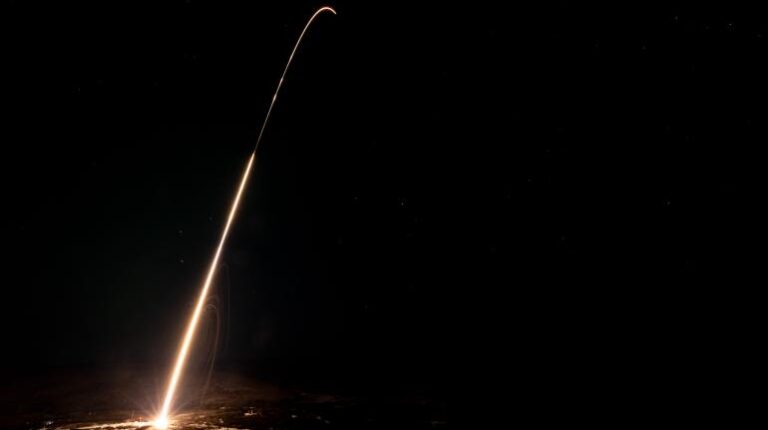
The second NASA rocket, the four-stage Black Brant XII, launched early on March 25, 2025, from Poker Flat Research Range on the second night of the AWESOME sounding rocket mission. Photo by Bryan Whitten
Share
LinkedIn Facebook Twitter Email

Two NASA-funded rockets have been launched from Poker Flat Research Range in Fairbanks, Alaska, with a third expected to be launched by April 6 in a mission aimed at learning more about how the aurora affects the upper atmosphere.

The University of Alaska Fairbanks (UAF) Geophysical Institute owns Poker Flat, 32km north of Fairbanks, and operates it under a contract with NASA’s Wallops Flight Facility, which is part of the Goddard Space Flight Center.

The mission is led by UAF space physics professor Mark Conde of the Geophysical Institute and UAF College of Natural Science and Mathematics, and involves several UAF graduate student researchers at several ground monitoring sites. NASA and some of the nation’s top universities are also participating.

“I’m extremely pleased that we were able to get the conditions to line up to allow us to launch and to conduct the experiment,” Conde said. “I am absolutely delighted.”

According to Conde, the mission was more difficult than most because it was essentially two missions in one.

“Because we had the two-stage rockets deploying over central Alaska and the four-stage rocket deploying off the north coast of Alaska, we essentially were conducting two independent tracer experiments at the same time,” Conde explained. “And because the camera locations we needed were completely different for each of those rockets, we needed many camera sites to be clear at the same time.”

Results of the experiment, titled Auroral Waves Excited by Substorm Onset Magnetic Events (AWESOME), could upend a long-held theory about the aurora’s interaction with the thermosphere. It may also improve space weather forecasting, which is critical as the world becomes increasingly reliant on satellite-based devices such as GPS units in everyday life.

The experiment features one four-stage rocket and two two-stage rockets. For more information, click here.

Previous ArticleSERCOM approves WMO updates on hazardous events and early warnings
Next Article NPL and MSL detect earthquakes in Pacific Ocean using pioneering detection technique

Read Similar Stories

Space Weather

Northumbria University secures £4m to study Earth’s radiation belts

April 16, 20262 Mins Read
Solar

Mauna Loa Solar Observatory reopens to support Artemis II mission

April 8, 20262 Mins Read
Satellites

NCAR researchers create breakthrough tool to enhance space weather prediction

February 24, 20262 Mins Read
Latest News

Northumbria University secures £4m to study Earth’s radiation belts

April 16, 2026

AI model improves real-time prediction of wildfire spread

April 16, 2026

Study identifies atmospheric trigger behind flash droughts in Puerto Rico

April 15, 2026

Receive breaking stories and features in your inbox each week, for free


Enter your email address:


Supplier Spotlights
  • Sommer GmbH
Getting in Touch
  • Contact Us / Advertise
  • Meet the Editors
  • Media Pack
  • Free Weekly E-Newsletter
Our Social Channels
  • Facebook
  • LinkedIn
© 2026 UKi Media & Events a division of UKIP Media & Events Ltd
  • Cookie Policy
  • Privacy Policy
  • Terms and Conditions
  • Notice and Takedown Policy

Type above and press Enter to search. Press Esc to cancel.