


Close Menu
Meteorological Technology International
  • News
    • A-E
      • Agriculture
      • Automated Weather Stations
      • Aviation
      • Climate Measurement
      • Data
      • Developing Countries
      • Digital Applications
      • Early Warning Systems
      • Extreme Weather
    • G-P
      • Hydrology
      • Lidar
      • Lightning Detection
      • New Appointments
      • Nowcasting
      • Numerical Weather Prediction
      • Polar Weather
    • R-S
      • Radar
      • Rainfall
      • Remote Sensing
      • Renewable Energy
      • Satellites
      • Solar
      • Space Weather
      • Supercomputers
    • T-Z
      • Training
      • Transport
      • Weather Instruments
      • Wind
      • World Meteorological Organization
      • Meteorological Technology World Expo
  • Features
  • Online Magazines
    • January 2026
    • April 2025
    • January 2025
    • September 2024
    • April 2024
    • Archive Issues
    • Subscribe Free!
  • Opinion
  • Videos
  • Supplier Spotlight
  • Expo
LinkedIn X (Twitter) Facebook
  • Sign-up for Free Weekly E-Newsletter
  • Meet the Editors
  • Contact Us
  • Media Pack
LinkedIn Facebook
Subscribe
Meteorological Technology International
  • News
      • Agriculture
      • Automated Weather Stations
      • Aviation
      • Climate Measurement
      • Data
      • Developing Countries
      • Digital Applications
      • Early Warning Systems
      • Extreme Weather
      • Hydrology
      • Lidar
      • Lightning Detection
      • New Appointments
      • Nowcasting
      • Numerical Weather Prediction
      • Polar Weather
      • Radar
      • Rainfall
      • Remote Sensing
      • Renewable Energy
      • Satellites
      • Solar
      • Space Weather
      • Supercomputers
      • Training
      • Transport
      • Weather Instruments
      • Wind
      • World Meteorological Organization
      • Meteorological Technology World Expo
  • Features
  • Online Magazines
    1. January 2026
    2. September 2025
    3. April 2025
    4. January 2025
    5. September 2024
    6. April 2024
    7. January 2024
    8. September 2023
    9. April 2023
    10. Archive Issues
    11. Subscribe Free!
    Featured
    November 27, 2025

    In this Issue – January 2026

    By Hazel KingNovember 27, 2025
    Recent

    In this Issue – January 2026

    November 27, 2025

    In this Issue – September 2025

    August 11, 2025

    In this Issue – April 2025

    April 15, 2025
  • Opinion
  • Videos
  • Supplier Spotlight
  • Expo
Facebook LinkedIn
Subscribe
Meteorological Technology International
Satellites

Hyperspectral microwave sounder demonstrator launched to improve weather forecasting

Alex PackBy Alex PackMarch 9, 20263 Mins Read
Share LinkedIn Facebook Twitter Email
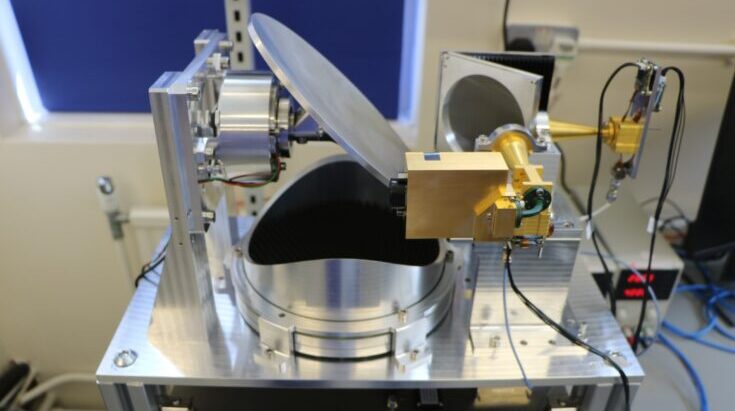
Hyperspectral microwave sounder demonstrator launched to improve weather forecasting.
Credit: UK Research and Innovation (UKRI)
Share
LinkedIn Facebook Twitter Email

A hyperspectral microwave sensor designed to improve the accuracy and timeliness of weather forecasting has been launched into orbit.

The shoebox-sized Hyperspectral Microwave Sounder (HyMS) demonstrator was developed by Spire Global in collaboration with STFC RAL Space. It launched from Vandenberg Space Force Base in California on January 11, 2026 aboard SpaceX’s Twilight mission.

HyMS is intended to enable more frequent and higher-resolution monitoring of atmospheric temperature and moisture, which are key inputs for weather prediction models.

Cloud cover often prevents conventional satellite instruments from consistently measuring these atmospheric properties. Microwave observations can penetrate clouds, allowing meteorologists to collect data even in cloudy conditions.

The sensor builds on technology developed by STFC RAL Space’s Millimetre-Wave Technology Group. Spire Global led the development of the flight payload, integrating the instrument into a small satellite and creating the associated ground data processing capability.

Traditional meteorological satellites are typically large and costly to develop and launch, and they often revisit the same location only once per day. This limits their ability to capture rapidly evolving weather systems such as tropical storms.

HyMS aims to address this limitation by providing higher-frequency resolution in a smaller and more affordable instrument. The approach could allow multiple sensors to be deployed across satellite constellations, enabling much more frequent atmospheric sampling.

The technology originated at RAL Space, where it was developed with early-stage support from the Science and Technology Facilities Council (STFC) Innovations team and the UK Space Agency. Spire Global later licensed the technology and engineered it for spaceflight.

The two organizations contributed different elements to the project. STFC RAL Space developed the receivers, calibration target and thermometry, while Spire led mission design, instrument control and operations.

Prof. Peter Huggard, millimeter-wave technology program leader at STFC RAL Space, said, “After years of development by teams at RAL Space and Spire, we’re tremendously proud to see the first HyMS in space.

“The receiver and calibration technology our team has provided will play a critical part in helping Spire Global deliver a step change in weather forecasting.”

Huggard added that deploying HyMS instruments across multiple satellites could significantly improve the tracking and prediction of increasingly variable weather.

Spire Global plans to roll out the technology across a future fleet of satellites and make the measurements available to forecasting agencies worldwide, including in data-sparse regions such as oceans.

Theresa Condor, CEO of Spire Global, said, “Microwave sounding is one of the most impactful satellite observations for weather forecasting models worldwide, alongside radio occultation profiles.

“With the successful launch of our Hyperspectral Microwave Sounder demonstrator, we are proud to strengthen our ability to support global forecasting agencies and further enable efficient and effective private-sector participation in the global observing system.”

In related news, NCAR researchers create breakthrough tool to enhance space weather prediction

Previous ArticleAmazon report explores how AI could transform national meteorological services
Next Article Study finds temperature differences between Reno airport weather station and nearby reference site

Read Similar Stories

Space Weather

Northumbria University secures £4m to study Earth’s radiation belts

April 16, 20262 Mins Read
Extreme Weather

AI model improves real-time prediction of wildfire spread

April 16, 20263 Mins Read
Climate Measurement

Study identifies atmospheric trigger behind flash droughts in Puerto Rico

April 15, 20263 Mins Read
Latest News

Northumbria University secures £4m to study Earth’s radiation belts

April 16, 2026

AI model improves real-time prediction of wildfire spread

April 16, 2026

Study identifies atmospheric trigger behind flash droughts in Puerto Rico

April 15, 2026

Receive breaking stories and features in your inbox each week, for free


Enter your email address:


Supplier Spotlights
  • Meteomatics AG
Getting in Touch
  • Contact Us / Advertise
  • Meet the Editors
  • Media Pack
  • Free Weekly E-Newsletter
Our Social Channels
  • Facebook
  • LinkedIn
© 2026 UKi Media & Events a division of UKIP Media & Events Ltd
  • Cookie Policy
  • Privacy Policy
  • Terms and Conditions
  • Notice and Takedown Policy

Type above and press Enter to search. Press Esc to cancel.