


Close Menu
Meteorological Technology International
  • News
    • A-E
      • Agriculture
      • Automated Weather Stations
      • Aviation
      • Climate Measurement
      • Data
      • Developing Countries
      • Digital Applications
      • Early Warning Systems
      • Extreme Weather
    • G-P
      • Hydrology
      • Lidar
      • Lightning Detection
      • New Appointments
      • Nowcasting
      • Numerical Weather Prediction
      • Polar Weather
    • R-S
      • Radar
      • Rainfall
      • Remote Sensing
      • Renewable Energy
      • Satellites
      • Solar
      • Space Weather
      • Supercomputers
    • T-Z
      • Training
      • Transport
      • Weather Instruments
      • Wind
      • World Meteorological Organization
      • Meteorological Technology World Expo
  • Features
  • Online Magazines
    • January 2026
    • April 2025
    • January 2025
    • September 2024
    • April 2024
    • Archive Issues
    • Subscribe Free!
  • Opinion
  • Videos
  • Supplier Spotlight
  • Expo
LinkedIn X (Twitter) Facebook
  • Sign-up for Free Weekly E-Newsletter
  • Meet the Editors
  • Contact Us
  • Media Pack
LinkedIn Facebook
Subscribe
Meteorological Technology International
  • News
      • Agriculture
      • Automated Weather Stations
      • Aviation
      • Climate Measurement
      • Data
      • Developing Countries
      • Digital Applications
      • Early Warning Systems
      • Extreme Weather
      • Hydrology
      • Lidar
      • Lightning Detection
      • New Appointments
      • Nowcasting
      • Numerical Weather Prediction
      • Polar Weather
      • Radar
      • Rainfall
      • Remote Sensing
      • Renewable Energy
      • Satellites
      • Solar
      • Space Weather
      • Supercomputers
      • Training
      • Transport
      • Weather Instruments
      • Wind
      • World Meteorological Organization
      • Meteorological Technology World Expo
  • Features
  • Online Magazines
    1. January 2026
    2. September 2025
    3. April 2025
    4. January 2025
    5. September 2024
    6. April 2024
    7. January 2024
    8. September 2023
    9. April 2023
    10. Archive Issues
    11. Subscribe Free!
    Featured
    November 27, 2025

    In this Issue – January 2026

    By Hazel KingNovember 27, 2025
    Recent

    In this Issue – January 2026

    November 27, 2025

    In this Issue – September 2025

    August 11, 2025

    In this Issue – April 2025

    April 15, 2025
  • Opinion
  • Videos
  • Supplier Spotlight
  • Expo
Facebook LinkedIn
Subscribe
Meteorological Technology International
Remote Sensing

Caltech develops new type of seismic sensor to detect moonquakes

Elizabeth BakerBy Elizabeth BakerMay 1, 20244 Mins Read
Share LinkedIn Facebook Twitter Email
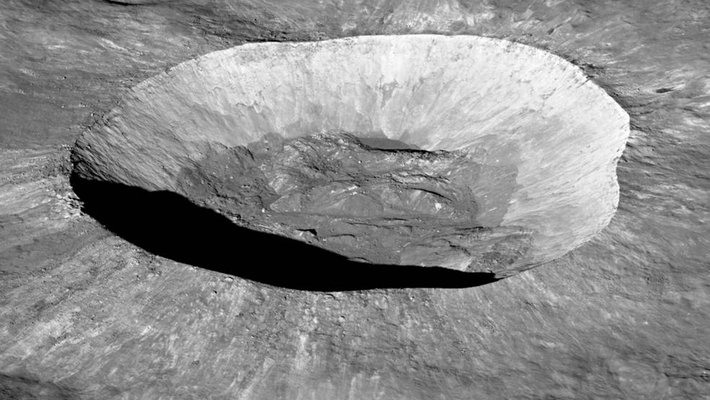
Caltech develops new type of seismic sensor to detect moonquakes
Credit: Caltech
Share
LinkedIn Facebook Twitter Email

A Caltech study has demonstrated that an emerging new seismological technology called distributed acoustic sensing (DAS) would be able to measure lunar quakes with unprecedented precision.

The research study was led by Qiushi Zhai, postdoctoral scholar research associate in geophysics at Caltech, and has been published in the Assessing the feasibility of Distributed Acoustic Sensing (DAS) for moonquake detection paper in the journal Earth and Planetary Science Letters. 

Funding was provided by the National Science Foundation, the USGS, the Gordon and Betty Moore Foundation, and the Braun Trust. Caltech manages JPL for NASA.

The hypothesis
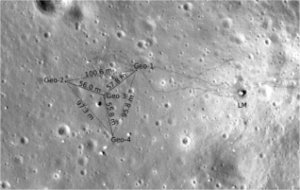
A close-up image of the Moon with lines and writing and dots.
The diagram shows the position of the seismometers on the Moon from Apollo 17. According to the researchers, a fiber-optic-based seismic detector, using distributed acoustic sensing, could function as the equivalent of hundreds of seismometers. Credit – Nunn, C., Garcia, R. F., Nakamura, Y., Marusiak, A. G., Kawamura, T., Sun, D., et al. (2020).

As NASA’s upcoming Artemis missions plan to return to the Moon to, among other research aims, deploy new seismic sensors, the study makes a case for using DAS rather than conventional seismometers.

For the past decade, Zhongwen Zhan (PhD ’13), Professor of Geophysics at Caltech, has been developing DAS, which involves sending lasers through a fiber-optic cable and measuring how the laser light changes throughout the cable as it experiences shaking or tremors. In this way, the cable acts as a sequence of hundreds of individual seismometers, enabling researchers to measure quakes very precisely. A recent study showed that a 100km stretch of cable could function as the equivalent of 10,000 seismometers.

With only a few individual seismometers far apart from each other on the Moon, the seismic signals of lunar quakes are reportedly quite fuzzy, or “noisy”, like listening to a radio full of static. This is due to a phenomenon called scattering, where seismic waves become less clear when traveling through the powdery upper layer of the Moon’s surface. Having multiple sensors – indeed, having thousands, as a fiber optic cable could provide – is expected to help clarify a noisy signal.

The methodology

In the new study, led by Zhai, the researchers deployed a fiber-optic cable equipped with DAS technology in Antarctica. According to the team, the South Pole’s freezing, dry environment, far away from human activities, is the closest analog on Earth to the Moon. The DAS sensors were sensitive enough to measure the small shaking caused by the ice cracking and moving, suggesting that they would be able to measure moonquakes.

“Another advantage of using DAS on the Moon is that a fiber-optic cable is physically quite resilient to the harsh lunar environment – high radiation, extreme temperatures and heavy dust,” said Zhai.

Lunar quake context

During the Apollo missions of the 1970s, several seismometers were flown to the Moon, where they collected data on lunar seismic trembling for eight years. The data showed some lunar quakes were as powerful as a magnitude 5.

Unlike the Earth, the Moon is not tectonically active. Lunar quakes have different origins: Some are caused by day-to-night thermal differences as the surface varies in temperature, others that occur deeper may be caused by Earth’s gravitational pull, and still others are caused by the Moon slowly cooling and contracting over time. Understanding how, when and where these quakes occur is critical for planning missions to the Moon, especially if permanent structures like a lunar base are to be built on its surface.

The researchers’ next steps are to demonstrate that DAS can operate with the limited power resources available on the Moon and to conduct more modeling and analysis to understand how small and distant quakes can be and still be detectable.

For more top insights into the expert development in space weather forecasting, read Meteorological Technology International’s exclusive feature here.
Previous ArticleFires pose growing worldwide threat to wildland-urban interface, NSF NCAR finds
Next Article ICPAC, United Nations and Google.org implement early warning systems project in Eastern Africa

Read Similar Stories

Space Weather

Northumbria University secures £4m to study Earth’s radiation belts

April 16, 20262 Mins Read
Solar

Mauna Loa Solar Observatory reopens to support Artemis II mission

April 8, 20262 Mins Read
Satellites

NCAR researchers create breakthrough tool to enhance space weather prediction

February 24, 20262 Mins Read
Latest News

Northumbria University secures £4m to study Earth’s radiation belts

April 16, 2026

AI model improves real-time prediction of wildfire spread

April 16, 2026

Study identifies atmospheric trigger behind flash droughts in Puerto Rico

April 15, 2026

Receive breaking stories and features in your inbox each week, for free


Enter your email address:


Supplier Spotlights
  • ZOGLAB Microsystem Co., Ltd
Getting in Touch
  • Contact Us / Advertise
  • Meet the Editors
  • Media Pack
  • Free Weekly E-Newsletter
Our Social Channels
  • Facebook
  • LinkedIn
© 2026 UKi Media & Events a division of UKIP Media & Events Ltd
  • Cookie Policy
  • Privacy Policy
  • Terms and Conditions
  • Notice and Takedown Policy

Type above and press Enter to search. Press Esc to cancel.