


Close Menu
Meteorological Technology International
  • News
    • A-E
      • Agriculture
      • Automated Weather Stations
      • Aviation
      • Climate Measurement
      • Data
      • Developing Countries
      • Digital Applications
      • Early Warning Systems
      • Extreme Weather
    • G-P
      • Hydrology
      • Lidar
      • Lightning Detection
      • New Appointments
      • Nowcasting
      • Numerical Weather Prediction
      • Polar Weather
    • R-S
      • Radar
      • Rainfall
      • Remote Sensing
      • Renewable Energy
      • Satellites
      • Solar
      • Space Weather
      • Supercomputers
    • T-Z
      • Training
      • Transport
      • Weather Instruments
      • Wind
      • World Meteorological Organization
      • Meteorological Technology World Expo
  • Features
  • Online Magazines
    • January 2026
    • April 2025
    • January 2025
    • September 2024
    • April 2024
    • Archive Issues
    • Subscribe Free!
  • Opinion
  • Videos
  • Supplier Spotlight
  • Expo
LinkedIn X (Twitter) Facebook
  • Sign-up for Free Weekly E-Newsletter
  • Meet the Editors
  • Contact Us
  • Media Pack
LinkedIn Facebook
Subscribe
Meteorological Technology International
  • News
      • Agriculture
      • Automated Weather Stations
      • Aviation
      • Climate Measurement
      • Data
      • Developing Countries
      • Digital Applications
      • Early Warning Systems
      • Extreme Weather
      • Hydrology
      • Lidar
      • Lightning Detection
      • New Appointments
      • Nowcasting
      • Numerical Weather Prediction
      • Polar Weather
      • Radar
      • Rainfall
      • Remote Sensing
      • Renewable Energy
      • Satellites
      • Solar
      • Space Weather
      • Supercomputers
      • Training
      • Transport
      • Weather Instruments
      • Wind
      • World Meteorological Organization
      • Meteorological Technology World Expo
  • Features
  • Online Magazines
    1. January 2026
    2. September 2025
    3. April 2025
    4. January 2025
    5. September 2024
    6. April 2024
    7. January 2024
    8. September 2023
    9. April 2023
    10. Archive Issues
    11. Subscribe Free!
    Featured
    November 27, 2025

    In this Issue – January 2026

    By Hazel KingNovember 27, 2025
    Recent

    In this Issue – January 2026

    November 27, 2025

    In this Issue – September 2025

    August 11, 2025

    In this Issue – April 2025

    April 15, 2025
  • Opinion
  • Videos
  • Supplier Spotlight
  • Expo
Facebook LinkedIn
Subscribe
Meteorological Technology International
Climate Measurement

Robotic Argo float sends back first ocean transect beneath East Antarctic ice shelf

Alex PackBy Alex PackDecember 11, 20252 Mins Read
Share LinkedIn Facebook Twitter Email
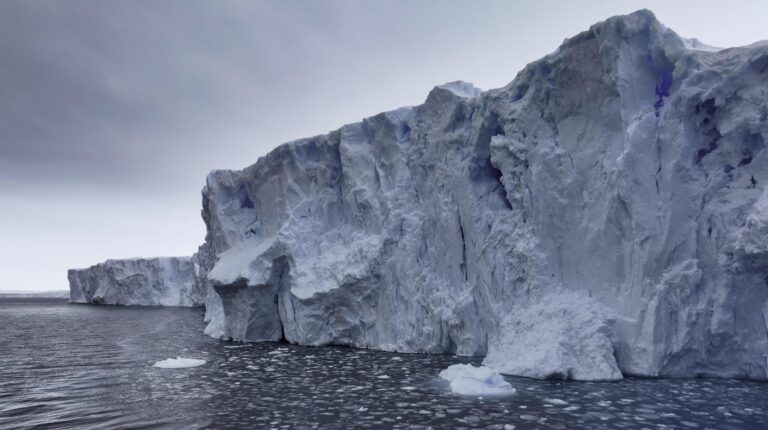
Robotic Argo float sends back first ocean transect beneath East Antarctic ice shelf.
The Denman-Glacier. Credit: Pete Harmsen/Australian Antarctic Division
Share
LinkedIn Facebook Twitter Email

A robotic Argo float has completed an ocean transect beneath an East Antarctic ice shelf – said to be the first of its kind – after spending more than eight months under the Denman and Shackleton ice shelves and collecting detailed temperature and salinity data.

Over two-and-a-half years, the float completed a 300km drift, collecting nearly 200 profiles from previously unsampled parts of the ocean. The mission offers rare insights into how ocean conditions are influencing the stability of East Antarctica’s ice.

“We got lucky,” said Dr Steve Rintoul, oceanographer at SCIRO and partner with the Australian Antarctic Program Partnership. “Our intrepid float drifted beneath the ice and spent eight months under the Denman and Shackleton ice shelves, collecting profiles from the seafloor to the base of the ice every five days. These unprecedented observations provide new insights into the vulnerability of the ice shelves.”
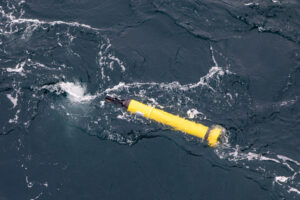
Robotic Argo float sends back first ocean transect beneath East Antarctic ice shelf.
The Argo float. Credit: Pete Harmsen/Australian Antarctic Division

The data shows that the Shackleton Ice Shelf – the most northerly in East Antarctica – is not currently exposed to warm water capable of driving basal melt. By contrast, warm water is reaching the base of the Denman Glacier, which has a potential 1.5m contribution to global sea-level rise. Small changes in the thickness of this warm water layer could significantly accelerate melt and trigger unstable retreat.

A key scientific gain comes from measurements within the 10m boundary layer directly beneath the ice, which strongly controls melt rates. “A great advantage of floats is that they can measure the properties of the boundary layer that control the melt rate,” Dr Rintoul explained. “The float measurements will be used to improve how these processes are represented in computer models, reducing the uncertainty in projections of future sea-level rise.”

He added that deploying additional floats along the Antarctic continental shelf “would transform our understanding of the vulnerability of ice shelves to changes in the ocean.”

Prof. Delphine Lannuzel, leader of the Australian Antarctic Program Partnership, called the achievement “an amazing story of the little float that could,” noting that “under incredibly testing conditions, a relatively tiny instrument has delivered us a wealth of invaluable information.”

The research is published in Science Advances and supported by CSIRO, the Australian Antarctic Program Partnership, IMAS and Australia’s Integrated Marine Observing System.

In related news, Antarctic flights carry NSF NCAR instrument to measure Southern Ocean carbon

Previous ArticleSecond phase of CREWS project launched to strengthen early warning systems in Southeast Asia
Next Article WMO and UNDP analysis urges shift from reactive recovery to risk-informed development

Read Similar Stories

Climate Measurement

Study identifies atmospheric trigger behind flash droughts in Puerto Rico

April 15, 20263 Mins Read
Satellites

AI tool uses weather satellite data to map ocean currents in near real time

April 14, 20263 Mins Read
Climate Measurement

New tool speeds up climate model evaluation

April 13, 20262 Mins Read
Latest News

Northumbria University secures £4m to study Earth’s radiation belts

April 16, 2026

AI model improves real-time prediction of wildfire spread

April 16, 2026

Study identifies atmospheric trigger behind flash droughts in Puerto Rico

April 15, 2026

Receive breaking stories and features in your inbox each week, for free


Enter your email address:


Supplier Spotlights
  • MicroStep-MIS
Getting in Touch
  • Contact Us / Advertise
  • Meet the Editors
  • Media Pack
  • Free Weekly E-Newsletter
Our Social Channels
  • Facebook
  • LinkedIn
© 2026 UKi Media & Events a division of UKIP Media & Events Ltd
  • Cookie Policy
  • Privacy Policy
  • Terms and Conditions
  • Notice and Takedown Policy

Type above and press Enter to search. Press Esc to cancel.