


Close Menu
Meteorological Technology International
  • News
    • A-E
      • Agriculture
      • Automated Weather Stations
      • Aviation
      • Climate Measurement
      • Data
      • Developing Countries
      • Digital Applications
      • Early Warning Systems
      • Extreme Weather
    • G-P
      • Hydrology
      • Lidar
      • Lightning Detection
      • New Appointments
      • Nowcasting
      • Numerical Weather Prediction
      • Polar Weather
    • R-S
      • Radar
      • Rainfall
      • Remote Sensing
      • Renewable Energy
      • Satellites
      • Solar
      • Space Weather
      • Supercomputers
    • T-Z
      • Training
      • Transport
      • Weather Instruments
      • Wind
      • World Meteorological Organization
      • Meteorological Technology World Expo
  • Features
  • Online Magazines
    • January 2026
    • April 2025
    • January 2025
    • September 2024
    • April 2024
    • Archive Issues
    • Subscribe Free!
  • Opinion
  • Videos
  • Supplier Spotlight
  • Expo
LinkedIn X (Twitter) Facebook
  • Sign-up for Free Weekly E-Newsletter
  • Meet the Editors
  • Contact Us
  • Media Pack
LinkedIn Facebook
Subscribe
Meteorological Technology International
  • News
      • Agriculture
      • Automated Weather Stations
      • Aviation
      • Climate Measurement
      • Data
      • Developing Countries
      • Digital Applications
      • Early Warning Systems
      • Extreme Weather
      • Hydrology
      • Lidar
      • Lightning Detection
      • New Appointments
      • Nowcasting
      • Numerical Weather Prediction
      • Polar Weather
      • Radar
      • Rainfall
      • Remote Sensing
      • Renewable Energy
      • Satellites
      • Solar
      • Space Weather
      • Supercomputers
      • Training
      • Transport
      • Weather Instruments
      • Wind
      • World Meteorological Organization
      • Meteorological Technology World Expo
  • Features
  • Online Magazines
    1. January 2026
    2. September 2025
    3. April 2025
    4. January 2025
    5. September 2024
    6. April 2024
    7. January 2024
    8. September 2023
    9. April 2023
    10. Archive Issues
    11. Subscribe Free!
    Featured
    November 27, 2025

    In this Issue – January 2026

    By Hazel KingNovember 27, 2025
    Recent

    In this Issue – January 2026

    November 27, 2025

    In this Issue – September 2025

    August 11, 2025

    In this Issue – April 2025

    April 15, 2025
  • Opinion
  • Videos
  • Supplier Spotlight
  • Expo
Facebook LinkedIn
Subscribe
Meteorological Technology International
Remote Sensing

Norwegian Research Centre to deploy 30 autonomous weather drones from Meteomatics

Elizabeth BakerBy Elizabeth BakerJune 4, 20243 Mins Read
Share LinkedIn Facebook Twitter Email
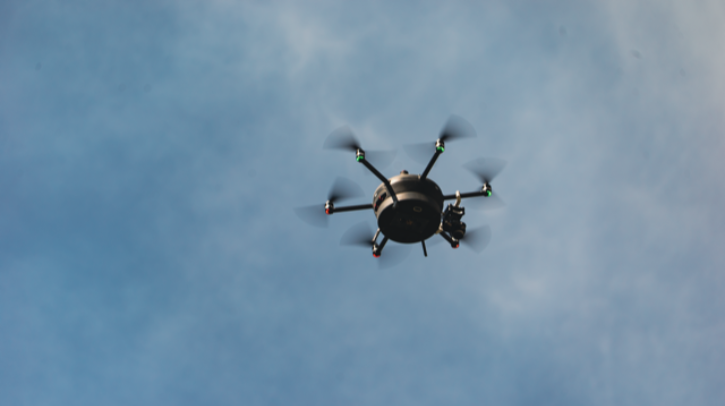
Meteomatics' autonomous Meteodrone flies through a blue sky with a few clouds.
Credit: Meteomatics
Share
LinkedIn Facebook Twitter Email

Through a multi-million-euro project, Meteomatics will deploy 30 of its autonomous weather drones, or ‘Meteodrones’, across Norway in collaboration with the Norwegian Research Centre (NORCE). This initiative forms part of the country’s work to futureproof itself against challenges to its economy, people and infrastructure.

Installation of Meteodrones

To forecast the weather in Norway more accurately, the 30 Meteodrones will be accompanied by Meteobases, which store and launch the drones. The installation of the Meteobases will begin this summer. A team of experts is currently evaluating meteorologically significant locations where the Meteodrones will have optimal access to aspects of weather modeling. The project is expected to be fully implemented and operational by the end of 2025.

Lack of data for precise forecasting

According to the partners, weather models have long been limited by insufficient observations from the atmospheric boundary layer, hindering accurate predictions of local weather phenomena, such as heavy rain, snow formation or thunderstorms. The only technology currently used for weather data from the lower and middle atmosphere is radiosondes on weather balloons. The partners also highlighted that because these single-use devices are dependent on the availability of helium for the balloon, radiosondes are very expensive and unsustainable.

In contrast, Meteodrones can carry out several measurement flights in longer time periods, enabling more extensive data collection compared to radiosondes. While radiosondes are typically used only two times a day, Meteodrones can fly every 30 minutes to collect atmospheric data.

Eliminating Norway’s gap in weather visibility

Meteomatics’ autonomous flight system can fly 6,000m (20,000ft) above the Earth’s surface. According to the company, this enables it to close a meteorological data gap in the lower and mid atmosphere – regions not regularly or accurately observed by traditional weather sensing technology and radar.

A new era of precision in meteorology

Meteodrones can capture high-resolution, direct measurements of critical meteorological elements such as temperature, humidity, air pressure and wind speed. The Meteodrone data is injected into EURO1k, the European high-resolution weather model, exclusively developed by Meteomatics. EURO1k is the only model to cover Europe, large parts of the East and parts of North Africa at a resolution of 1km and update every hour. The additional stream of weather data is intended to help the country understand the formation of severe weather events.

“NORCE will conduct scientific research to validate the EURO1K forecasts and compare their accuracy with other weather forecasts used by the Norwegian Army for tactical decision making,” said Camilla Stoltenberg, CEO of NORCE. “Meteomatics shows great confidence by allowing us to validate and share the performance of their weather forecasts. This demonstrates that independent scientific research can significantly contribute to the successful transfer of such technology to Norway.”

“We are honored to play a part in Norway’s forward-looking initiative to prepare itself for weather-related challenges. Our 30 Meteodrones and Meteobases will significantly improve the data basis for accurate weather forecasts across the entire country,” said Martin Fengler, CEO and founder of Meteomatics. “The technology readiness of our Meteodrones has already been demonstrated in several countries, and we’re excited to see our Meteodrones take flight in Norway.” 

At this year’s Meteorological Technology World Expo in Geneva, Martin Fengler, CEO and founder of Meteomatics, discussed the company’s Meteodrone technology in an exclusive video. Click here to watch the full video.

Previous ArticleEUMETSAT to provide meteorological satellite data to African Union Commission
Next Article FMI report reveals meteorological factors that affect the reliability of four-week cold weather forecasts in Northern Eurasia

Read Similar Stories

Climate Measurement

China inaugurates 27th national climate observatory in Hebei

April 9, 20262 Mins Read
Solar

Mauna Loa Solar Observatory reopens to support Artemis II mission

April 8, 20262 Mins Read
Data

Bureau of Meteorology to install temporary weather radar to restore network coverage in Wyndham, Western Australia

March 20, 20262 Mins Read
Latest News

Northumbria University secures £4m to study Earth’s radiation belts

April 16, 2026

AI model improves real-time prediction of wildfire spread

April 16, 2026

Study identifies atmospheric trigger behind flash droughts in Puerto Rico

April 15, 2026

Receive breaking stories and features in your inbox each week, for free


Enter your email address:


Supplier Spotlights
  • Nel Hydrogen
Getting in Touch
  • Contact Us / Advertise
  • Meet the Editors
  • Media Pack
  • Free Weekly E-Newsletter
Our Social Channels
  • Facebook
  • LinkedIn
© 2026 UKi Media & Events a division of UKIP Media & Events Ltd
  • Cookie Policy
  • Privacy Policy
  • Terms and Conditions
  • Notice and Takedown Policy

Type above and press Enter to search. Press Esc to cancel.