


Close Menu
Meteorological Technology International
  • News
    • A-E
      • Agriculture
      • Automated Weather Stations
      • Aviation
      • Climate Measurement
      • Data
      • Developing Countries
      • Digital Applications
      • Early Warning Systems
      • Extreme Weather
    • G-P
      • Hydrology
      • Lidar
      • Lightning Detection
      • New Appointments
      • Nowcasting
      • Numerical Weather Prediction
      • Polar Weather
    • R-S
      • Radar
      • Rainfall
      • Remote Sensing
      • Renewable Energy
      • Satellites
      • Solar
      • Space Weather
      • Supercomputers
    • T-Z
      • Training
      • Transport
      • Weather Instruments
      • Wind
      • World Meteorological Organization
      • Meteorological Technology World Expo
  • Features
  • Online Magazines
    • January 2026
    • April 2025
    • January 2025
    • September 2024
    • April 2024
    • Archive Issues
    • Subscribe Free!
  • Opinion
  • Videos
  • Supplier Spotlight
  • Expo
LinkedIn X (Twitter) Facebook
  • Sign-up for Free Weekly E-Newsletter
  • Meet the Editors
  • Contact Us
  • Media Pack
LinkedIn Facebook
Subscribe
Meteorological Technology International
  • News
      • Agriculture
      • Automated Weather Stations
      • Aviation
      • Climate Measurement
      • Data
      • Developing Countries
      • Digital Applications
      • Early Warning Systems
      • Extreme Weather
      • Hydrology
      • Lidar
      • Lightning Detection
      • New Appointments
      • Nowcasting
      • Numerical Weather Prediction
      • Polar Weather
      • Radar
      • Rainfall
      • Remote Sensing
      • Renewable Energy
      • Satellites
      • Solar
      • Space Weather
      • Supercomputers
      • Training
      • Transport
      • Weather Instruments
      • Wind
      • World Meteorological Organization
      • Meteorological Technology World Expo
  • Features
  • Online Magazines
    1. January 2026
    2. September 2025
    3. April 2025
    4. January 2025
    5. September 2024
    6. April 2024
    7. January 2024
    8. September 2023
    9. April 2023
    10. Archive Issues
    11. Subscribe Free!
    Featured
    November 27, 2025

    In this Issue – January 2026

    By Hazel KingNovember 27, 2025
    Recent

    In this Issue – January 2026

    November 27, 2025

    In this Issue – September 2025

    August 11, 2025

    In this Issue – April 2025

    April 15, 2025
  • Opinion
  • Videos
  • Supplier Spotlight
  • Expo
Facebook LinkedIn
Subscribe
Meteorological Technology International
Solar

NASA selects proposals to advance understanding of space weather

Helen NormanBy Helen NormanSeptember 11, 20194 Mins Read
Share LinkedIn Facebook Twitter Email
Share
LinkedIn Facebook Twitter Email

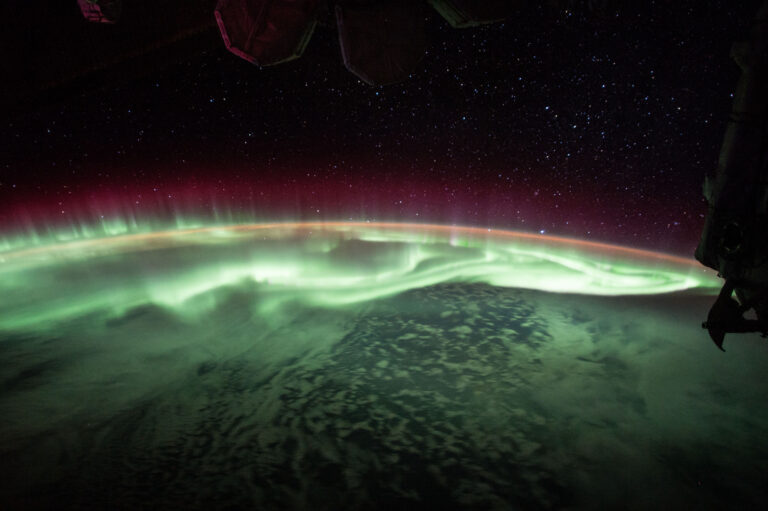
NASA has selected three proposals for concept studies of missions that could help us better understand the dynamic space weather system driven by the Sun that manifests near Earth. The proposals examine what drives different parts of that system and ultimately could help predict and mitigate its effects on spacecraft and astronauts.

“NASA’s research to understand the space we travel through relies on exploring key details about a vast system from the Sun, to Earth, to the edges of the solar system,” said Peg Luce, deputy director for heliophysics in the Science Mission Directorate at NASA Headquarters in Washington. “Each of these proposals could add a significant tool from a unique vantage point to help us understand that system.”

Each of these Heliophysics Mission of Opportunity proposals will receive US$400,000 to conduct a nine-month mission concept study. After the study period, NASA will choose one proposal to go forward to launch. Each potential mission has a separate launch opportunity and timeframe.

The proposals were selected based on potential science value and feasibility of development plans. The total cost for the mission ultimately chosen will be capped at US$55m and is funded by NASA’s Heliophysics Explorers’ program.

The selected proposals are:

Extreme Ultraviolet High-Throughput Spectroscopic Telescope (EUVST) Epsilon Mission. EUVST would aim to provide an answer to a fundamental question in solar physics: How does the interplay of solar material – a hot plasma – and magnetic fields drive solar activity and eruptions, such as solar flares and coronal mass ejections? The mission would launch with the Japan Aerospace Exploration Agency’s Solar-C mission, planned for 2025. EUVST would observe simultaneously, for the first time and over a wide range of the lower solar atmosphere, how magnetic fields and plasma interact. Those observations could help us learn more about how the two systems contribute to the dynamic atmosphere around the Sun. The principal investigator for EUVST is Clarence Korendyke at the US Naval Research Laboratory in Washington.

Aeronomy at Earth: Tools for Heliophysics Exploration and Research (AETHER). AETHER would explore the ionosphere-thermosphere system and its response to geomagnetic storms. From a position aboard the International Space Station, it could gather observations of the ionosphere – the area of our atmosphere that overlaps with the lower regions of space. These observations would be complemented by ground observations of electrons in the same region. The mission would provide information on how the neutral, terrestrial-weather-driven thermosphere interacts with the ionosphere’s charged particles. Understanding how the neutral atmosphere affects the ions and vice versa is key to better understanding the complex space weather system surrounding our planet, which affects spacecraft and astronauts flying through it. The launch of AETHER would be no later than 2024. The principal investigator for AETHER is James Clemmons at the University of New Hampshire in Durham.

Electrojet Zeeman Imaging Explorer (EZIE). EZIE would focus on an electric current known as the auroral electrojet, which circles through the atmosphere around 60-90 miles above Earth, near the poles. Using three SmallSats to measure magnetic fields, EZIE would observe the structure of electrojets and explore what causes them and how they evolve. Electrojets are part of a larger space weather system that can lead to oscillations in Earth’s magnetic fields, creating geomagnetic storms that can interfere with spacecraft and – at their most intense – utility grids on the ground. Knowing how electrojets form and grow could contribute to ultimately predicting such storms. EZIE would launch as part of the agency’s CubeSat Launch Initiative. EZIE also would launch no later than 2024. The principal investigator for EZIE is Jeng-Hwa Yee at the Johns Hopkins University Applied Physics Laboratory in Laurel, Maryland.

Previous ArticleWMO urges industry to invest in early warning to deliver climate adaptation
Next Article Australia’s Antarctic Division recalls challenges of defrosting remote weather station

Read Similar Stories

Space Weather

Northumbria University secures £4m to study Earth’s radiation belts

April 16, 20262 Mins Read
Solar

Mauna Loa Solar Observatory reopens to support Artemis II mission

April 8, 20262 Mins Read
Satellites

NCAR researchers create breakthrough tool to enhance space weather prediction

February 24, 20262 Mins Read
Latest News

Northumbria University secures £4m to study Earth’s radiation belts

April 16, 2026

AI model improves real-time prediction of wildfire spread

April 16, 2026

Study identifies atmospheric trigger behind flash droughts in Puerto Rico

April 15, 2026

Receive breaking stories and features in your inbox each week, for free


Enter your email address:


Supplier Spotlights
  • Baron
Getting in Touch
  • Contact Us / Advertise
  • Meet the Editors
  • Media Pack
  • Free Weekly E-Newsletter
Our Social Channels
  • Facebook
  • LinkedIn
© 2026 UKi Media & Events a division of UKIP Media & Events Ltd
  • Cookie Policy
  • Privacy Policy
  • Terms and Conditions
  • Notice and Takedown Policy

Type above and press Enter to search. Press Esc to cancel.