


Close Menu
Meteorological Technology International
  • News
    • A-E
      • Agriculture
      • Automated Weather Stations
      • Aviation
      • Climate Measurement
      • Data
      • Developing Countries
      • Digital Applications
      • Early Warning Systems
      • Extreme Weather
    • G-P
      • Hydrology
      • Lidar
      • Lightning Detection
      • New Appointments
      • Nowcasting
      • Numerical Weather Prediction
      • Polar Weather
    • R-S
      • Radar
      • Rainfall
      • Remote Sensing
      • Renewable Energy
      • Satellites
      • Solar
      • Space Weather
      • Supercomputers
    • T-Z
      • Training
      • Transport
      • Weather Instruments
      • Wind
      • World Meteorological Organization
      • Meteorological Technology World Expo
  • Features
  • Online Magazines
    • January 2026
    • April 2025
    • January 2025
    • September 2024
    • April 2024
    • Archive Issues
    • Subscribe Free!
  • Opinion
  • Videos
  • Supplier Spotlight
  • Expo
LinkedIn X (Twitter) Facebook
  • Sign-up for Free Weekly E-Newsletter
  • Meet the Editors
  • Contact Us
  • Media Pack
LinkedIn Facebook
Subscribe
Meteorological Technology International
  • News
      • Agriculture
      • Automated Weather Stations
      • Aviation
      • Climate Measurement
      • Data
      • Developing Countries
      • Digital Applications
      • Early Warning Systems
      • Extreme Weather
      • Hydrology
      • Lidar
      • Lightning Detection
      • New Appointments
      • Nowcasting
      • Numerical Weather Prediction
      • Polar Weather
      • Radar
      • Rainfall
      • Remote Sensing
      • Renewable Energy
      • Satellites
      • Solar
      • Space Weather
      • Supercomputers
      • Training
      • Transport
      • Weather Instruments
      • Wind
      • World Meteorological Organization
      • Meteorological Technology World Expo
  • Features
  • Online Magazines
    1. January 2026
    2. September 2025
    3. April 2025
    4. January 2025
    5. September 2024
    6. April 2024
    7. January 2024
    8. September 2023
    9. April 2023
    10. Archive Issues
    11. Subscribe Free!
    Featured
    November 27, 2025

    In this Issue – January 2026

    By Hazel KingNovember 27, 2025
    Recent

    In this Issue – January 2026

    November 27, 2025

    In this Issue – September 2025

    August 11, 2025

    In this Issue – April 2025

    April 15, 2025
  • Opinion
  • Videos
  • Supplier Spotlight
  • Expo
Facebook LinkedIn
Subscribe
Meteorological Technology International
Satellites

NASA makes IMAP real-time space weather data link available

Alex PackBy Alex PackFebruary 5, 20262 Mins Read
Share LinkedIn Facebook Twitter Email
NASA makes IMAP real-time space weather data link available.
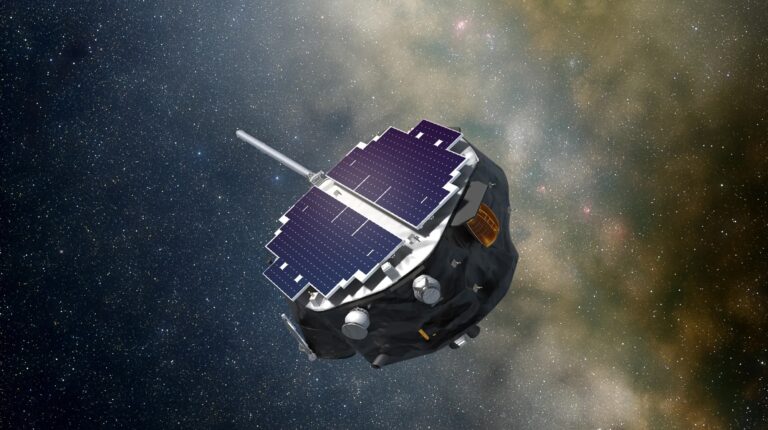
An artist’s depiction of NASA’s IMAP (Interstellar Mapping and Acceleration Probe (IMAP) spacecraft. NASA/Princeton/Patrick McPike
Share
LinkedIn Facebook Twitter Email

NASA has made a new real-time data stream from its Interstellar Mapping and Acceleration Probe (IMAP) observatory available to support space weather research and forecasting.

The IMAP spacecraft launched on September 24, 2025, and has recently entered orbit around the Sun-Earth L1 Lagrange point. From this position, it can monitor solar and interstellar conditions and transmit measurements that are important for operational space weather forecasting.

Five in situ instruments aboard IMAP are providing continuous measurements that are transmitted in near real time through the low-latency IMAP Active Link for Real-Time (I-ALiRT) data stream. The system is designed to support both scientific research and operational forecasting by providing rapid access to solar wind and energetic particle data.

The I-ALiRT dataset includes products derived from the Advanced Composition Explorer (ACE) mission but at higher measurement cadences. It also introduces new data products available for the first time in a near real-time space weather pipeline. These include high-energy electron count rates, helium ion count rates, solar wind charge-state ratios and elemental abundances, and information on counterstreaming electron flows.

The data is expected to support improvements in forecasting solar energetic particle events and other space weather hazards. Forecasters at NOAA’s Space Weather Prediction Center plan to use the IMAP data stream to enhance the timeliness of warnings, alerts and forecasts related to energetic particle events.

In related news, China’s Xihe-2 Sun-Earth L5 solar exploration project officially launches

Previous ArticleProbability-based forecasting central to future weather prediction, Met Office says
Next Article India partners on hybrid solar forecasting project for large solar parks

Read Similar Stories

Space Weather

Northumbria University secures £4m to study Earth’s radiation belts

April 16, 20262 Mins Read
Extreme Weather

AI model improves real-time prediction of wildfire spread

April 16, 20263 Mins Read
Satellites

AI tool uses weather satellite data to map ocean currents in near real time

April 14, 20263 Mins Read
Latest News

Northumbria University secures £4m to study Earth’s radiation belts

April 16, 2026

AI model improves real-time prediction of wildfire spread

April 16, 2026

Study identifies atmospheric trigger behind flash droughts in Puerto Rico

April 15, 2026

Receive breaking stories and features in your inbox each week, for free


Enter your email address:


Supplier Spotlights
  • Nel Hydrogen
Getting in Touch
  • Contact Us / Advertise
  • Meet the Editors
  • Media Pack
  • Free Weekly E-Newsletter
Our Social Channels
  • Facebook
  • LinkedIn
© 2026 UKi Media & Events a division of UKIP Media & Events Ltd
  • Cookie Policy
  • Privacy Policy
  • Terms and Conditions
  • Notice and Takedown Policy

Type above and press Enter to search. Press Esc to cancel.