


Close Menu
Meteorological Technology International
  • News
    • A-E
      • Agriculture
      • Automated Weather Stations
      • Aviation
      • Climate Measurement
      • Data
      • Developing Countries
      • Digital Applications
      • Early Warning Systems
      • Extreme Weather
    • G-P
      • Hydrology
      • Lidar
      • Lightning Detection
      • New Appointments
      • Nowcasting
      • Numerical Weather Prediction
      • Polar Weather
    • R-S
      • Radar
      • Rainfall
      • Remote Sensing
      • Renewable Energy
      • Satellites
      • Solar
      • Space Weather
      • Supercomputers
    • T-Z
      • Training
      • Transport
      • Weather Instruments
      • Wind
      • World Meteorological Organization
      • Meteorological Technology World Expo
  • Features
  • Online Magazines
    • January 2026
    • April 2025
    • January 2025
    • September 2024
    • April 2024
    • Archive Issues
    • Subscribe Free!
  • Opinion
  • Videos
  • Supplier Spotlight
  • Expo
LinkedIn X (Twitter) Facebook
  • Sign-up for Free Weekly E-Newsletter
  • Meet the Editors
  • Contact Us
  • Media Pack
LinkedIn Facebook
Subscribe
Meteorological Technology International
  • News
      • Agriculture
      • Automated Weather Stations
      • Aviation
      • Climate Measurement
      • Data
      • Developing Countries
      • Digital Applications
      • Early Warning Systems
      • Extreme Weather
      • Hydrology
      • Lidar
      • Lightning Detection
      • New Appointments
      • Nowcasting
      • Numerical Weather Prediction
      • Polar Weather
      • Radar
      • Rainfall
      • Remote Sensing
      • Renewable Energy
      • Satellites
      • Solar
      • Space Weather
      • Supercomputers
      • Training
      • Transport
      • Weather Instruments
      • Wind
      • World Meteorological Organization
      • Meteorological Technology World Expo
  • Features
  • Online Magazines
    1. January 2026
    2. September 2025
    3. April 2025
    4. January 2025
    5. September 2024
    6. April 2024
    7. January 2024
    8. September 2023
    9. April 2023
    10. Archive Issues
    11. Subscribe Free!
    Featured
    November 27, 2025

    In this Issue – January 2026

    By Hazel KingNovember 27, 2025
    Recent

    In this Issue – January 2026

    November 27, 2025

    In this Issue – September 2025

    August 11, 2025

    In this Issue – April 2025

    April 15, 2025
  • Opinion
  • Videos
  • Supplier Spotlight
  • Expo
Facebook LinkedIn
Subscribe
Meteorological Technology International
Extreme Weather

NASA and SpaceX launch NOAA’s latest advanced weather satellite

Elizabeth BakerBy Elizabeth BakerJune 27, 20243 Mins Read
Share LinkedIn Facebook Twitter Email
NASA and SpaceX have launched the fourth and final satellite in a series of advanced weather satellites for the National Oceanic and Atmospheric Administration (NOAA).
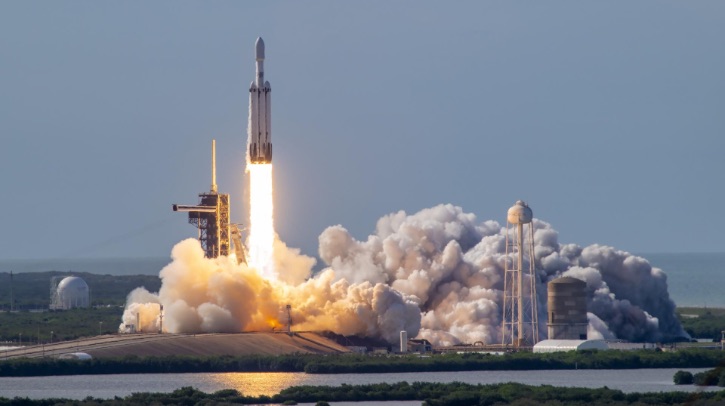
A SpaceX Falcon Heavy rocket carrying the National Oceanic and Atmospheric Administration (NOAA) GOES-U (Geostationary Operational Environmental Satellite U) lifts off from Launch Complex 39A at NASA’s Kennedy Space Center in Florida on Tuesday, June 25, 2024. The GOES-U satellite is the final satellite in the GOES-R series, which serves a critical role in providing continuous coverage of the Western Hemisphere, including monitoring tropical systems in the eastern Pacific and Atlantic oceans. Credit: SpaceX
Share
LinkedIn Facebook Twitter Email

NASA and SpaceX have launched the fourth and final satellite in a series of advanced weather satellites for the National Oceanic and Atmospheric Administration (NOAA).

NOAA’s advanced satellites

The Geostationary Operational Environmental Satellite (GOES-U) will provide continuous coverage of weather and hazardous environmental conditions across much of the Western Hemisphere.

The satellite launched on a SpaceX Falcon Heavy rocket from Launch Complex 39A at NASA’s Kennedy Space Center in Florida. Mission managers confirmed at 10:18pm on June 25, 2024, that the spacecraft’s solar arrays had deployed, and the spacecraft was operating on its own power.

Once GOES-U is in a geostationary orbit, about 22,200 miles above Earth, it will be renamed GOES-19. Following a successful orbital checkout of its instruments and systems, GOES-19 will go into service, keeping watch of the weather over most of North America, including the contiguous USA and Mexico, as well as Central and South America, the Caribbean, and the Atlantic Ocean to the west coast of Africa.

Real-time extreme weather monitoring

“The data that GOES-U will provide is critical to protecting the safety of people in the Western Hemisphere,” said John Gagosian, director of NASA’s Joint Agency Satellite Division. “With this successful launch, forecasters will have a resource to better inform and educate the public.”

“As communities across the country and the world feel the effects of extreme weather, satellites like GOES-U keep a close watch to monitor weather in real-time,” said NASA administrator Bill Nelson. “NASA and NOAA have worked together for several decades to bring critical data back down to Earth to prepare for severe storms, fire detection, and much more. This fleet of advanced satellites is strengthening resilience to our changing climate, and protecting humanity from weather hazards on Earth, and in space.”

Space weather

In addition to its role in terrestrial weather prediction, the GOES constellation of satellites helps forecasters predict space weather near Earth that can interfere with satellite electronics, GPS and radio communications. The GOES-U satellite goes beyond the capabilities of its predecessors with a new space weather instrument, the Compact Coronograph-1, which blocks the sun’s bright light so scientists can observe the relatively fainter solar atmosphere.

“There are so many applications for GOES data – many of which directly impact our everyday lives here on Earth,” said Nicky Fox, associate administrator, science mission directorate, at NASA headquarters in Washington. “GOES-U will add to the global data record, allowing NASA and NOAA to track changes in our climate and also provide critical information before severe weather and natural disasters strike. NASA looks forward to teaming up with NOAA again as we enter the next generation of Earth-observing satellites.”

GOES-R series satellite technology partners

NASA’s Goddard Space Flight Center in Greenbelt, Maryland, oversaw the acquisition of the GOES-R series spacecraft and instruments and built the magnetometer for GOES-U and its predecessor, GOES-T. NASA’s Launch Services Program, based at Kennedy, provided launch management for the mission.

The GOES-R Series Program is overseen by NOAA, through an integrated NOAA-NASA office that manages the ground system, operates the satellites, and distributes data to users worldwide. Lockheed Martin designs, builds and tests the GOES-R series satellites. L3Harris Technologies provides the main instrument payload, the Advanced Baseline Imager and the ground system, which includes the antenna system for data reception.

In related news, GOES-U, the fourth and final satellite in NOAA’s GOES-R Series of advanced geostationary satellites, recently completed environmental testing ahead of its launch into space. Click here to read the full story.

Previous ArticleBiden-Harris Administration invests US$4.9m in drought monitoring and prediction
Next Article Weathernews and Google develop AI-powered weather forecasting technology

Read Similar Stories

Space Weather

Northumbria University secures £4m to study Earth’s radiation belts

April 16, 20262 Mins Read
Extreme Weather

AI model improves real-time prediction of wildfire spread

April 16, 20263 Mins Read
Climate Measurement

Study identifies atmospheric trigger behind flash droughts in Puerto Rico

April 15, 20263 Mins Read
Latest News

Northumbria University secures £4m to study Earth’s radiation belts

April 16, 2026

AI model improves real-time prediction of wildfire spread

April 16, 2026

Study identifies atmospheric trigger behind flash droughts in Puerto Rico

April 15, 2026

Receive breaking stories and features in your inbox each week, for free


Enter your email address:


Supplier Spotlights
  • Reuniwatt
Getting in Touch
  • Contact Us / Advertise
  • Meet the Editors
  • Media Pack
  • Free Weekly E-Newsletter
Our Social Channels
  • Facebook
  • LinkedIn
© 2026 UKi Media & Events a division of UKIP Media & Events Ltd
  • Cookie Policy
  • Privacy Policy
  • Terms and Conditions
  • Notice and Takedown Policy

Type above and press Enter to search. Press Esc to cancel.