


Close Menu
Meteorological Technology International
  • News
    • A-E
      • Agriculture
      • Automated Weather Stations
      • Aviation
      • Climate Measurement
      • Data
      • Developing Countries
      • Digital Applications
      • Early Warning Systems
      • Extreme Weather
    • G-P
      • Hydrology
      • Lidar
      • Lightning Detection
      • New Appointments
      • Nowcasting
      • Numerical Weather Prediction
      • Polar Weather
    • R-S
      • Radar
      • Rainfall
      • Remote Sensing
      • Renewable Energy
      • Satellites
      • Solar
      • Space Weather
      • Supercomputers
    • T-Z
      • Training
      • Transport
      • Weather Instruments
      • Wind
      • World Meteorological Organization
      • Meteorological Technology World Expo
  • Features
  • Online Magazines
    • January 2026
    • April 2025
    • January 2025
    • September 2024
    • April 2024
    • Archive Issues
    • Subscribe Free!
  • Opinion
  • Videos
  • Supplier Spotlight
  • Expo
LinkedIn X (Twitter) Facebook
  • Sign-up for Free Weekly E-Newsletter
  • Meet the Editors
  • Contact Us
  • Media Pack
LinkedIn Facebook
Subscribe
Meteorological Technology International
  • News
      • Agriculture
      • Automated Weather Stations
      • Aviation
      • Climate Measurement
      • Data
      • Developing Countries
      • Digital Applications
      • Early Warning Systems
      • Extreme Weather
      • Hydrology
      • Lidar
      • Lightning Detection
      • New Appointments
      • Nowcasting
      • Numerical Weather Prediction
      • Polar Weather
      • Radar
      • Rainfall
      • Remote Sensing
      • Renewable Energy
      • Satellites
      • Solar
      • Space Weather
      • Supercomputers
      • Training
      • Transport
      • Weather Instruments
      • Wind
      • World Meteorological Organization
      • Meteorological Technology World Expo
  • Features
  • Online Magazines
    1. January 2026
    2. September 2025
    3. April 2025
    4. January 2025
    5. September 2024
    6. April 2024
    7. January 2024
    8. September 2023
    9. April 2023
    10. Archive Issues
    11. Subscribe Free!
    Featured
    November 27, 2025

    In this Issue – January 2026

    By Hazel KingNovember 27, 2025
    Recent

    In this Issue – January 2026

    November 27, 2025

    In this Issue – September 2025

    August 11, 2025

    In this Issue – April 2025

    April 15, 2025
  • Opinion
  • Videos
  • Supplier Spotlight
  • Expo
Facebook LinkedIn
Subscribe
Meteorological Technology International
Rainfall

Rainfall timing could help predict floods, CIRES finds

Elizabeth BakerBy Elizabeth BakerJuly 2, 20244 Mins Read
Share LinkedIn Facebook Twitter Email
The Cooperative Institute for Research In Environmental Sciences (CIRES) at University of Colorado Boulder has released a study which that an increase in precipitation alone won’t necessarily increase disastrous flooding – instead, flood risk depends on how many days have passed between storms.
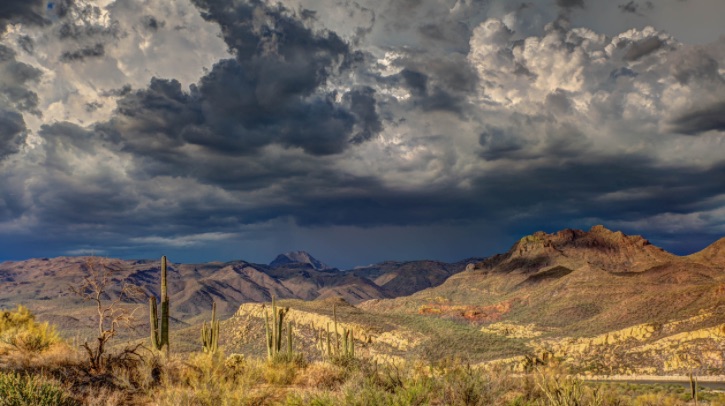
Credit: R Murray, Unsplash
Share
LinkedIn Facebook Twitter Email

The Cooperative Institute for Research In Environmental Sciences (CIRES) at the University of Colorado Boulder has released a study that reveals that an increase in precipitation alone won’t necessarily increase disastrous flooding – instead, flood risk depends on how many days have passed between storms.

Can precipitation intermittency predict flooding by Ben Livneh, Nels Bjarke, Parthakumar A Modi, Alex Furman, Darren Ficklin, Justin M Pflug, and Kris Karnauskas (CIRES Fellow) was published in Science of the Total Environment.

In the study, Livneh – a fellow and Western Water Assessment director of CIRES – and his colleagues looked for a new way to understand soil moisture and how it affects flooding.

Precipitation intermittency

As the research team knew the importance and difficulty of measuring soils to effectively understand flooding, they found a proxy for soil moisture – precipitation intermittency. Precipitation intermittency is the length of a dry spell between precipitation events. They found that after a prolonged time since the last rain, it takes a larger storm to generate flooding; with fewer days between storms, a wider range of conditions can lead to flooding.

“We can actually understand changes in flood risk based on the number of days since the last rain event,” Livneh said. “We wanted to make it straightforward because soil water is hard to predict.”

The research focused on semi-arid and arid regions and looked at rain rather than snow as a form of precipitation. To create a value for precipitation intermittency, researchers looked at historical observations of 108 watersheds around the US from 1950-2022. Through analysis of these observations, the goal was to understand whether wet or dry soils preceded heavy rain events – and how that influenced floods.

Intuitive framework for predicting flooding

Nels Bjarke, a Western Water Assessment postdoctoral researcher, ran the analysis for the study. “We don’t have comprehensive observations of soil moisture that are continuous over space or continuous through time,” he said. “Therefore, it can be difficult to apply some sort of predictive framework for flooding using just soil moisture because the data are sparse.”

Yet, precipitation is widely measured, so the team tested precipitation as a proxy for soil moisture by looking at the timing of rain, rather than the amount. Through analysis, the team created a timescale as a meaningful value for precipitation intermittency. They categorized intermittency into segments of five days.

In their calculations, 10 days or less indicated low intermittency, when a high range of storms could produce floods. Drier periods with 20 days or more between storms defined high intermittency, and only serious storms could produce floods. Overall, flood probabilities are 30% lower following long periods of dry spells.

Boulder’s 2013 flooding case study

The researchers point out that the 2013 floods in Boulder were a real-life example of how precipitation intermittency is applied to flood projections. According to NOAA, seven days of heavy rain nearly doubled the previous record for rainfall, and the event displaced hundreds of people and caused US$2bn of property damage.

The paper’s findings are expected to help forecasters and emergency managers anticipate very real flooding risks. Since wide-ranging observations of precipitation exist, forecasters can take the findings of this paper and use intermittency to help predict the likelihood of a flood.

“As we enter the era of big data, we can benefit from simple proxies like the dry-spell length as a way to more intuitively understand extreme events,” said Livneh.

In related news, researchers from the Conservation Research Department at Dunhuang Academy in China recently discovered evidence of the long-hypothesized link between soil, air humidity and atmospheric pressure. Click here to read the full story.

Previous ArticleSOFF receives an additional US$14.7m in funding to close weather and data gaps
Next Article Hydrogen-hybrid research vessel to join Scripps Oceanography’s fleet

Read Similar Stories

Extreme Weather

AI model improves real-time prediction of wildfire spread

April 16, 20263 Mins Read
Climate Measurement

Study identifies atmospheric trigger behind flash droughts in Puerto Rico

April 15, 20263 Mins Read
Climate Measurement

Regional training aims to improve flood forecasting in Central Africa

April 1, 20263 Mins Read
Latest News

Northumbria University secures £4m to study Earth’s radiation belts

April 16, 2026

AI model improves real-time prediction of wildfire spread

April 16, 2026

Study identifies atmospheric trigger behind flash droughts in Puerto Rico

April 15, 2026

Receive breaking stories and features in your inbox each week, for free


Enter your email address:


Supplier Spotlights
  • GAMIC GmbH
Getting in Touch
  • Contact Us / Advertise
  • Meet the Editors
  • Media Pack
  • Free Weekly E-Newsletter
Our Social Channels
  • Facebook
  • LinkedIn
© 2026 UKi Media & Events a division of UKIP Media & Events Ltd
  • Cookie Policy
  • Privacy Policy
  • Terms and Conditions
  • Notice and Takedown Policy

Type above and press Enter to search. Press Esc to cancel.