


Close Menu
Meteorological Technology International
  • News
    • A-E
      • Agriculture
      • Automated Weather Stations
      • Aviation
      • Climate Measurement
      • Data
      • Developing Countries
      • Digital Applications
      • Early Warning Systems
      • Extreme Weather
    • G-P
      • Hydrology
      • Lidar
      • Lightning Detection
      • New Appointments
      • Nowcasting
      • Numerical Weather Prediction
      • Polar Weather
    • R-S
      • Radar
      • Rainfall
      • Remote Sensing
      • Renewable Energy
      • Satellites
      • Solar
      • Space Weather
      • Supercomputers
    • T-Z
      • Training
      • Transport
      • Weather Instruments
      • Wind
      • World Meteorological Organization
      • Meteorological Technology World Expo
  • Features
  • Online Magazines
    • January 2026
    • April 2025
    • January 2025
    • September 2024
    • April 2024
    • Archive Issues
    • Subscribe Free!
  • Opinion
  • Videos
  • Supplier Spotlight
  • Expo
LinkedIn X (Twitter) Facebook
  • Sign-up for Free Weekly E-Newsletter
  • Meet the Editors
  • Contact Us
  • Media Pack
LinkedIn Facebook
Subscribe
Meteorological Technology International
  • News
      • Agriculture
      • Automated Weather Stations
      • Aviation
      • Climate Measurement
      • Data
      • Developing Countries
      • Digital Applications
      • Early Warning Systems
      • Extreme Weather
      • Hydrology
      • Lidar
      • Lightning Detection
      • New Appointments
      • Nowcasting
      • Numerical Weather Prediction
      • Polar Weather
      • Radar
      • Rainfall
      • Remote Sensing
      • Renewable Energy
      • Satellites
      • Solar
      • Space Weather
      • Supercomputers
      • Training
      • Transport
      • Weather Instruments
      • Wind
      • World Meteorological Organization
      • Meteorological Technology World Expo
  • Features
  • Online Magazines
    1. January 2026
    2. September 2025
    3. April 2025
    4. January 2025
    5. September 2024
    6. April 2024
    7. January 2024
    8. September 2023
    9. April 2023
    10. Archive Issues
    11. Subscribe Free!
    Featured
    November 27, 2025

    In this Issue – January 2026

    By Hazel KingNovember 27, 2025
    Recent

    In this Issue – January 2026

    November 27, 2025

    In this Issue – September 2025

    August 11, 2025

    In this Issue – April 2025

    April 15, 2025
  • Opinion
  • Videos
  • Supplier Spotlight
  • Expo
Facebook LinkedIn
Subscribe
Meteorological Technology International
Polar Weather

FMI improves freeze/thaw monitoring with radar satellites

Elizabeth BakerBy Elizabeth BakerApril 17, 20243 Mins Read
Share LinkedIn Facebook Twitter Email
FMI improves freeze/thaw monitoring with radar satellites.
Credit: Tobias Arhelger
Share
LinkedIn Facebook Twitter Email

The Finnish Meteorological Institute (FMI) has released research dedicated to developing improvements to monitoring the freeze/thaw (F/T) state with synthetic aperture radar (SAR) satellites.

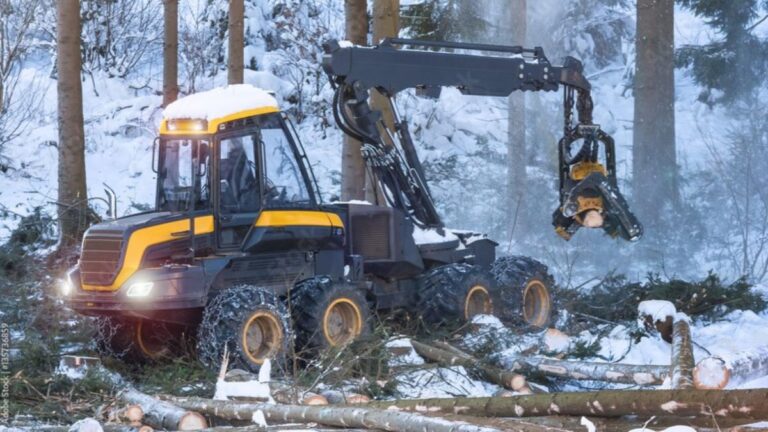
The new study presents significant improvements to the existing methods, such as taking into consideration changes in the summer season. Soil F/T information is useful, for example, for users of heavy equipment, such as forestry machines – as soil freezing has a significant effect on the bearing capacity.

Soil F/T state in the boreal forest was mapped using microwave L and C band SAR satellites. The study showed that the F/T state can be detected with good accuracy at both frequencies. The lower frequency L band is more suitable for soil F/T state detection, as it is less sensitive to vegetation and snow cover, and it enables deeper penetration into the soil. However, the weaknesses of the C band can be compensated by taking into account also the signal returning from the tree canopies in the calculation algorithm.

Based on the FMI’s previous research, a soil F/T product based on Sentinel-1 satellites covering almost the whole of Finland has been developed. According to the researchers of the latest study though, the new report presents significant improvements to the existing methods, such as taking into consideration changes in the summer season, a more advanced classification algorithm and wet snow information.

They also asserted that the availability of satellite L band SAR data is currently limited, but the European ROSE-L and American-Indian NISAR radar satellites that are to be launched in the next few years will offer a good opportunity to monitor the F/T state also at a lower frequency. The comprehensive SAR data set collected with the Japanese ALOS-2 satellite used in the research enabled the development of methods for soil F/T monitoring with L band in the boreal region in advance.

In the first phase of the study the researchers investigated the influence of soil and vegetation conditions on the backscatter, namely the intensity of the returning radar signal from the object. In particular, they focused on the effect of canopy freezing and backscatter changes from spring to autumn, because these topics have not yet been properly studied, although they are important in soil F/T state retrieval.

In the second phase, monitoring of soil F/T state was demonstrated for selected test areas in Finland. First, a forest model separating the backscatter contributions from the ground surface and the canopy was applied to the satellite observations. Then, suitable reference satellite acquisitions representing autumn (thaw), winter (freeze) and spring (thaw) conditions were identified. Finally, these were used in the classification algorithm to distinguish between frozen and thawed conditions, also using automatic in situ measurements of air temperature and snow depth.

Wet snow can prevent microwave radiation from reaching the ground surface. Hence, wet snow was detected as well, using the radar backscatter, air temperature and snow depth data, for enabling reliable estimation of the soil F/T state during the end of the winter. In the validation of the results, soil temperature and moisture measurements near the Arctic Space Centre located in Sodankylä were used.

In related news, a new report by Alexey Karpechko, research professor at Finnish Meteorological Institute, recently showed that monthly forecasts in mid and high latitudes would be improved if weather models better predicted variability in the stratosphere and tropical atmosphere. Click here to read the full story.

Previous ArticleTwo thirds of US adults affected by extreme weather in past 12 months, Annenberg Public Policy Center finds
Next Article WMO develops hydrological capacity in Central America

Read Similar Stories

Space Weather

Northumbria University secures £4m to study Earth’s radiation belts

April 16, 20262 Mins Read
Extreme Weather

AI model improves real-time prediction of wildfire spread

April 16, 20263 Mins Read
Satellites

AI tool uses weather satellite data to map ocean currents in near real time

April 14, 20263 Mins Read
Latest News

Northumbria University secures £4m to study Earth’s radiation belts

April 16, 2026

AI model improves real-time prediction of wildfire spread

April 16, 2026

Study identifies atmospheric trigger behind flash droughts in Puerto Rico

April 15, 2026

Receive breaking stories and features in your inbox each week, for free


Enter your email address:


Supplier Spotlights
  • Nel Hydrogen
Getting in Touch
  • Contact Us / Advertise
  • Meet the Editors
  • Media Pack
  • Free Weekly E-Newsletter
Our Social Channels
  • Facebook
  • LinkedIn
© 2026 UKi Media & Events a division of UKIP Media & Events Ltd
  • Cookie Policy
  • Privacy Policy
  • Terms and Conditions
  • Notice and Takedown Policy

Type above and press Enter to search. Press Esc to cancel.