


Close Menu
Meteorological Technology International
  • News
    • A-E
      • Agriculture
      • Automated Weather Stations
      • Aviation
      • Climate Measurement
      • Data
      • Developing Countries
      • Digital Applications
      • Early Warning Systems
      • Extreme Weather
    • G-P
      • Hydrology
      • Lidar
      • Lightning Detection
      • New Appointments
      • Nowcasting
      • Numerical Weather Prediction
      • Polar Weather
    • R-S
      • Radar
      • Rainfall
      • Remote Sensing
      • Renewable Energy
      • Satellites
      • Solar
      • Space Weather
      • Supercomputers
    • T-Z
      • Training
      • Transport
      • Weather Instruments
      • Wind
      • World Meteorological Organization
      • Meteorological Technology World Expo
  • Features
  • Online Magazines
    • January 2026
    • April 2025
    • January 2025
    • September 2024
    • April 2024
    • Archive Issues
    • Subscribe Free!
  • Opinion
  • Videos
  • Supplier Spotlight
  • Expo
LinkedIn X (Twitter) Facebook
  • Sign-up for Free Weekly E-Newsletter
  • Meet the Editors
  • Contact Us
  • Media Pack
LinkedIn Facebook
Subscribe
Meteorological Technology International
  • News
      • Agriculture
      • Automated Weather Stations
      • Aviation
      • Climate Measurement
      • Data
      • Developing Countries
      • Digital Applications
      • Early Warning Systems
      • Extreme Weather
      • Hydrology
      • Lidar
      • Lightning Detection
      • New Appointments
      • Nowcasting
      • Numerical Weather Prediction
      • Polar Weather
      • Radar
      • Rainfall
      • Remote Sensing
      • Renewable Energy
      • Satellites
      • Solar
      • Space Weather
      • Supercomputers
      • Training
      • Transport
      • Weather Instruments
      • Wind
      • World Meteorological Organization
      • Meteorological Technology World Expo
  • Features
  • Online Magazines
    1. January 2026
    2. September 2025
    3. April 2025
    4. January 2025
    5. September 2024
    6. April 2024
    7. January 2024
    8. September 2023
    9. April 2023
    10. Archive Issues
    11. Subscribe Free!
    Featured
    November 27, 2025

    In this Issue – January 2026

    By Hazel KingNovember 27, 2025
    Recent

    In this Issue – January 2026

    November 27, 2025

    In this Issue – September 2025

    August 11, 2025

    In this Issue – April 2025

    April 15, 2025
  • Opinion
  • Videos
  • Supplier Spotlight
  • Expo
Facebook LinkedIn
Subscribe
Meteorological Technology International
Oceans

US coastline to experience 30cm increase in sea levels by 2050, finds NOAA report

Dan SymondsBy Dan SymondsFebruary 16, 20224 Mins Read
Share LinkedIn Facebook Twitter Email
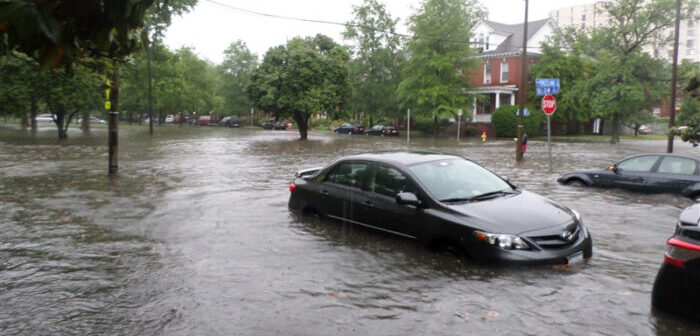
Flooding in Norfolk, Virginia, on May 16, 2014 - credit: NOAA
Share
LinkedIn Facebook Twitter Email

Scientists have estimated that sea levels in the USA could rise by as much as 30cm (12in) by 2050, leading to increased coastal flooding, even in the absence of heavy rain or storms.

The NOAA-led Sea Level Rise Technical Report provides the most up-to-date sea level rise projections for all US states and territories by decade for the next 100 years and beyond, based on a combination of tide gauge and satellite observations, as well as model ensembles from the Sixth Assessment Report of the Intergovernmental Panel on Climate Change (IPCC).

The report projects sea levels along the coastline will rise an additional 25-30cm (10-12in) by 2050, with specific amounts varying regionally, mainly due to land height changes.

The report updates the federal government’s 2017 sea level rise projections, and provides additional information on tide, wind, and storm-driven extreme water levels affecting current and future coastal flood risk.

A suite of federal tools use the data, including the NOAA Sea Level Rise Viewer, which is critical to the administration’s commitment to tackle the climate crisis by making actionable climate data accessible to those who need it.

Gina M Raimondo, US secretary of commerce, said, “For businesses along the coast, knowing what to expect and how to plan for the future is critical. These updated projections will help businesses, and the communities they support, understand risks and make smart investments in the years ahead.”

Gina McCarthy, US national climate advisor, added, “This new data on sea rise is the latest reconfirmation that our climate crisis, as the President has said, is blinking ‘code red’. We must redouble our efforts to cut the greenhouse gases that cause climate change while, at the same time, help our coastal communities become more resilient in the face of rising seas.”

Rick Spinrad, NOAA administrator, commented, “This is a global wake-up call and gives Americans the information needed to act now to best position ourselves for the future. As we build a Climate Ready Nation, these updated data can inform coastal communities and others about current and future vulnerabilities in the face of climate change and help them make smart decisions to keep people and property safe over the long run.”

The report also finds that the sea level rise expected by 2050 will create a profound increase in the frequency of coastal flooding, even in the absence of storms or heavy rainfall.

Nicole LeBoeuf, national ocean service director, NOAA, said, “By 2050, moderate flooding, which is typically disruptive and damaging by today’s weather, sea level and infrastructure standards, is expected to occur more than 10 times as often as it does today. These numbers mean a change from a single event every 2-5 years to multiple events each year, in some places.”

Bill Nelson, NASA Administrator, added, “This report supports previous studies and confirms what we have long known: sea levels are continuing to rise at an alarming rate, endangering communities around the world. Science is indisputable and urgent action is required to mitigate a climate crisis that is well underway. NASA is steadfast in our commitment to protecting our home planet by expanding our monitoring capabilities and continuing to ensure our climate data is not only accessible but understandable.”

This multi-agency effort is a product of the Interagency Sea Level Rise and Coastal Flood Hazard and Tool Task Force, composed of NOAA, NASA, EPA, USGS, DoD, FEMA and the US Army Corps of Engineers, as well as several academic institutes. The report leverages methods and insights from both the United Nations Intergovernmental Panel on Climate Change (IPCC) Sixth Assessment Report and supporting research for the US DoD Defense Regional Sea Level database.

To read the full Sea Level Rise Technical Report, click here.
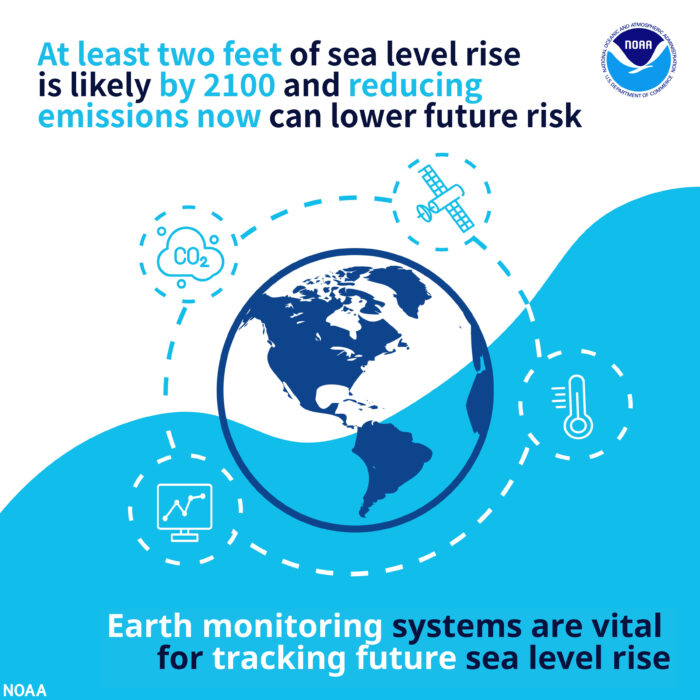
At least 2ft of sea level rise is likely by 2100 and reducing emissions now can lower future risk. Earth-monitoring systems are vital for tracking future sea level rise – credit: NOAA. 
Previous ArticleAnthropogenic emissions “doping the atmosphere” says WMO chief, as IPCC report enters final review phase
Next Article Cold patch in the North Atlantic helping to stall glacier loss in Iceland

Read Similar Stories

Space Weather

Northumbria University secures £4m to study Earth’s radiation belts

April 16, 20262 Mins Read
Extreme Weather

AI model improves real-time prediction of wildfire spread

April 16, 20263 Mins Read
Climate Measurement

Study identifies atmospheric trigger behind flash droughts in Puerto Rico

April 15, 20263 Mins Read
Latest News

Northumbria University secures £4m to study Earth’s radiation belts

April 16, 2026

AI model improves real-time prediction of wildfire spread

April 16, 2026

Study identifies atmospheric trigger behind flash droughts in Puerto Rico

April 15, 2026

Receive breaking stories and features in your inbox each week, for free


Enter your email address:


Supplier Spotlights
  • Raymetrics
Getting in Touch
  • Contact Us / Advertise
  • Meet the Editors
  • Media Pack
  • Free Weekly E-Newsletter
Our Social Channels
  • Facebook
  • LinkedIn
© 2026 UKi Media & Events a division of UKIP Media & Events Ltd
  • Cookie Policy
  • Privacy Policy
  • Terms and Conditions
  • Notice and Takedown Policy

Type above and press Enter to search. Press Esc to cancel.