


Close Menu
Meteorological Technology International
  • News
    • A-E
      • Agriculture
      • Automated Weather Stations
      • Aviation
      • Climate Measurement
      • Data
      • Developing Countries
      • Digital Applications
      • Early Warning Systems
      • Extreme Weather
    • G-P
      • Hydrology
      • Lidar
      • Lightning Detection
      • New Appointments
      • Nowcasting
      • Numerical Weather Prediction
      • Polar Weather
    • R-S
      • Radar
      • Rainfall
      • Remote Sensing
      • Renewable Energy
      • Satellites
      • Solar
      • Space Weather
      • Supercomputers
    • T-Z
      • Training
      • Transport
      • Weather Instruments
      • Wind
      • World Meteorological Organization
      • Meteorological Technology World Expo
  • Features
  • Online Magazines
    • January 2026
    • April 2025
    • January 2025
    • September 2024
    • April 2024
    • Archive Issues
    • Subscribe Free!
  • Opinion
  • Videos
  • Supplier Spotlight
  • Expo
LinkedIn X (Twitter) Facebook
  • Sign-up for Free Weekly E-Newsletter
  • Meet the Editors
  • Contact Us
  • Media Pack
LinkedIn Facebook
Subscribe
Meteorological Technology International
  • News
      • Agriculture
      • Automated Weather Stations
      • Aviation
      • Climate Measurement
      • Data
      • Developing Countries
      • Digital Applications
      • Early Warning Systems
      • Extreme Weather
      • Hydrology
      • Lidar
      • Lightning Detection
      • New Appointments
      • Nowcasting
      • Numerical Weather Prediction
      • Polar Weather
      • Radar
      • Rainfall
      • Remote Sensing
      • Renewable Energy
      • Satellites
      • Solar
      • Space Weather
      • Supercomputers
      • Training
      • Transport
      • Weather Instruments
      • Wind
      • World Meteorological Organization
      • Meteorological Technology World Expo
  • Features
  • Online Magazines
    1. January 2026
    2. September 2025
    3. April 2025
    4. January 2025
    5. September 2024
    6. April 2024
    7. January 2024
    8. September 2023
    9. April 2023
    10. Archive Issues
    11. Subscribe Free!
    Featured
    November 27, 2025

    In this Issue – January 2026

    By Hazel KingNovember 27, 2025
    Recent

    In this Issue – January 2026

    November 27, 2025

    In this Issue – September 2025

    August 11, 2025

    In this Issue – April 2025

    April 15, 2025
  • Opinion
  • Videos
  • Supplier Spotlight
  • Expo
Facebook LinkedIn
Subscribe
Meteorological Technology International
Data

UNESCO endorses global network of ocean robots to collect weather data

Elizabeth BakerBy Elizabeth BakerJune 5, 20253 Mins Read
Share LinkedIn Facebook Twitter Email
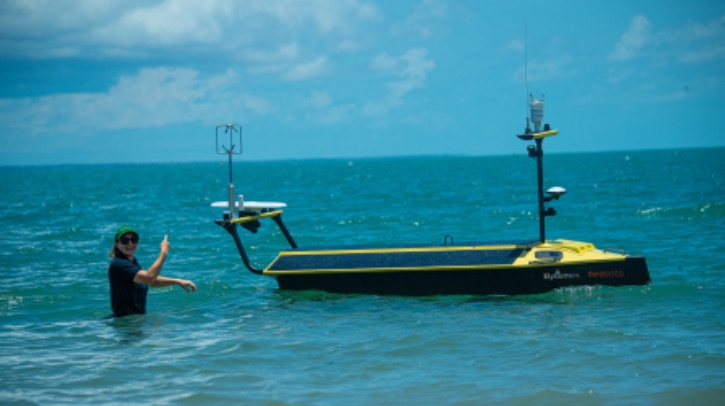
A woman points to a yellow uncrewed surface vessel in the sea.
Charles Darwin University adjunct Dr Ruth Patterson led the endorsement of SUN Fleet in a world-first global uncrewed surface vessel network.
Share
LinkedIn Facebook Twitter Email

UNESCO has endorsed a global network of uncrewed surface vessels (USVs) to sail the seas collecting data to improve weather and climate forecasting, maritime security awareness, wildlife surveys and more.

In April 2025, an international collaboration led by Dr Ruth Patterson, research fellow at Australia’s Charles Darwin University (CDU), put together the proposal for a global network of uncrewed surface vehicles (USVs). This was then presented to and later endorsed by the Global Ocean Observing System’s (GOOS) Observations Coordination Group, which is led by the Intergovernmental Oceanographic Commission of UNESCO and the World Meteorological Organisation (WMO).

Surface uncrewed fleet

The network, called the Surface Uncrewed (SUN) Fleet, is now the 17th network of the GOOS. Only two other global networks are led by individuals in Australia – one at the Bureau of Meteorology, and the other at the Integrated Marine Observing System.

Dr Patterson, an oceanographer who heads up Elysium EPL’s Marine Environmental Services, said the endorsement was the result of global collaboration among scientists, government and industry over the last four years.

“We are building a market for this new and currently booming industry of uncrewed surface vehicles,” Dr Patterson said. “This network is about science and industry collaborating to build a capacity and capability for broader humanity. Science and industry need to come together and ensure data is precise, it’s coordinated, and we have the right instruments in the right locations. The data collected is tied to people’s livelihoods, agriculture, fisheries and food security, shipping and more. These observations will lead to better weather forecasts in our region and around the world.”

The university highlights that the advantage of USVs is they are powered by renewable energy sources, able to traverse tens of thousands of kilometers unassisted, and navigate extreme environmental conditions which are typically under sampled because of logistics, costs and safety concerns.

Dr Patterson said the next steps include developing data standards and best practices, a governance structure, and securing sponsorship and funding. The Sun Fleet project office has already been established by the Centre for Ocean Leadership at the University Corporation for Atmospheric Research in the USA.

“It’s in humanity’s best interests to be invested in this network and this technology,” Dr Patterson said. “As weather events are becoming more extreme and there are cuts to scientific research, it’s more important than ever to have access to new, accurate and consistent data. At the same time, it’s also bolstering the blue economy, and the autonomous vehicle market for scientific ocean enterprise.”

Global reach

The proposal and development of the network is a collaboration between more than 40 universities and organizations around the world.

In the USA, National Oceanic and Atmospheric Administration (NOAA) oceanographer Dr Meghan Cronin, who is with NOAA’s Pacific Marine Environmental Laboratory and chair of the Observing Air-Sea Interaction Strategy, said the network would have immense value in measuring oceanographic and atmospheric scientific observations.

“USVs will allow us to cost-effectively sample vast areas of the ocean where we simply don’t have enough data,” Dr Cronin said. “They could be the answer to the question, ‘How do we fill in the blanks?’ The true value of these observations for improving forecasts will come when their data from around the world can be fed into the operational models within minutes of being captured.”

For more of the top insights into automated ocean monitoring, read Meteorological Technology International’s exclusive feature, “What do new international regulations mean for automated ocean monitoring?”, here

Previous ArticleBelize invests US$860,000 in weather observation systems to develop early warnings
Next Article UK Met Office launches five-year corporate strategy

Read Similar Stories

Climate Measurement

Study identifies atmospheric trigger behind flash droughts in Puerto Rico

April 15, 20263 Mins Read
Satellites

AI tool uses weather satellite data to map ocean currents in near real time

April 14, 20263 Mins Read
Climate Measurement

New tool speeds up climate model evaluation

April 13, 20262 Mins Read
Latest News

Northumbria University secures £4m to study Earth’s radiation belts

April 16, 2026

AI model improves real-time prediction of wildfire spread

April 16, 2026

Study identifies atmospheric trigger behind flash droughts in Puerto Rico

April 15, 2026

Receive breaking stories and features in your inbox each week, for free


Enter your email address:


Supplier Spotlights
  • MicroStep-MIS
Getting in Touch
  • Contact Us / Advertise
  • Meet the Editors
  • Media Pack
  • Free Weekly E-Newsletter
Our Social Channels
  • Facebook
  • LinkedIn
© 2026 UKi Media & Events a division of UKIP Media & Events Ltd
  • Cookie Policy
  • Privacy Policy
  • Terms and Conditions
  • Notice and Takedown Policy

Type above and press Enter to search. Press Esc to cancel.