

Close Menu
Meteorological Technology International
  • News
    • A-E
      • Agriculture
      • Automated Weather Stations
      • Aviation
      • Climate Measurement
      • Data
      • Developing Countries
      • Digital Applications
      • Early Warning Systems
      • Extreme Weather
    • G-P
      • Hydrology
      • Lidar
      • Lightning Detection
      • New Appointments
      • Nowcasting
      • Numerical Weather Prediction
      • Polar Weather
    • R-S
      • Radar
      • Rainfall
      • Remote Sensing
      • Renewable Energy
      • Satellites
      • Solar
      • Space Weather
      • Supercomputers
    • T-Z
      • Training
      • Transport
      • Weather Instruments
      • Wind
      • World Meteorological Organization
      • Meteorological Technology World Expo
  • Features
  • Online Magazines
    • January 2026
    • April 2025
    • January 2025
    • September 2024
    • April 2024
    • Archive Issues
    • Subscribe Free!
  • Opinion
  • Videos
  • Supplier Spotlight
  • Expo
LinkedIn X (Twitter) Facebook
  • Sign-up for Free Weekly E-Newsletter
  • Meet the Editors
  • Contact Us
  • Media Pack
LinkedIn Facebook
Subscribe
Meteorological Technology International
  • News
      • Agriculture
      • Automated Weather Stations
      • Aviation
      • Climate Measurement
      • Data
      • Developing Countries
      • Digital Applications
      • Early Warning Systems
      • Extreme Weather
      • Hydrology
      • Lidar
      • Lightning Detection
      • New Appointments
      • Nowcasting
      • Numerical Weather Prediction
      • Polar Weather
      • Radar
      • Rainfall
      • Remote Sensing
      • Renewable Energy
      • Satellites
      • Solar
      • Space Weather
      • Supercomputers
      • Training
      • Transport
      • Weather Instruments
      • Wind
      • World Meteorological Organization
      • Meteorological Technology World Expo
  • Features
  • Online Magazines
    1. January 2026
    2. September 2025
    3. April 2025
    4. January 2025
    5. September 2024
    6. April 2024
    7. January 2024
    8. September 2023
    9. April 2023
    10. Archive Issues
    11. Subscribe Free!
    Featured
    November 27, 2025

    In this Issue – January 2026

    By Hazel KingNovember 27, 2025
    Recent

    In this Issue – January 2026

    November 27, 2025

    In this Issue – September 2025

    August 11, 2025

    In this Issue – April 2025

    April 15, 2025
  • Opinion
  • Videos
  • Supplier Spotlight
  • Expo
Facebook LinkedIn
Subscribe
Meteorological Technology International
Extreme Weather

Year-end marks close of a decade of ‘exceptional global heat’

Paul WillisBy Paul WillisDecember 10, 20192 Mins Read
Share LinkedIn Facebook Twitter Email
Share
LinkedIn Facebook Twitter Email

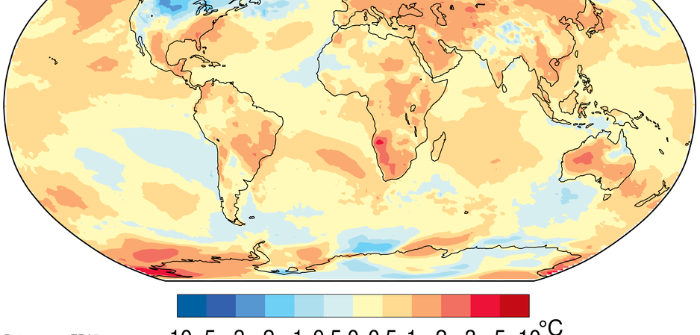
Not only will 2019 go down as one of the hottest years on record but it also marks the end of a decade of “exceptional global heat”, according to the WMO.

So far the average global temperature this year has been about 1.1°C above the pre-industrial period putting 2019 on course to be the second or third warmest year on record.

In its provisional statement on the State of the Global Climate, the WMO noted that the unprecedented warming is part of a decade-long trend with average temperatures for the 10-year period from 2010-2019 almost certain to be the highest ever recorded.

The report also noted the extreme impact of carbon emissions on global climate and weather. As concentrations of carbon dioxide in the atmosphere hit record levels of 407.8 parts per million in 2018, sea level rises have accelerated with the melting of the ice sheets in Greenland and Antarctica.

Meanwhile, CO2 absorbed into the oceans has made them 26% more acidic than at the start of the industrial era. The report also noted the massive uptick in extreme weather events around the globe.

The WMO report was compiled using datasets from the US National Oceanic and Atmospheric Administration (NOAA), NASA’s Goddard Institute for Space Studies, and the Met Office’s Hadley Centre and the University of East Anglia’s Climatic Research Unit (CRU) in the UK.

The Met Office and Climatic Research Unit team estimates global temperature using the HadCRUT4 dataset, which is compiled using thousands of air and sea-surface temperature measurements taken across the globe, from all continents and oceans.

Prof. Tim Osborn, CRU director of research, said, “The five warmest years for average global surface temperature since records began in 1850 have all occurred in the last five years; by contrast the five coldest years all occurred before 1912. This is climate change and not a coincidence.”


Previous ArticleUndersea fiber-optic cables can be used to detect earthquakes, say researchers
Next Article WMO report says benefits of investing in forecasting far outweigh costs

Read Similar Stories

Extreme Weather

AI model improves real-time prediction of wildfire spread

April 16, 20263 Mins Read
Climate Measurement

Study identifies atmospheric trigger behind flash droughts in Puerto Rico

April 15, 20263 Mins Read
Climate Measurement

Regional training aims to improve flood forecasting in Central Africa

April 1, 20263 Mins Read
Latest News

Northumbria University secures £4m to study Earth’s radiation belts

April 16, 2026

AI model improves real-time prediction of wildfire spread

April 16, 2026

Study identifies atmospheric trigger behind flash droughts in Puerto Rico

April 15, 2026

Receive breaking stories and features in your inbox each week, for free


Enter your email address:


Supplier Spotlights
  • Reuniwatt
Getting in Touch
  • Contact Us / Advertise
  • Meet the Editors
  • Media Pack
  • Free Weekly E-Newsletter
Our Social Channels
  • Facebook
  • LinkedIn
© 2026 UKi Media & Events a division of UKIP Media & Events Ltd
  • Cookie Policy
  • Privacy Policy
  • Terms and Conditions
  • Notice and Takedown Policy

Type above and press Enter to search. Press Esc to cancel.