

Close Menu
Meteorological Technology International
  • News
    • A-E
      • Agriculture
      • Automated Weather Stations
      • Aviation
      • Climate Measurement
      • Data
      • Developing Countries
      • Digital Applications
      • Early Warning Systems
      • Extreme Weather
    • G-P
      • Hydrology
      • Lidar
      • Lightning Detection
      • New Appointments
      • Nowcasting
      • Numerical Weather Prediction
      • Polar Weather
    • R-S
      • Radar
      • Rainfall
      • Remote Sensing
      • Renewable Energy
      • Satellites
      • Solar
      • Space Weather
      • Supercomputers
    • T-Z
      • Training
      • Transport
      • Weather Instruments
      • Wind
      • World Meteorological Organization
      • Meteorological Technology World Expo
  • Features
  • Online Magazines
    • January 2026
    • April 2025
    • January 2025
    • September 2024
    • April 2024
    • Archive Issues
    • Subscribe Free!
  • Opinion
  • Videos
  • Supplier Spotlight
  • Expo
LinkedIn X (Twitter) Facebook
  • Sign-up for Free Weekly E-Newsletter
  • Meet the Editors
  • Contact Us
  • Media Pack
LinkedIn Facebook
Subscribe
Meteorological Technology International
  • News
      • Agriculture
      • Automated Weather Stations
      • Aviation
      • Climate Measurement
      • Data
      • Developing Countries
      • Digital Applications
      • Early Warning Systems
      • Extreme Weather
      • Hydrology
      • Lidar
      • Lightning Detection
      • New Appointments
      • Nowcasting
      • Numerical Weather Prediction
      • Polar Weather
      • Radar
      • Rainfall
      • Remote Sensing
      • Renewable Energy
      • Satellites
      • Solar
      • Space Weather
      • Supercomputers
      • Training
      • Transport
      • Weather Instruments
      • Wind
      • World Meteorological Organization
      • Meteorological Technology World Expo
  • Features
  • Online Magazines
    1. January 2026
    2. September 2025
    3. April 2025
    4. January 2025
    5. September 2024
    6. April 2024
    7. January 2024
    8. September 2023
    9. April 2023
    10. Archive Issues
    11. Subscribe Free!
    Featured
    November 27, 2025

    In this Issue – January 2026

    By Hazel KingNovember 27, 2025
    Recent

    In this Issue – January 2026

    November 27, 2025

    In this Issue – September 2025

    August 11, 2025

    In this Issue – April 2025

    April 15, 2025
  • Opinion
  • Videos
  • Supplier Spotlight
  • Expo
Facebook LinkedIn
Subscribe
Meteorological Technology International
Agriculture

Studying how shrubs burn will make wildfire prediction must faster, say researchers

Paul WillisBy Paul WillisSeptember 17, 20192 Mins Read
Share LinkedIn Facebook Twitter Email
Share
LinkedIn Facebook Twitter Email

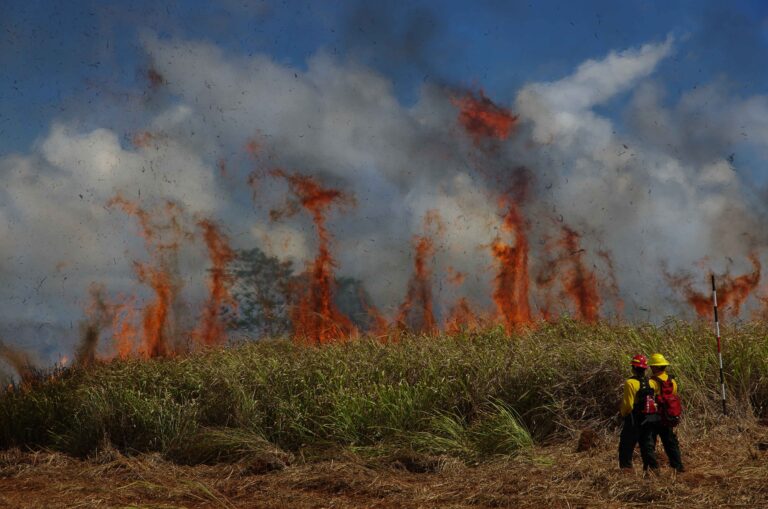
Researchers are studying how different varieties of shrubs burn in an effort to provide faster predictions of wildfire threat. The team from Brigham Young University’s Fire Research Lab in Utah used a thermogravimetric analyzer to measure the responsiveness to heat of 14 shrub species endemic to regions in the US prone to wildfires.

Some of the species included in the test were inkberry, wax myrtle, fetterbush, dwarf palmetto and sparkleberry. As the temperature inside the crucible was raised slowly up to a peak of 800°C, the research team studied the speed at which the plant matter broke down and the chemicals produced by the heat.

The study, which was funded by the US Defense Department and published in the Journal of Analytical and Applied Pyrolysis, found that the chemistry of plants is a big factor in how quickly they break down prior to combusting.

The researchers hope that a better understanding of how different vegetation responds to heat will allow them to predict more effectively when a wildfire will propagate.

“Very detailed models that already exist take up to two weeks to run on very big computers and by that time the fire has moved and it’s not in the same place anymore,” study co-author and Brigham Young professor of chemical engineering Thomas H Fletcher told ScienceDaily. “We’re aiming toward giving answers on how a fire might propagate in the next 20 minutes or half hour instead of the next two weeks.”

Wildfires are a growing problem in the US and around the world. In 2018 there were nearly 60,000 wildfires in the US, which destroyed nearly nine million acres of forest, much of it in California.

Siberian wildfires have destroyed 30 million acres since the beginning of 2019, according to Greenpeace. Meanwhile wildfires in the Amazon in 2019 are estimated to have destroyed 2.2 million acres of rainforest.

Previous ArticleAustralia’s Antarctic Division recalls challenges of defrosting remote weather station
Next Article Computer modeling reveals mystery behind deadly Indonesia tsunami

Read Similar Stories

Extreme Weather

AI model improves real-time prediction of wildfire spread

April 16, 20263 Mins Read
Climate Measurement

Study identifies atmospheric trigger behind flash droughts in Puerto Rico

April 15, 20263 Mins Read
Climate Measurement

Regional training aims to improve flood forecasting in Central Africa

April 1, 20263 Mins Read
Latest News

Northumbria University secures £4m to study Earth’s radiation belts

April 16, 2026

AI model improves real-time prediction of wildfire spread

April 16, 2026

Study identifies atmospheric trigger behind flash droughts in Puerto Rico

April 15, 2026

Receive breaking stories and features in your inbox each week, for free


Enter your email address:


Supplier Spotlights
  • Meteorage
Getting in Touch
  • Contact Us / Advertise
  • Meet the Editors
  • Media Pack
  • Free Weekly E-Newsletter
Our Social Channels
  • Facebook
  • LinkedIn
© 2026 UKi Media & Events a division of UKIP Media & Events Ltd
  • Cookie Policy
  • Privacy Policy
  • Terms and Conditions
  • Notice and Takedown Policy

Type above and press Enter to search. Press Esc to cancel.