

Close Menu
Meteorological Technology International
  • News
    • A-E
      • Agriculture
      • Automated Weather Stations
      • Aviation
      • Climate Measurement
      • Data
      • Developing Countries
      • Digital Applications
      • Early Warning Systems
      • Extreme Weather
    • G-P
      • Hydrology
      • Lidar
      • Lightning Detection
      • New Appointments
      • Nowcasting
      • Numerical Weather Prediction
      • Polar Weather
    • R-S
      • Radar
      • Rainfall
      • Remote Sensing
      • Renewable Energy
      • Satellites
      • Solar
      • Space Weather
      • Supercomputers
    • T-Z
      • Training
      • Transport
      • Weather Instruments
      • Wind
      • World Meteorological Organization
      • Meteorological Technology World Expo
  • Features
  • Online Magazines
    • January 2026
    • April 2025
    • January 2025
    • September 2024
    • April 2024
    • Archive Issues
    • Subscribe Free!
  • Opinion
  • Videos
  • Supplier Spotlight
  • Expo
LinkedIn X (Twitter) Facebook
  • Sign-up for Free Weekly E-Newsletter
  • Meet the Editors
  • Contact Us
  • Media Pack
LinkedIn Facebook
Subscribe
Meteorological Technology International
  • News
      • Agriculture
      • Automated Weather Stations
      • Aviation
      • Climate Measurement
      • Data
      • Developing Countries
      • Digital Applications
      • Early Warning Systems
      • Extreme Weather
      • Hydrology
      • Lidar
      • Lightning Detection
      • New Appointments
      • Nowcasting
      • Numerical Weather Prediction
      • Polar Weather
      • Radar
      • Rainfall
      • Remote Sensing
      • Renewable Energy
      • Satellites
      • Solar
      • Space Weather
      • Supercomputers
      • Training
      • Transport
      • Weather Instruments
      • Wind
      • World Meteorological Organization
      • Meteorological Technology World Expo
  • Features
  • Online Magazines
    1. January 2026
    2. September 2025
    3. April 2025
    4. January 2025
    5. September 2024
    6. April 2024
    7. January 2024
    8. September 2023
    9. April 2023
    10. Archive Issues
    11. Subscribe Free!
    Featured
    November 27, 2025

    In this Issue – January 2026

    By Hazel KingNovember 27, 2025
    Recent

    In this Issue – January 2026

    November 27, 2025

    In this Issue – September 2025

    August 11, 2025

    In this Issue – April 2025

    April 15, 2025
  • Opinion
  • Videos
  • Supplier Spotlight
  • Expo
Facebook LinkedIn
Subscribe
Meteorological Technology International
Extreme Weather

New method to help forecast severity of aftershocks when earthquakes hit

Paul WillisBy Paul WillisOctober 23, 20192 Mins Read
Share LinkedIn Facebook Twitter Email
earthquake
Share
LinkedIn Facebook Twitter Email

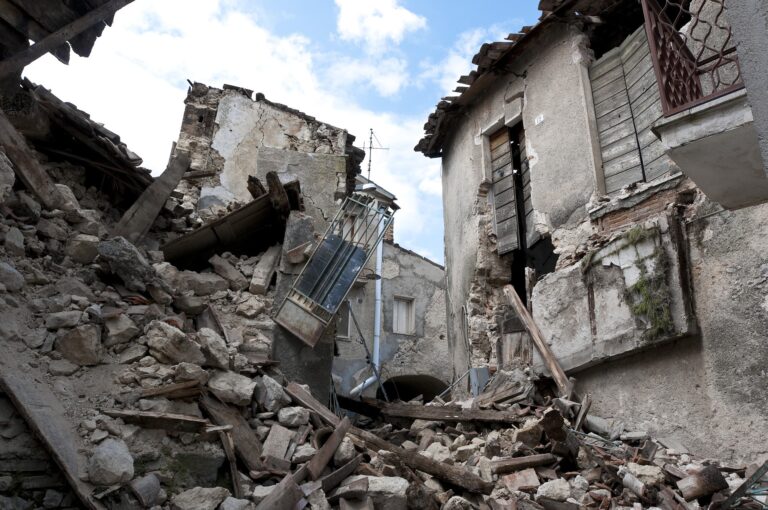
Scientists have developed a method that they say will help them determine in real-time the strength of aftershocks following an earthquake.

The vast majority of earthquakes are followed by aftershocks that get progressively smaller. But in about 5-10% of cases the quake is followed by an aftershock larger than the original event.

A recent example was the 2016 Kumamoto earthquake in Japan where an initial quake of 6.2 magnitude was followed by a 7.0 magnitude aftershock.

Researchers from the Swiss Seismological Service have proposed a method for determining when an anomalous event like this will occur.

According to the research team of Laura Gulia and Stefan Weimer, the risk of an aftershock bigger than the main quake can be determined by paying attention to something called the Gutenberg-Richter law.

This is a law that expresses the relationship between magnitude and the total number of earthquakes  in a geographical area at a particular time. According to the law, for example, for most places on Earth for every earthquake of magnitude 4 or larger there will be 10 quakes of magnitude 3 or larger and 100 quakes of magnitude 2 or larger.

The exact ratio of the magnitude distribution is arrived at using a parameter known as the ‘b-value’. Gulia and Weimer noted that the b-value usually rises during aftershocks but that occasionally it drops. They also noted that every time the b-value dropped it correlated with an aftershock larger than the original quake.

They spotted this correlation twice during their research – for the 2016 Kumamoto earthquakes and for the Amatrice-Norcia earthquakes in the northern Italian region of Umbria that struck the same year.

Gulia and Weimer, who published their findings in Nature, have also publicly released the computer code that they developed for their prediction method so that other seismologists can reuse it to test its validity when new earthquakes occur.

Previous ArticleNew study reveals that powerful storms can generate earthquake-like seismic activity
Next Article Record flooding in India monsoon linked to climate change

Read Similar Stories

Extreme Weather

AI model improves real-time prediction of wildfire spread

April 16, 20263 Mins Read
Climate Measurement

Study identifies atmospheric trigger behind flash droughts in Puerto Rico

April 15, 20263 Mins Read
Climate Measurement

Regional training aims to improve flood forecasting in Central Africa

April 1, 20263 Mins Read
Latest News

Northumbria University secures £4m to study Earth’s radiation belts

April 16, 2026

AI model improves real-time prediction of wildfire spread

April 16, 2026

Study identifies atmospheric trigger behind flash droughts in Puerto Rico

April 15, 2026

Receive breaking stories and features in your inbox each week, for free


Enter your email address:


Supplier Spotlights
  • AIRMAR Technology Corporation
Getting in Touch
  • Contact Us / Advertise
  • Meet the Editors
  • Media Pack
  • Free Weekly E-Newsletter
Our Social Channels
  • Facebook
  • LinkedIn
© 2026 UKi Media & Events a division of UKIP Media & Events Ltd
  • Cookie Policy
  • Privacy Policy
  • Terms and Conditions
  • Notice and Takedown Policy

Type above and press Enter to search. Press Esc to cancel.