

Close Menu
Meteorological Technology International
  • News
    • A-E
      • Agriculture
      • Automated Weather Stations
      • Aviation
      • Climate Measurement
      • Data
      • Developing Countries
      • Digital Applications
      • Early Warning Systems
      • Extreme Weather
    • G-P
      • Hydrology
      • Lidar
      • Lightning Detection
      • New Appointments
      • Nowcasting
      • Numerical Weather Prediction
      • Polar Weather
    • R-S
      • Radar
      • Rainfall
      • Remote Sensing
      • Renewable Energy
      • Satellites
      • Solar
      • Space Weather
      • Supercomputers
    • T-Z
      • Training
      • Transport
      • Weather Instruments
      • Wind
      • World Meteorological Organization
      • Meteorological Technology World Expo
  • Features
  • Online Magazines
    • January 2026
    • April 2025
    • January 2025
    • September 2024
    • April 2024
    • Archive Issues
    • Subscribe Free!
  • Opinion
  • Videos
  • Supplier Spotlight
  • Expo
LinkedIn X (Twitter) Facebook
  • Sign-up for Free Weekly E-Newsletter
  • Meet the Editors
  • Contact Us
  • Media Pack
LinkedIn Facebook
Subscribe
Meteorological Technology International
  • News
      • Agriculture
      • Automated Weather Stations
      • Aviation
      • Climate Measurement
      • Data
      • Developing Countries
      • Digital Applications
      • Early Warning Systems
      • Extreme Weather
      • Hydrology
      • Lidar
      • Lightning Detection
      • New Appointments
      • Nowcasting
      • Numerical Weather Prediction
      • Polar Weather
      • Radar
      • Rainfall
      • Remote Sensing
      • Renewable Energy
      • Satellites
      • Solar
      • Space Weather
      • Supercomputers
      • Training
      • Transport
      • Weather Instruments
      • Wind
      • World Meteorological Organization
      • Meteorological Technology World Expo
  • Features
  • Online Magazines
    1. January 2026
    2. September 2025
    3. April 2025
    4. January 2025
    5. September 2024
    6. April 2024
    7. January 2024
    8. September 2023
    9. April 2023
    10. Archive Issues
    11. Subscribe Free!
    Featured
    November 27, 2025

    In this Issue – January 2026

    By Hazel KingNovember 27, 2025
    Recent

    In this Issue – January 2026

    November 27, 2025

    In this Issue – September 2025

    August 11, 2025

    In this Issue – April 2025

    April 15, 2025
  • Opinion
  • Videos
  • Supplier Spotlight
  • Expo
Facebook LinkedIn
Subscribe
Meteorological Technology International
Climate Measurement

NASA flights to investigate sea level rise impact on Mississippi Delta

Paul WillisBy Paul WillisMarch 4, 20202 Mins Read
Share LinkedIn Facebook Twitter Email
Share
LinkedIn Facebook Twitter Email

NASA is set to launch an airborne mission aimed at understanding the impact of sea level rise on the Mississippi River Delta.

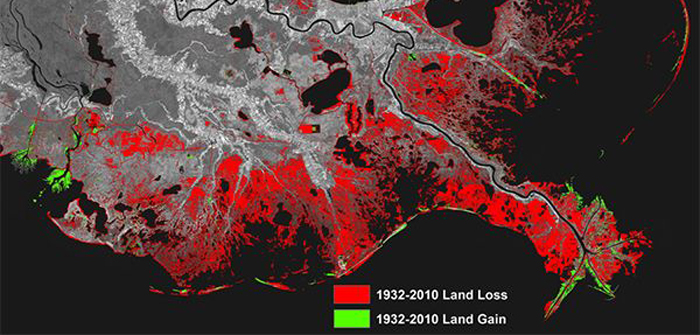
Research flights over the delta region in coastal Louisiana will investigate why some parts of the delta are disappearing under rising seas while others are not.

“Millions of people live on, and live from services provided by, coastal deltas like the Mississippi River Delta,” said the project’s lead investigator Marc Simard of NASA’s Jet Propulsion Laboratory in Pasadena, California. “But sea-level rise is causing many major deltas to lose land or disappear altogether, taking those services with them.”

The Mississippi River Delta, one of the world’s largest, has been particularly hard hit. According to NASA the delta region has lost some 2,000 square miles of wetlands in the last 80 years.

This land loss has major implications for the industries – such as shipping, fishing and tourism – and the wildlife that rely on the delta. In the face of sea level rise it could have wider implications for the surrounding region since deltas typically protect inland areas from wind and flooding during storms.

The disappearance of parts of the delta is due to those area being unable to accumulate sediment fast enough to offset sea-level rise and ground sinking – caused by extracting too much subterranean water, petroleum and natural gas.

Over the course of two field campaigns, one in April and one in the autumn, the NASA team will try to understand how and why sediment accumulates in some areas and not in others. As well as looking at how rising seas will impact this process.

The airborne campaign, which will be backed up by boats, will focus on two locations that have gained and lost land respectively: the Atchafalaya Basin and northwest of Terrebonne Bay.

During the mission, known as Delta-X, the team will use specialized remote-sensing instruments to measure how much water flows through the river’s channels and how much of it overflows to the wetlands. They will also detect the amount of sediment in the water and how much of it gets deposited on land.

Previous ArticleStudy assesses impact of extreme weather on energy systems
Next Article European forecast center issues software coding challenge

Read Similar Stories

Extreme Weather

AI model improves real-time prediction of wildfire spread

April 16, 20263 Mins Read
Climate Measurement

Study identifies atmospheric trigger behind flash droughts in Puerto Rico

April 15, 20263 Mins Read
Satellites

AI tool uses weather satellite data to map ocean currents in near real time

April 14, 20263 Mins Read
Latest News

Northumbria University secures £4m to study Earth’s radiation belts

April 16, 2026

AI model improves real-time prediction of wildfire spread

April 16, 2026

Study identifies atmospheric trigger behind flash droughts in Puerto Rico

April 15, 2026

Receive breaking stories and features in your inbox each week, for free


Enter your email address:


Supplier Spotlights
  • REMTECH
Getting in Touch
  • Contact Us / Advertise
  • Meet the Editors
  • Media Pack
  • Free Weekly E-Newsletter
Our Social Channels
  • Facebook
  • LinkedIn
© 2026 UKi Media & Events a division of UKIP Media & Events Ltd
  • Cookie Policy
  • Privacy Policy
  • Terms and Conditions
  • Notice and Takedown Policy

Type above and press Enter to search. Press Esc to cancel.