


Close Menu
Meteorological Technology International
  • News
    • A-E
      • Agriculture
      • Automated Weather Stations
      • Aviation
      • Climate Measurement
      • Data
      • Developing Countries
      • Digital Applications
      • Early Warning Systems
      • Extreme Weather
    • G-P
      • Hydrology
      • Lidar
      • Lightning Detection
      • New Appointments
      • Nowcasting
      • Numerical Weather Prediction
      • Polar Weather
    • R-S
      • Radar
      • Rainfall
      • Remote Sensing
      • Renewable Energy
      • Satellites
      • Solar
      • Space Weather
      • Supercomputers
    • T-Z
      • Training
      • Transport
      • Weather Instruments
      • Wind
      • World Meteorological Organization
      • Meteorological Technology World Expo
  • Features
  • Online Magazines
    • January 2026
    • April 2025
    • January 2025
    • September 2024
    • April 2024
    • Archive Issues
    • Subscribe Free!
  • Opinion
  • Videos
  • Supplier Spotlight
  • Expo
LinkedIn X (Twitter) Facebook
  • Sign-up for Free Weekly E-Newsletter
  • Meet the Editors
  • Contact Us
  • Media Pack
LinkedIn Facebook
Subscribe
Meteorological Technology International
  • News
      • Agriculture
      • Automated Weather Stations
      • Aviation
      • Climate Measurement
      • Data
      • Developing Countries
      • Digital Applications
      • Early Warning Systems
      • Extreme Weather
      • Hydrology
      • Lidar
      • Lightning Detection
      • New Appointments
      • Nowcasting
      • Numerical Weather Prediction
      • Polar Weather
      • Radar
      • Rainfall
      • Remote Sensing
      • Renewable Energy
      • Satellites
      • Solar
      • Space Weather
      • Supercomputers
      • Training
      • Transport
      • Weather Instruments
      • Wind
      • World Meteorological Organization
      • Meteorological Technology World Expo
  • Features
  • Online Magazines
    1. January 2026
    2. September 2025
    3. April 2025
    4. January 2025
    5. September 2024
    6. April 2024
    7. January 2024
    8. September 2023
    9. April 2023
    10. Archive Issues
    11. Subscribe Free!
    Featured
    November 27, 2025

    In this Issue – January 2026

    By Hazel KingNovember 27, 2025
    Recent

    In this Issue – January 2026

    November 27, 2025

    In this Issue – September 2025

    August 11, 2025

    In this Issue – April 2025

    April 15, 2025
  • Opinion
  • Videos
  • Supplier Spotlight
  • Expo
Facebook LinkedIn
Subscribe
Meteorological Technology International
Early Warning Systems

Land surface conditions research set to transform early warning systems in tropical regions

Elizabeth BakerBy Elizabeth BakerApril 7, 20253 Mins Read
Share LinkedIn Facebook Twitter Email
According to a new study published in Nature Geoscience by the UK Centre for Ecology and Hydrology (UKCEH), the University of Leeds (UK) and the Pacific Northwest National Laboratory (USA), measurements of land surface conditions are set to transform early warning systems in tropical regions.
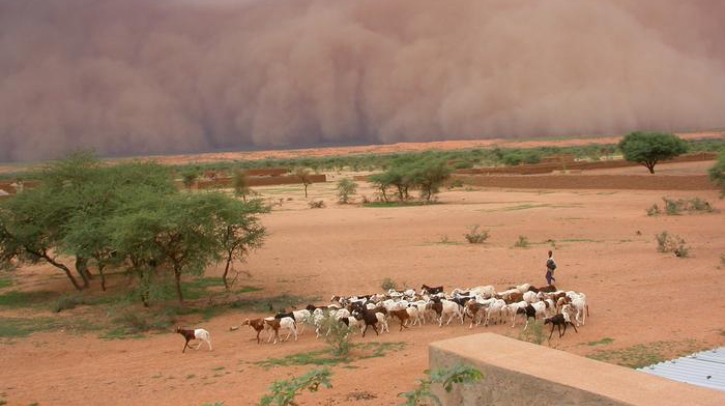
Intense dust storms, such as this haboob in Mali, proceed torrential rain in the Sahel. Credit: Françoise Guichard / Laurent Kergoat / CNRS Photo Library
Share
LinkedIn Facebook Twitter Email

According to a new study by the UK Centre for Ecology and Hydrology (UKCEH), the University of Leeds (UK) and the Pacific Northwest National Laboratory (USA), measurements of land surface conditions are set to transform early warning systems in tropical regions.

The new study, published in Nature Geoscience, is part of ongoing UKCEH research funded by the Natural Environment Research Council (NERC). A previous study found land surface conditions often affect the direction and intensity of megastorms in the Sahel after they have formed, while a separate paper showed that deforestation increases the frequency of storms in some fast-growing African coastal cities.

Improving warnings

The study involved a detailed analysis of 20 years of satellite data relating to storm activity and soil moisture conditions in West Africa, southern Africa, India, South America, as well as computer modeling.

The research focused on mesoscale convective systems, which bring severe flash flooding and mudslides in parts of Africa, Asia, Americas and Australia that collectively have a population of nearly four billion people.

The researchers found surface conditions that influence rainfall can be observed two to five days before a storm hits, which will enable advance warning of potential flash flooding.

Rethinking forecasting

“Meteorologists tend to focus on atmospheric conditions to predict weather patterns. But, as a growing amount of evidence shows, we should also consider what is happening on the land surface to improve forecasting,” said study co-author Dr Cornelia Klein, a meteorologist at UKCEH.

The study authors explained that the greater contrast in moisture between wetter and drier areas over a large distance results in a greater contrast in air temperatures, leading to stronger shifts in wind direction and/or speed as you go higher up in the atmosphere. This turbulence helps storms grow, producing more rainfall over a larger area.

In addition to their analysis in West and southern Africa, India and South America, the researchers observed the same connection between soil moisture contrasts and wind circulations in China, Australia and the US Great Plains. So while there was insufficient storm data to carry out a full analysis, they are confident that soil moisture contrasts are also exacerbating rainfall in other regions affected by mesoscale convective systems.

Developing accurate tools

The next step planned for the researchers is exploring what factors contribute to these regional variations. They are also using the latest advanced climate models, which better incorporate storms, to improve understanding of the processes that make rainfall more intense as temperatures continue to rise under global warming.

Computer software tools being developed by UKCEH are enabling meteorological agencies to generate more reliable short-term forecasting (up to six hours ahead of storms) and therefore warnings to communities about approaching storms. These include an online ‘nowcasting’ portal based on satellite-derived data on atmospheric and soil conditions in Africa.

Lead author Dr Emma Barton, a meteorologist at UKCEH, said, “Mesoscale convective systems are some of the most intense thunderstorms on the planet, and are increasing in severity due to climate change. Rising temperatures could increase the contrast between wet and dry areas of soils, further intensifying thunderstorms in already severely impacted regions.

“Understanding how soil moisture influences storm activity, and how this may change in the future, will be essential for more accurate short-term forecasting to warn communities about approaching storms, as well as making longer-term projections.”

In related news, the UK Centre for Ecology & Hydrology (UKCEH) recently opened an office in Accra, Ghana, to improve its meteorological collaboration with communities in the region. Click here to read the full story.

Previous ArticleVaisala to deliver weather radar and lightning detection network across Greece
Next Article China Meteorological Administration unveils two AI meteorological models

Read Similar Stories

Space Weather

Northumbria University secures £4m to study Earth’s radiation belts

April 16, 20262 Mins Read
Extreme Weather

AI model improves real-time prediction of wildfire spread

April 16, 20263 Mins Read
Climate Measurement

Study identifies atmospheric trigger behind flash droughts in Puerto Rico

April 15, 20263 Mins Read
Latest News

Northumbria University secures £4m to study Earth’s radiation belts

April 16, 2026

AI model improves real-time prediction of wildfire spread

April 16, 2026

Study identifies atmospheric trigger behind flash droughts in Puerto Rico

April 15, 2026

Receive breaking stories and features in your inbox each week, for free


Enter your email address:


Supplier Spotlights
  • EWR Radar Systems
Getting in Touch
  • Contact Us / Advertise
  • Meet the Editors
  • Media Pack
  • Free Weekly E-Newsletter
Our Social Channels
  • Facebook
  • LinkedIn
© 2026 UKi Media & Events a division of UKIP Media & Events Ltd
  • Cookie Policy
  • Privacy Policy
  • Terms and Conditions
  • Notice and Takedown Policy

Type above and press Enter to search. Press Esc to cancel.