


Close Menu
Meteorological Technology International
  • News
    • A-E
      • Agriculture
      • Automated Weather Stations
      • Aviation
      • Climate Measurement
      • Data
      • Developing Countries
      • Digital Applications
      • Early Warning Systems
      • Extreme Weather
    • G-P
      • Hydrology
      • Lidar
      • Lightning Detection
      • New Appointments
      • Nowcasting
      • Numerical Weather Prediction
      • Polar Weather
    • R-S
      • Radar
      • Rainfall
      • Remote Sensing
      • Renewable Energy
      • Satellites
      • Solar
      • Space Weather
      • Supercomputers
    • T-Z
      • Training
      • Transport
      • Weather Instruments
      • Wind
      • World Meteorological Organization
      • Meteorological Technology World Expo
  • Features
  • Online Magazines
    • January 2026
    • April 2025
    • January 2025
    • September 2024
    • April 2024
    • Archive Issues
    • Subscribe Free!
  • Opinion
  • Videos
  • Supplier Spotlight
  • Expo
LinkedIn X (Twitter) Facebook
  • Sign-up for Free Weekly E-Newsletter
  • Meet the Editors
  • Contact Us
  • Media Pack
LinkedIn Facebook
Subscribe
Meteorological Technology International
  • News
      • Agriculture
      • Automated Weather Stations
      • Aviation
      • Climate Measurement
      • Data
      • Developing Countries
      • Digital Applications
      • Early Warning Systems
      • Extreme Weather
      • Hydrology
      • Lidar
      • Lightning Detection
      • New Appointments
      • Nowcasting
      • Numerical Weather Prediction
      • Polar Weather
      • Radar
      • Rainfall
      • Remote Sensing
      • Renewable Energy
      • Satellites
      • Solar
      • Space Weather
      • Supercomputers
      • Training
      • Transport
      • Weather Instruments
      • Wind
      • World Meteorological Organization
      • Meteorological Technology World Expo
  • Features
  • Online Magazines
    1. January 2026
    2. September 2025
    3. April 2025
    4. January 2025
    5. September 2024
    6. April 2024
    7. January 2024
    8. September 2023
    9. April 2023
    10. Archive Issues
    11. Subscribe Free!
    Featured
    November 27, 2025

    In this Issue – January 2026

    By Hazel KingNovember 27, 2025
    Recent

    In this Issue – January 2026

    November 27, 2025

    In this Issue – September 2025

    August 11, 2025

    In this Issue – April 2025

    April 15, 2025
  • Opinion
  • Videos
  • Supplier Spotlight
  • Expo
Facebook LinkedIn
Subscribe
Meteorological Technology International
Digital Applications

Nvidia launches open Earth-2 model family for AI weather forecasting

Alex PackBy Alex PackJanuary 26, 20263 Mins Read
Share LinkedIn Facebook Twitter Email
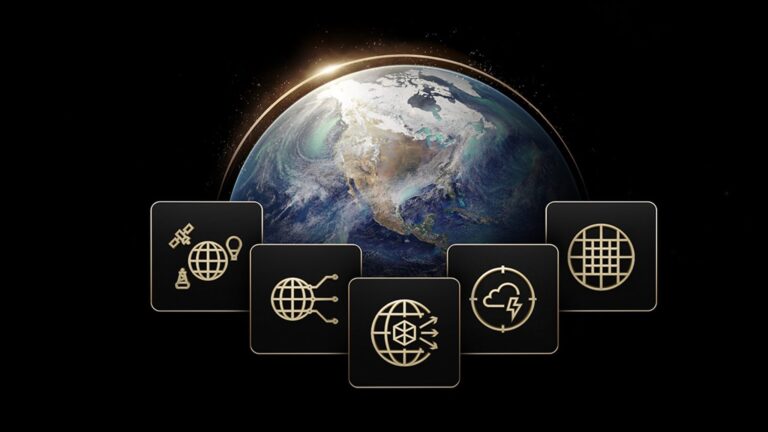
NVIDIA launches open Earth-2 model family for AI weather forecasting.
Image credit: Nvidia
Share
LinkedIn Facebook Twitter Email

Nvidia has launched a new Earth-2 family of open models, libraries and frameworks designed to support AI-based weather and climate forecasting, making advanced weather AI more accessible to organizations worldwide.

The announcement was made at the American Meteorological Society’s annual meeting, where Nvidia described Earth-2 as the world’s first fully open, accelerated software stack covering the full forecasting workflow – from processing observational data to generating medium-range global forecasts and short-term local storm predictions.

Nvidia said the open nature of Earth-2 allows scientists, weather agencies, developers, enterprises and governments to run, fine-tune and deploy production-ready weather AI models on their own infrastructure. The company positioned the platform as a lower-cost, faster alternative to traditional physics-based numerical weather prediction, which typically requires large supercomputing resources.

The Earth-2 stack includes pretrained models, inference libraries and customization tools aimed at reducing computational time while maintaining or improving forecast accuracy. According to Nvidia, AI-powered forecasting can significantly reduce compute requirements, enabling more countries and organizations to develop application-specific forecasting systems.

Three new open models were introduced as part of the Earth-2 family. Earth-2 Medium Range, built on a new architecture called Atlas, supports forecasts up to 15 days ahead across more than 70 weather variables. Earth-2 Nowcasting, powered by the StormScope architecture, generates kilometer-scale, zero- to six-hour forecasts of local storms using generative AI. Earth-2 Global Data Assimilation, based on the HealDA architecture, produces initial atmospheric conditions for forecasts in seconds on GPUs rather than hours on supercomputers.

These models join existing open Earth-2 components, including CorrDiff for high-resolution downscaling and FourCastNet3 for rapid, high-accuracy global forecasting. The platform also integrates open models from organizations such as the European Centre for Medium-Range Weather Forecasts, Microsoft and Google, and supports training via Nvidia’s open-source PhysicsNeMo framework.

Nvidia said Earth-2 models are already being evaluated or used operationally by weather agencies, energy companies and risk and analytics firms. Users include the Israel Meteorological Service, Taiwan’s Central Weather Administration, The Weather Company and the US National Weather Service, as well as energy and grid operators such as TotalEnergies, Eni and Southwest Power Pool.

“The revolution of new AI weather tools for forecasting is very exciting,” said Julian Green, co-founder and CEO of AI weather provider Brightband, which is running Earth-2 Medium Range operationally. “The model being open source speeds up innovation, allowing easier comparison and improvements.”

Earth-2 Medium Range and Nowcasting are now available through Nvidia Earth2Studio, Hugging Face and GitHub, while Earth-2 Global Data Assimilation is expected to be released later in 2026.

In related news, Tomorrow.io announces DeepSky AI-native weather-sensing constellation

Previous ArticleTomorrow.io announces DeepSky AI-native weather-sensing constellation
Next Article Caribbean workshop focuses on strengthening early warning communication

Read Similar Stories

Extreme Weather

AI model improves real-time prediction of wildfire spread

April 16, 20263 Mins Read
Climate Measurement

New tool speeds up climate model evaluation

April 13, 20262 Mins Read
Data

NASA tests high-resolution weather model for launch operations

April 7, 20262 Mins Read
Latest News

Northumbria University secures £4m to study Earth’s radiation belts

April 16, 2026

AI model improves real-time prediction of wildfire spread

April 16, 2026

Study identifies atmospheric trigger behind flash droughts in Puerto Rico

April 15, 2026

Receive breaking stories and features in your inbox each week, for free


Enter your email address:


Supplier Spotlights
  • ZX Lidars
Getting in Touch
  • Contact Us / Advertise
  • Meet the Editors
  • Media Pack
  • Free Weekly E-Newsletter
Our Social Channels
  • Facebook
  • LinkedIn
© 2026 UKi Media & Events a division of UKIP Media & Events Ltd
  • Cookie Policy
  • Privacy Policy
  • Terms and Conditions
  • Notice and Takedown Policy

Type above and press Enter to search. Press Esc to cancel.