


Close Menu
Meteorological Technology International
  • News
    • A-E
      • Agriculture
      • Automated Weather Stations
      • Aviation
      • Climate Measurement
      • Data
      • Developing Countries
      • Digital Applications
      • Early Warning Systems
      • Extreme Weather
    • G-P
      • Hydrology
      • Lidar
      • Lightning Detection
      • New Appointments
      • Nowcasting
      • Numerical Weather Prediction
      • Polar Weather
    • R-S
      • Radar
      • Rainfall
      • Remote Sensing
      • Renewable Energy
      • Satellites
      • Solar
      • Space Weather
      • Supercomputers
    • T-Z
      • Training
      • Transport
      • Weather Instruments
      • Wind
      • World Meteorological Organization
      • Meteorological Technology World Expo
  • Features
  • Online Magazines
    • January 2026
    • April 2025
    • January 2025
    • September 2024
    • April 2024
    • Archive Issues
    • Subscribe Free!
  • Opinion
  • Videos
  • Supplier Spotlight
  • Expo
LinkedIn X (Twitter) Facebook
  • Sign-up for Free Weekly E-Newsletter
  • Meet the Editors
  • Contact Us
  • Media Pack
LinkedIn Facebook
Subscribe
Meteorological Technology International
  • News
      • Agriculture
      • Automated Weather Stations
      • Aviation
      • Climate Measurement
      • Data
      • Developing Countries
      • Digital Applications
      • Early Warning Systems
      • Extreme Weather
      • Hydrology
      • Lidar
      • Lightning Detection
      • New Appointments
      • Nowcasting
      • Numerical Weather Prediction
      • Polar Weather
      • Radar
      • Rainfall
      • Remote Sensing
      • Renewable Energy
      • Satellites
      • Solar
      • Space Weather
      • Supercomputers
      • Training
      • Transport
      • Weather Instruments
      • Wind
      • World Meteorological Organization
      • Meteorological Technology World Expo
  • Features
  • Online Magazines
    1. January 2026
    2. September 2025
    3. April 2025
    4. January 2025
    5. September 2024
    6. April 2024
    7. January 2024
    8. September 2023
    9. April 2023
    10. Archive Issues
    11. Subscribe Free!
    Featured
    November 27, 2025

    In this Issue – January 2026

    By Hazel KingNovember 27, 2025
    Recent

    In this Issue – January 2026

    November 27, 2025

    In this Issue – September 2025

    August 11, 2025

    In this Issue – April 2025

    April 15, 2025
  • Opinion
  • Videos
  • Supplier Spotlight
  • Expo
Facebook LinkedIn
Subscribe
Meteorological Technology International
Digital Applications

International space agencies expand Earth Observing Dashboard capabilities

Dan SymondsBy Dan SymondsMay 20, 20223 Mins Read
Share LinkedIn Facebook Twitter Email
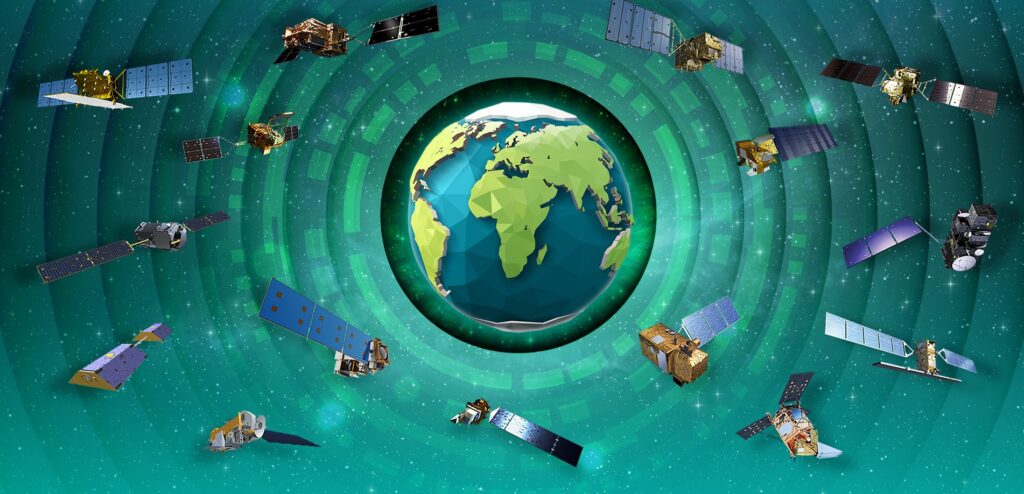
NASA, ESA, and JAXA have created a tri-agency dashboard that combines their resources, technical knowledge and expertise - credit: NASA
Share
LinkedIn Facebook Twitter Email

NASA, the European Space Agency (ESA) and Japan Aerospace Exploration Agency (JAXA) have expanded the co-created Earth Observing Dashboard, originally designed to monitor Covid-19, to include six new focus areas – atmosphere, agriculture, biomass, water and ocean, cryosphere, and the economy.

The dashboard provides an easy-to-use resource that uses accurate remote sensing observations to show the changes occurring in Earth’s air, land and water, and their effects on human activities. Users can explore countries and regions around the world to see how the indicators in specific locations change over time.

The agencies collaborated to identify the most relevant satellite data streams and adapted existing computing infrastructure to share data from across the agencies and produce relevant indicators and stories.

Karen St Germain, director, NASA Earth Science Division, said, “At NASA, accessibility to data is a top priority. With our partners at ESA and JAXA, this is another important step to getting the latest information to the public about our changing planet, in an accessible and convenient way, which can inform decisions and planning for communities around the world.”

Simonetta Cheli, director of Earth Observation Programmes at ESA, said, “International collaboration between our space agencies is key. Our advanced Earth-observing satellite data provided by ESA, NASA and JAXA are used every day to benefit society at large and advance our knowledge of our home planet. After the success of the Earth Observing Dashboard, I am delighted to see how our resources and technical knowledge can be expanded and used to further our understanding of global environmental changes and other societal challenges impacting our planet.”

The new additions include:

  • The atmosphere focus area demonstrates ways in which air pollution and climate change contribute to the biggest environmental challenges.
  • In the agriculture focus area, users can explore satellite data that provides insights into agricultural production, crop conditions, and food supply.
  • The biomass focus area features a story describing how trees and plants remove substantial amounts of carbon dioxide out of the atmosphere each year.
  • In the cryosphere focus area, a story on the effects of global temperature rise on the extent of sea ice allows the reader to interact with a geographic visualization of a JAXA sea ice dataset.
  • The water and ocean area focuses on Earth’s largest natural resource and enables users to discover a view of the ocean that is as rich and complex as that of land.
  • The economy focus area provides access to data sets that show how Earth’s social and economic systems are connected to the environment.

In addition to the curated stories and data set offered in each of the focus areas, the Earth Observing Dashboard provides direct access to a data set exploration tool, which allows users to interactively explore the different indicators in detail.

Koji Terada, JAXA vice president and director general for the Space Technology Directorate I, said, “Following the collaboration with NASA and ESA on Covid-19, we expanded this dashboard to widely provide the stories on global issues about the environment and climate change to the world in the trilateral collaboration. From the perspective of contributing to the understanding of the Earth’s environment and systems and enhancing the values of Earth observation data, we at JAXA will continue to work on updating this dashboard.”

To visit the Earth Observing Dashboard, click here.

Previous ArticleHuman influence shifts Kyoto cherry blossom dates by more than a week
Next Article NOAA predicts 14 to 21 named storms in above-average 2022 Atlantic hurricane season

Read Similar Stories

Space Weather

Northumbria University secures £4m to study Earth’s radiation belts

April 16, 20262 Mins Read
Extreme Weather

AI model improves real-time prediction of wildfire spread

April 16, 20263 Mins Read
Climate Measurement

Study identifies atmospheric trigger behind flash droughts in Puerto Rico

April 15, 20263 Mins Read
Latest News

Northumbria University secures £4m to study Earth’s radiation belts

April 16, 2026

AI model improves real-time prediction of wildfire spread

April 16, 2026

Study identifies atmospheric trigger behind flash droughts in Puerto Rico

April 15, 2026

Receive breaking stories and features in your inbox each week, for free


Enter your email address:


Supplier Spotlights
  • Raymetrics
Getting in Touch
  • Contact Us / Advertise
  • Meet the Editors
  • Media Pack
  • Free Weekly E-Newsletter
Our Social Channels
  • Facebook
  • LinkedIn
© 2026 UKi Media & Events a division of UKIP Media & Events Ltd
  • Cookie Policy
  • Privacy Policy
  • Terms and Conditions
  • Notice and Takedown Policy

Type above and press Enter to search. Press Esc to cancel.