


Close Menu
Meteorological Technology International
  • News
    • A-E
      • Agriculture
      • Automated Weather Stations
      • Aviation
      • Climate Measurement
      • Data
      • Developing Countries
      • Digital Applications
      • Early Warning Systems
      • Extreme Weather
    • G-P
      • Hydrology
      • Lidar
      • Lightning Detection
      • New Appointments
      • Nowcasting
      • Numerical Weather Prediction
      • Polar Weather
    • R-S
      • Radar
      • Rainfall
      • Remote Sensing
      • Renewable Energy
      • Satellites
      • Solar
      • Space Weather
      • Supercomputers
    • T-Z
      • Training
      • Transport
      • Weather Instruments
      • Wind
      • World Meteorological Organization
      • Meteorological Technology World Expo
  • Features
  • Online Magazines
    • January 2026
    • April 2025
    • January 2025
    • September 2024
    • April 2024
    • Archive Issues
    • Subscribe Free!
  • Opinion
  • Videos
  • Supplier Spotlight
  • Expo
LinkedIn X (Twitter) Facebook
  • Sign-up for Free Weekly E-Newsletter
  • Meet the Editors
  • Contact Us
  • Media Pack
LinkedIn Facebook
Subscribe
Meteorological Technology International
  • News
      • Agriculture
      • Automated Weather Stations
      • Aviation
      • Climate Measurement
      • Data
      • Developing Countries
      • Digital Applications
      • Early Warning Systems
      • Extreme Weather
      • Hydrology
      • Lidar
      • Lightning Detection
      • New Appointments
      • Nowcasting
      • Numerical Weather Prediction
      • Polar Weather
      • Radar
      • Rainfall
      • Remote Sensing
      • Renewable Energy
      • Satellites
      • Solar
      • Space Weather
      • Supercomputers
      • Training
      • Transport
      • Weather Instruments
      • Wind
      • World Meteorological Organization
      • Meteorological Technology World Expo
  • Features
  • Online Magazines
    1. January 2026
    2. September 2025
    3. April 2025
    4. January 2025
    5. September 2024
    6. April 2024
    7. January 2024
    8. September 2023
    9. April 2023
    10. Archive Issues
    11. Subscribe Free!
    Featured
    November 27, 2025

    In this Issue – January 2026

    By Hazel KingNovember 27, 2025
    Recent

    In this Issue – January 2026

    November 27, 2025

    In this Issue – September 2025

    August 11, 2025

    In this Issue – April 2025

    April 15, 2025
  • Opinion
  • Videos
  • Supplier Spotlight
  • Expo
Facebook LinkedIn
Subscribe
Meteorological Technology International
Digital Applications

ECMWF launches four-year project to intensify use of ML in weather prediction

Elizabeth BakerBy Elizabeth BakerJanuary 15, 20243 Mins Read
Share LinkedIn Facebook Twitter Email
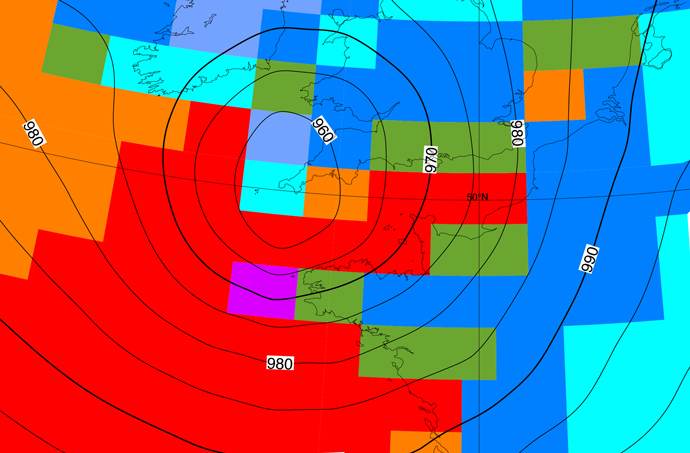
Extract from a 48-hour forecast from ECMWF’s experimental AIFS machine-learning model for mean sea-level pressure and wind speed for 00 UTC on November 2, 2023 (Storm Ciarán). Photo credit: ECMWF
Share
LinkedIn Facebook Twitter Email

ECMWF has launched a four-year project to build on its members’ development, testing and implementation of machine learning (ML) across their weather forecasting chains.

The next few months and years will see a push toward targeting all parts of the forecasting chain as well as adding the probabilistic dimension that forecasters need to assess all possible future weather scenarios, as well as their likelihood. The organization asserted that a lot of work is still needed before ML models can safely and accurately complement conventional models, and it will certainly be a challenge to get it right.

Existing initiatives that fall under this project include increasing resources within ECMWF to broaden the scope of its work on ML; intensifying ongoing work on a hybrid model mixing conventional and ML methodologies to develop a fully data-driven forecasting system; and the further development of the Artificial Intelligence/Integrated Forecasting System (AIFS) to create a full forecasting chain solely using ML.

Norway and Switzerland have taken joint lead in the latter project and will coordinate its development. Roar Skålin, director general of Met Norway, and Christof Appenzeller, director of MeteoSwiss, said in a joint statement, “Whilst many ECMWF member states are already involved in machine learning within their own meteorological services, it is important that we continue and even intensify the collaborative approach. This will be key to Europe’s leadership in weather prediction. Machine learning has a huge potential to improve our forecasts and services and will allow us to better protect all citizens from the impact of severe weather. From the recent and very promising results we are seeing now from our own experiments and ECMWF’s AIFS on a global scale, it is clear that this is a direction we must forcefully invest in.”

Additionally, the European Union’s Destination Earth initiative has been granted substantial extra funding to specifically intensify the use of ML in the development of an ML-based Earth system model that will support quantifying uncertainties in the Earth system digital twins and enhancing their interactivity capabilities.

Speaking on behalf of the consortium leading the development of the Weather-Induced Extremes digital twin, Marc Pontaud, director of research at Météo-France, said, “The importance of the digital twins and the positive impact that they can bring to society cannot be overstated. The additional funding to focus on artificial intelligence offers us game-changing improvements to our alert and advisory systems and will strengthen the ability of European meteorological services to forecast extreme weather events in a new, efficient way and benefit impact sectors.”

To find out more about ECMWF’s latest developments, click here.

Previous ArticleUS-Indian satellite to monitor Earth’s changing frozen regions
Next Article NWS launches website for water forecast services and flood inundation maps

Read Similar Stories

Extreme Weather

AI model improves real-time prediction of wildfire spread

April 16, 20263 Mins Read
Climate Measurement

New tool speeds up climate model evaluation

April 13, 20262 Mins Read
Data

NASA tests high-resolution weather model for launch operations

April 7, 20262 Mins Read
Latest News

Northumbria University secures £4m to study Earth’s radiation belts

April 16, 2026

AI model improves real-time prediction of wildfire spread

April 16, 2026

Study identifies atmospheric trigger behind flash droughts in Puerto Rico

April 15, 2026

Receive breaking stories and features in your inbox each week, for free


Enter your email address:


Supplier Spotlights
  • Synoptic Data PBC
Getting in Touch
  • Contact Us / Advertise
  • Meet the Editors
  • Media Pack
  • Free Weekly E-Newsletter
Our Social Channels
  • Facebook
  • LinkedIn
© 2026 UKi Media & Events a division of UKIP Media & Events Ltd
  • Cookie Policy
  • Privacy Policy
  • Terms and Conditions
  • Notice and Takedown Policy

Type above and press Enter to search. Press Esc to cancel.