


Close Menu
Meteorological Technology International
  • News
    • A-E
      • Agriculture
      • Automated Weather Stations
      • Aviation
      • Climate Measurement
      • Data
      • Developing Countries
      • Digital Applications
      • Early Warning Systems
      • Extreme Weather
    • G-P
      • Hydrology
      • Lidar
      • Lightning Detection
      • New Appointments
      • Nowcasting
      • Numerical Weather Prediction
      • Polar Weather
    • R-S
      • Radar
      • Rainfall
      • Remote Sensing
      • Renewable Energy
      • Satellites
      • Solar
      • Space Weather
      • Supercomputers
    • T-Z
      • Training
      • Transport
      • Weather Instruments
      • Wind
      • World Meteorological Organization
      • Meteorological Technology World Expo
  • Features
  • Online Magazines
    • January 2026
    • April 2025
    • January 2025
    • September 2024
    • April 2024
    • Archive Issues
    • Subscribe Free!
  • Opinion
  • Videos
  • Supplier Spotlight
  • Expo
LinkedIn X (Twitter) Facebook
  • Sign-up for Free Weekly E-Newsletter
  • Meet the Editors
  • Contact Us
  • Media Pack
LinkedIn Facebook
Subscribe
Meteorological Technology International
  • News
      • Agriculture
      • Automated Weather Stations
      • Aviation
      • Climate Measurement
      • Data
      • Developing Countries
      • Digital Applications
      • Early Warning Systems
      • Extreme Weather
      • Hydrology
      • Lidar
      • Lightning Detection
      • New Appointments
      • Nowcasting
      • Numerical Weather Prediction
      • Polar Weather
      • Radar
      • Rainfall
      • Remote Sensing
      • Renewable Energy
      • Satellites
      • Solar
      • Space Weather
      • Supercomputers
      • Training
      • Transport
      • Weather Instruments
      • Wind
      • World Meteorological Organization
      • Meteorological Technology World Expo
  • Features
  • Online Magazines
    1. January 2026
    2. September 2025
    3. April 2025
    4. January 2025
    5. September 2024
    6. April 2024
    7. January 2024
    8. September 2023
    9. April 2023
    10. Archive Issues
    11. Subscribe Free!
    Featured
    November 27, 2025

    In this Issue – January 2026

    By Hazel KingNovember 27, 2025
    Recent

    In this Issue – January 2026

    November 27, 2025

    In this Issue – September 2025

    August 11, 2025

    In this Issue – April 2025

    April 15, 2025
  • Opinion
  • Videos
  • Supplier Spotlight
  • Expo
Facebook LinkedIn
Subscribe
Meteorological Technology International
Data

University of Reading researches how to create weather forecasts one month in advance

Elizabeth BakerBy Elizabeth BakerMarch 18, 20243 Mins Read
Share LinkedIn Facebook Twitter Email
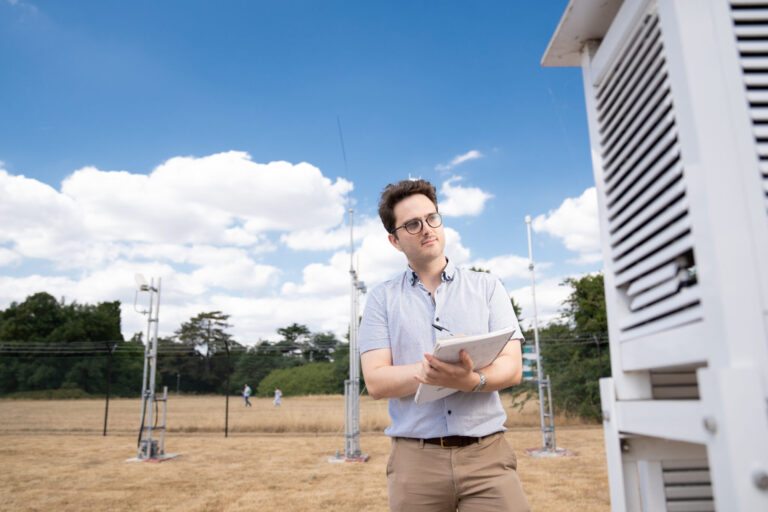
A researcher notes down readings from a weather station, in front of a blue sky.
Credit NCAR
Share
LinkedIn Facebook Twitter Email

In partnership with the European Centre for Medium-Range Weather Forecasts, the Met Office and the National Centre for Atmospheric Science, the University of Reading has launched the Advancing the Frontiers of Earth System Prediction (AFESP) research program to create accurate and reliable weather forecasts one month ahead.

Improving long-range weather forecasts

At the moment, meteorologists can make useful forecasts up to one week in advance. “A major goal of our work is to be able to say what the weather will be like a month ahead,” said Rowan Sutton, a climate scientist at the National Centre for Atmospheric Science and the University of Reading. “It will not be possible to predict one month ahead whether a particular day will be sunny or rainy. However, we hope to be able to say we are likely to experience a period of very wet and windy weather – or enjoy sunny weather – four weeks in advance.”

Improving the accuracy of weather forecasts 

The AFESP team is paying close attention to the variables involved in calculating weather patterns and making use of vast quantities of meteorological data.

The researchers will look at the data from weather stations across the world, deepwater buoys, weather balloons, transponders on aircraft and ships and sensors on satellites. By including more data, and more variables in the data used to create weather predictions, the AFESP researchers are tackling uncertainties in forecasts – especially the longer-term ones.

Pier Luigi Vidale, a climate scientist at the National Centre for Atmospheric Science and the University of Reading, explained, “We are starting to resolve things at finer and finer resolutions, not just in the atmosphere and on the land surface but also in the oceans, which gives us a much better understanding of how these two fluids transport heat from the equator to the pole and influence the ways that storms develop and bring winds and rain to our shores. That new physical understanding will also help improve our forecasts.”

He added, “At present, we don’t fully understand how predictable the real world is. So we are trying to develop a new theoretical understanding of what the main drivers are, and use that to find out what are the limits to predictability. But it is not just an intellectual exercise. If we get this right, we are going to make a huge, huge difference to people’s lives.”

In February 2024, Meteorological Technology International conducted an exclusive interview with Prof. Sue Grimmond, professor of atmospheric and oceanic science at the University Of Reading, and Met Office joint chair. Click here to read the full article.

Previous ArticleVIDEO: Preparing ESA’s Arctic weather satellite for environmental testing
Next Article Guatemala launches Early Warnings for All initiative

Read Similar Stories

Satellites

AI tool uses weather satellite data to map ocean currents in near real time

April 14, 20263 Mins Read
Climate Measurement

New tool speeds up climate model evaluation

April 13, 20262 Mins Read
Climate Measurement

China inaugurates 27th national climate observatory in Hebei

April 9, 20262 Mins Read
Latest News

Northumbria University secures £4m to study Earth’s radiation belts

April 16, 2026

AI model improves real-time prediction of wildfire spread

April 16, 2026

Study identifies atmospheric trigger behind flash droughts in Puerto Rico

April 15, 2026

Receive breaking stories and features in your inbox each week, for free


Enter your email address:


Supplier Spotlights
  • Adolf Thies GmbH & Co. KG
Getting in Touch
  • Contact Us / Advertise
  • Meet the Editors
  • Media Pack
  • Free Weekly E-Newsletter
Our Social Channels
  • Facebook
  • LinkedIn
© 2026 UKi Media & Events a division of UKIP Media & Events Ltd
  • Cookie Policy
  • Privacy Policy
  • Terms and Conditions
  • Notice and Takedown Policy

Type above and press Enter to search. Press Esc to cancel.