


Close Menu
Meteorological Technology International
  • News
    • A-E
      • Agriculture
      • Automated Weather Stations
      • Aviation
      • Climate Measurement
      • Data
      • Developing Countries
      • Digital Applications
      • Early Warning Systems
      • Extreme Weather
    • G-P
      • Hydrology
      • Lidar
      • Lightning Detection
      • New Appointments
      • Nowcasting
      • Numerical Weather Prediction
      • Polar Weather
    • R-S
      • Radar
      • Rainfall
      • Remote Sensing
      • Renewable Energy
      • Satellites
      • Solar
      • Space Weather
      • Supercomputers
    • T-Z
      • Training
      • Transport
      • Weather Instruments
      • Wind
      • World Meteorological Organization
      • Meteorological Technology World Expo
  • Features
  • Online Magazines
    • January 2026
    • April 2025
    • January 2025
    • September 2024
    • April 2024
    • Archive Issues
    • Subscribe Free!
  • Opinion
  • Videos
  • Supplier Spotlight
  • Expo
LinkedIn X (Twitter) Facebook
  • Sign-up for Free Weekly E-Newsletter
  • Meet the Editors
  • Contact Us
  • Media Pack
LinkedIn Facebook
Subscribe
Meteorological Technology International
  • News
      • Agriculture
      • Automated Weather Stations
      • Aviation
      • Climate Measurement
      • Data
      • Developing Countries
      • Digital Applications
      • Early Warning Systems
      • Extreme Weather
      • Hydrology
      • Lidar
      • Lightning Detection
      • New Appointments
      • Nowcasting
      • Numerical Weather Prediction
      • Polar Weather
      • Radar
      • Rainfall
      • Remote Sensing
      • Renewable Energy
      • Satellites
      • Solar
      • Space Weather
      • Supercomputers
      • Training
      • Transport
      • Weather Instruments
      • Wind
      • World Meteorological Organization
      • Meteorological Technology World Expo
  • Features
  • Online Magazines
    1. January 2026
    2. September 2025
    3. April 2025
    4. January 2025
    5. September 2024
    6. April 2024
    7. January 2024
    8. September 2023
    9. April 2023
    10. Archive Issues
    11. Subscribe Free!
    Featured
    November 27, 2025

    In this Issue – January 2026

    By Hazel KingNovember 27, 2025
    Recent

    In this Issue – January 2026

    November 27, 2025

    In this Issue – September 2025

    August 11, 2025

    In this Issue – April 2025

    April 15, 2025
  • Opinion
  • Videos
  • Supplier Spotlight
  • Expo
Facebook LinkedIn
Subscribe
Meteorological Technology International
Aviation

NOAA and GreenSight to deploy nano-sized uncrewed aircraft to measure atmospheric conditions

Elizabeth BakerBy Elizabeth BakerJune 11, 20243 Mins Read
Share LinkedIn Facebook Twitter Email
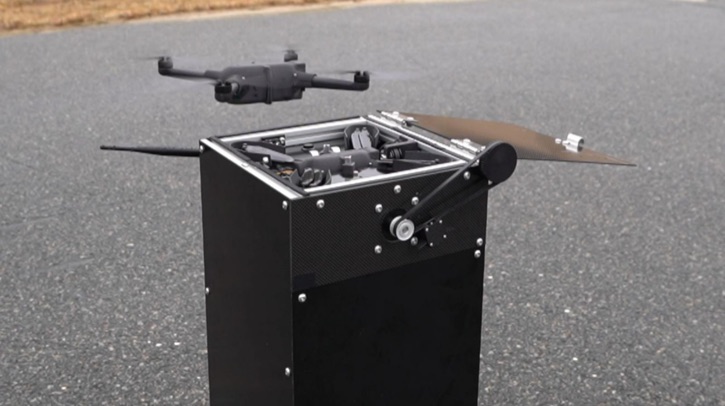
NOAA’s National Weather Service (NWS) and GreenSight have signed a one-year Cooperative Research and Development Agreement to deploy an uncrewed aircraft system, called WeatherHive, to measure atmospheric conditions and evaluate if the data could aid in weather forecasting.
Credit: GreenSight
Share
LinkedIn Facebook Twitter Email

NOAA’s National Weather Service (NWS) and GreenSight have signed a one-year Cooperative Research and Development Agreement to deploy an uncrewed aircraft system, called WeatherHive, to measure atmospheric conditions and evaluate if the data could aid in weather forecasting.

NOAA’s one-year demonstration project

The demonstration project will take place in and around Tulsa, Oklahoma. The NWS plans to expand testing to other sites later in 2024. Under the CRADA, NOAA and GreenSight will: develop five demonstrations of the system in the USA for data analysis, assessment and safety; evaluate data collected and test the benefit of horizontal and vertical sampling for weather forecasting for NOAA’s observational forecasting needs; capture input for optimizing data collection sampling patterns and swarming techniques; and explore value creation, cost savings, data rights and sharing models if a network of WeatherHive systems can meet NOAA’s mission.

The project will be conducted in parallel with traditional special-sounding deployments.

Uncrewed nano drones

WeatherHive’s uncrewed nano drones, called WISPs, gather real-time atmospheric measurements – pressure, temperature, humidity, and wind speed and direction – that can be used to forecast the weather. Each “hive” contains 10 WISPs spanning a 300km2 area reaching altitudes up to 5km, generating a 3D cube of measurements. It can operate in rain or shine and winds up to 39mph. WeatherHive technology was developed in partnership with the National Science Foundation’s America’s Seed Fund.

Overall, tens or hundreds of WeatherHive’s drones can be used at once to gather large quantities of data. Remotely deployable, the palm-sized drones automatically launch and land in their “hive” for recharging and reuse. The fully autonomous system provides approximately 50 minutes of sampling per flight that can be repeated continuously.

“We are excited to test and evaluate WeatherHive’s observations to determine if the data could be useful to our forecasters,” said Steven Piltz, meteorologist in charge of the National Weather Service office in Tulsa. “We are also looking at what height they can fly safely during severe weather.”

“WeatherHive has enormous potential to benefit the weather forecasting community and the nation as a whole, enhancing forecast accuracy to enable better planning and save lives,” said James Peverill, CEO and co-founder of GreenSight. “We are looking forward to collaborating with NOAA and working closely with the NWS in Tulsa.”

In related news, NOAA’s National Weather Service and Grand Sky Airfield Operations have signed a two-year Cooperative Research and Development Agreement to deploy uncrewed aircraft systems (UAS) to gather and evaluate the upper air data to determine how it could aid in weather forecasting. Click here to read the full story.

Previous ArticleWMO Executive Council discusses early warnings and greenhouse gas monitoring
Next Article AI and ML required to expand the Global Ocean Observing System, IOC/UNESCO Working Group 7 reveals

Read Similar Stories

Satellites

AI tool uses weather satellite data to map ocean currents in near real time

April 14, 20263 Mins Read
Climate Measurement

New tool speeds up climate model evaluation

April 13, 20262 Mins Read
Climate Measurement

China inaugurates 27th national climate observatory in Hebei

April 9, 20262 Mins Read
Latest News

Northumbria University secures £4m to study Earth’s radiation belts

April 16, 2026

AI model improves real-time prediction of wildfire spread

April 16, 2026

Study identifies atmospheric trigger behind flash droughts in Puerto Rico

April 15, 2026

Receive breaking stories and features in your inbox each week, for free


Enter your email address:


Supplier Spotlights
  • Synoptic Data PBC
Getting in Touch
  • Contact Us / Advertise
  • Meet the Editors
  • Media Pack
  • Free Weekly E-Newsletter
Our Social Channels
  • Facebook
  • LinkedIn
© 2026 UKi Media & Events a division of UKIP Media & Events Ltd
  • Cookie Policy
  • Privacy Policy
  • Terms and Conditions
  • Notice and Takedown Policy

Type above and press Enter to search. Press Esc to cancel.