


Close Menu
Meteorological Technology International
  • News
    • A-E
      • Agriculture
      • Automated Weather Stations
      • Aviation
      • Climate Measurement
      • Data
      • Developing Countries
      • Digital Applications
      • Early Warning Systems
      • Extreme Weather
    • G-P
      • Hydrology
      • Lidar
      • Lightning Detection
      • New Appointments
      • Nowcasting
      • Numerical Weather Prediction
      • Polar Weather
    • R-S
      • Radar
      • Rainfall
      • Remote Sensing
      • Renewable Energy
      • Satellites
      • Solar
      • Space Weather
      • Supercomputers
    • T-Z
      • Training
      • Transport
      • Weather Instruments
      • Wind
      • World Meteorological Organization
      • Meteorological Technology World Expo
  • Features
  • Online Magazines
    • January 2026
    • April 2025
    • January 2025
    • September 2024
    • April 2024
    • Archive Issues
    • Subscribe Free!
  • Opinion
  • Videos
  • Supplier Spotlight
  • Expo
LinkedIn X (Twitter) Facebook
  • Sign-up for Free Weekly E-Newsletter
  • Meet the Editors
  • Contact Us
  • Media Pack
LinkedIn Facebook
Subscribe
Meteorological Technology International
  • News
      • Agriculture
      • Automated Weather Stations
      • Aviation
      • Climate Measurement
      • Data
      • Developing Countries
      • Digital Applications
      • Early Warning Systems
      • Extreme Weather
      • Hydrology
      • Lidar
      • Lightning Detection
      • New Appointments
      • Nowcasting
      • Numerical Weather Prediction
      • Polar Weather
      • Radar
      • Rainfall
      • Remote Sensing
      • Renewable Energy
      • Satellites
      • Solar
      • Space Weather
      • Supercomputers
      • Training
      • Transport
      • Weather Instruments
      • Wind
      • World Meteorological Organization
      • Meteorological Technology World Expo
  • Features
  • Online Magazines
    1. January 2026
    2. September 2025
    3. April 2025
    4. January 2025
    5. September 2024
    6. April 2024
    7. January 2024
    8. September 2023
    9. April 2023
    10. Archive Issues
    11. Subscribe Free!
    Featured
    November 27, 2025

    In this Issue – January 2026

    By Hazel KingNovember 27, 2025
    Recent

    In this Issue – January 2026

    November 27, 2025

    In this Issue – September 2025

    August 11, 2025

    In this Issue – April 2025

    April 15, 2025
  • Opinion
  • Videos
  • Supplier Spotlight
  • Expo
Facebook LinkedIn
Subscribe
Meteorological Technology International
Data

Finnish Meteorological Institute improves the accuracy of its aurora borealis service

Elizabeth BakerBy Elizabeth BakerJanuary 30, 20243 Mins Read
Share LinkedIn Facebook Twitter Email
Share
LinkedIn Facebook Twitter Email

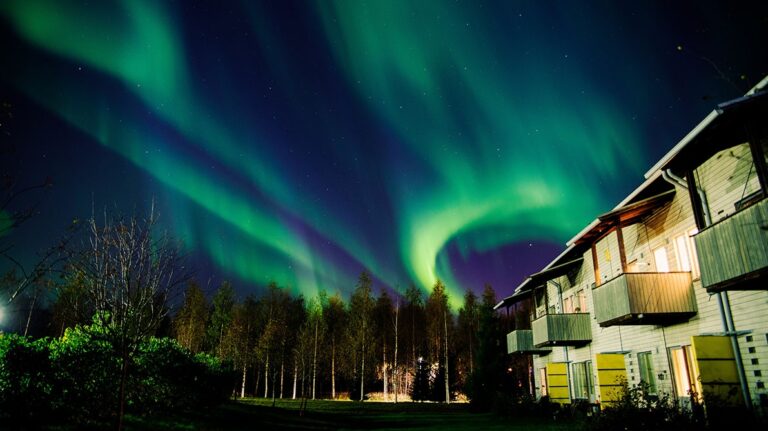
The Finnish Meteorological Institute (FMI) has updated its real-time products serving those who wish to see the aurora borealis, including the magnetic activity map and the bar chart showing the history of the day.

When the northern lights light up the sky, increased fluctuation is usually measured in the magnetic field on Earth’s surface. For about 20 years, the FMI has used this measure as the foundation of its real-time monitoring of magnetic activity to indicate the likelihood of the appearance of the aurora.

Some improvements have now been introduced to the aurora borealis service. The principle is unchanged – growing variations in the magnetic field reveal an increase in the likelihood of the appearance of the aurora. The most recent values that have been measured are displayed on a map and the daily history is shown in a bar chart for each observation station. The most important change is that the FMI has added a second threshold value and redefined the threshold values used for reporting a growing likelihood of the aurora.

To set the threshold values, the organization used 146,747 pictures from aurora borealis cameras in Kevo, Muonio and Hankasalmi. The images showed 463 hours of aurora displays as well as moments of dark sky, which was important for acquiring statistical material on the kinds of activity levels that usually do not involve the aurora.

The higher threshold value was largely equal in its significance to the previous one; when it is exceeded, an imposing aurora is likely to appear. This is why the columns and the markings on the map are colored red when the higher threshold is exceeded – previously this was done when the only threshold was crossed.

When the FMI’s newly introduced lower threshold is crossed, the columns and the markings on the map are colored yellow. When the lower level is exceeded but the higher one is not, the appearance of an aurora is quite possible, but it is usually dim and subdued. Each monitoring location still needs its own threshold values, which are presented in the form of horizontal lines in the bar chart.

The change also involved the way that the activity index is calculated. The organization calls it the R-index, where ‘R’ refers to revontuli – the Finnish word for the aurora borealis. The R-index describes the speed of change in the magnetic field, but it does not directly involve physical units. The value of the R-index is usually in the 10s or 100s, which means that it can be conveniently reported as an integer.

The R-index is calculated at intervals of five minutes instead of 10 minutes, as was done in the previous activity index. This means that the service is now closer to real time than it was before. The accessibility of the service has also been improved. The yellow markings on the map have been changed to squares and the red ones are shaped as rhombuses, which means that identifying the different levels no longer depends on color alone.

To find out more about the Finnish Meteorological Institute’s latest developments, click here

Previous ArticleFujitsu develops supercomputer system for numerical weather forecasting in Taiwan
Next Article Mauna Loa observatory receives funding for net zero target

Read Similar Stories

Satellites

AI tool uses weather satellite data to map ocean currents in near real time

April 14, 20263 Mins Read
Climate Measurement

New tool speeds up climate model evaluation

April 13, 20262 Mins Read
Climate Measurement

China inaugurates 27th national climate observatory in Hebei

April 9, 20262 Mins Read
Latest News

Northumbria University secures £4m to study Earth’s radiation belts

April 16, 2026

AI model improves real-time prediction of wildfire spread

April 16, 2026

Study identifies atmospheric trigger behind flash droughts in Puerto Rico

April 15, 2026

Receive breaking stories and features in your inbox each week, for free


Enter your email address:


Supplier Spotlights
  • ROTRONIC AG
Getting in Touch
  • Contact Us / Advertise
  • Meet the Editors
  • Media Pack
  • Free Weekly E-Newsletter
Our Social Channels
  • Facebook
  • LinkedIn
© 2026 UKi Media & Events a division of UKIP Media & Events Ltd
  • Cookie Policy
  • Privacy Policy
  • Terms and Conditions
  • Notice and Takedown Policy

Type above and press Enter to search. Press Esc to cancel.